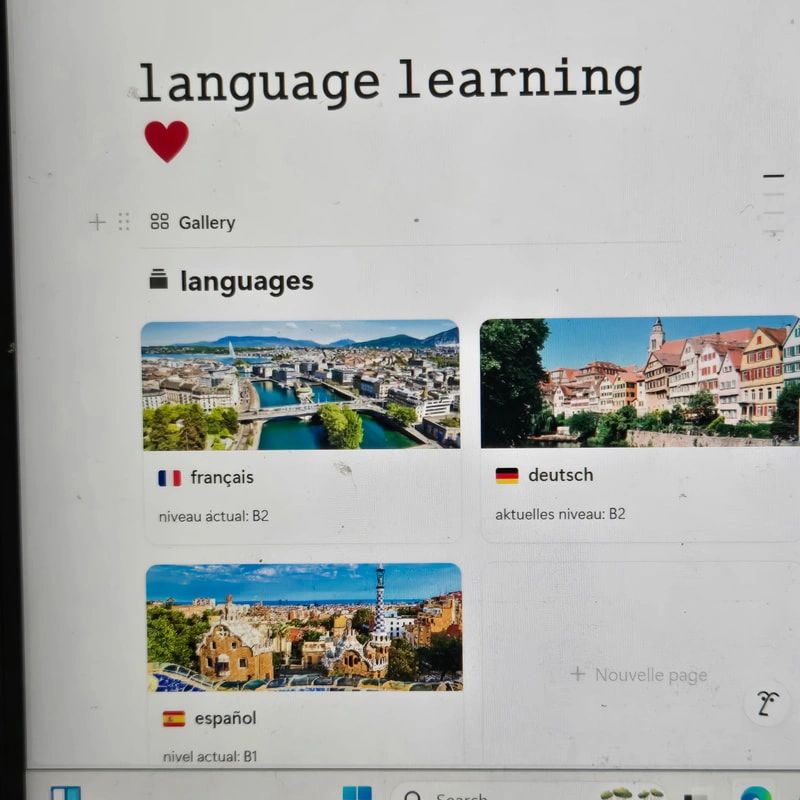
Do a quick search on social media for how to learn a language and you’ll be inevitably bombarded with apparent polyglots boasting their ‘foolproof method of learning a language in 2 months’ ,often accompanied by a link to their paid course, ads of the Duolingo owl, and the same advice we’ve all heard hundreds of times. While I’m a strong believer that immersion is and will always be the most useful way to pick up a language, I also understand that implementing it isn’t easy on top of stressful everyday life. This rings especially more true if you’re like me and have not one, not two, but three foreign languages you want to maintain at once. This article will give you ideas of ways I try to keep up my language skills on a (semi) regular basis. These methods go beyond the classic textbook advice of ‘watch TV!’ or ‘listen to podcasts!’ because I know you don’t need to hear that again.
1. Switch my devices to my target language (TL) I always get weird looks from friends when I hand them my phone and they’re instantly baffled by the fact it’s in French. Yes, it might be an inconvenience for anyone else using it, but I found that switching my phone to French is an easy way to pick up vocabulary. I’m on my phone enough that I remember where everything is anyway, so I now know the French words for all my apps, commands, and settings. It can get a bit frustrating when I need to use Maps and I have to follow French directions, but any immersion is good immersion!
2. Gaming in my TL When I say that I switch my devices to my TL, I even decided to include my Nintendo Switch. This way, I can pick up French words whilst doing something I enjoy. The main games I play are Animal Crossing and Minecraft which are both surprisingly useful for language learning. Animal Crossing helps with colloquial phrases and words I wouldn’t normally come across in lessons, while Minecraft is greatfor learning names of objects. I also play Pokémon occasionally which I love because I get to work out the witticisms in the French versions of Pokémon names (like how Lampent is called Mélancolux). If you like to play online, this could even be a way to find language exchange partners, but as a solitary player, I still find plenty of value in it.
3. Journaling Anyone who knows me knows that I absolutely love journaling. I write in my journal every night with a few extra entries scattered throughout the week, so I figured – why not combine two of my hobbies into one? I write a page in my TL, usually about fairly mundane things, and then I use ChatGPT to correct what I’ve written. I highlight any grammar or vocab I got wrong and annotate it so I can read back and understand my errors. You could even take it further and write about deeper, more emotional topics, but I tend to stick to everyday stuff so I don’t get too disheartened by gaps in my vocabulary.
4. Studying song lyrics Another classic language-learning tip is to listen to music in your TL. While I like to do this, I don’t believe that sticking a few French songs on will help you all that much, especially if you’re not actively listening to the lyrics. Instead, I read the lyrics as I’m listening to the song, write them down, and try to decipher their meaning. Then, I pull up the English translation to the song and highlight any unfamiliar words or grammatical structures. This is effective because it exposes you to real-world language use and slang. Small disclaimer for fellow French learners: Francophone singers will often change the emphasis or length of words to fit a song’s rhythm, so don’t take the pronunciation in songs as gospel!
5. Creating a social media account for my TL
A guilty pleasure for many of us is doomscrolling. What if I told you that there’s a way you can still do this and feel slightly less bad about it because it’s (sort of) in aid of your language learning goals? Well there is! All you have to do is make a new Instagram account and use it to exclusively look at posts in your TL. It doesn’t have to be Instagram, but that’s what I personally use because it’s one of the easiest apps for doomscrolling in my opinion. While you could follow TL content on your main account, chances are you’d end up reverting to English posts – so I find having a separate account makes it easier to stay immersed.
I do believe that the most common advice you hear in regards to learning languages is true, like doing flashcards and the vague concept of immersion, but these are my favourite ways to spice up my routine. Most of these strategies stem from me combining things I already enjoyed doing with my interest in languages, so my general advice would be to find a way to incorporate languages into your pre-existing hobbies. Do you like arts and crafts? Then look up tutorials in your TL. Do you enjoy puzzles? Find online ones in your TL. Do you read a lot? Start reading books in your TL. Chances are, whatever you enjoy doing, there’s a way to do it in your TL – and that’s the key to making language learning both fun and sustainable.
Quite a lot has changed in my life since I last posted on here. A few weeks ago, I was reluctantly preparing for my move to Austria and had accepted that I’d likely feel anxious and homesick, like I did in Switzerland. The day after my trip to the Austrian embassy in London, I started to question whether it was really worth the potential damage to my mental health to go through all the stress of moving to another country again. As exciting as it could have been, I concluded that it wasn’t worth it. I told one of my teachers from Lancaster and she said she still thought I should go, since it could be better than Switzerland, and I might fail my third year if I didn’t. It would be pretty difficult for me to enjoy Austria even less than Switzerland, but I didn’t have it in me to find out; I’m trying to get to a better place mentally and I don’t think there’s a world where moving abroad again will help with that. I couldn’t access mental health support whilst abroad because of insurance reasons, so I also fear that if I did struggle in Austria, I’d feel like I was on my own.
I applied for exceptional circumstances and I’ve been told my options are that I either switch to a degree in only French, or that I go to a German-speaking country in September. If I did the latter option, it would add another year to my degree and I would still end up having to go eventually, hence I’m likely going to choose the former. I’m glad that I can still carry on with a language degree but it is a bit sad to have learned German for so long and it won’t even count towards my degree. I still have questions about what exactly a single-honours degree will entail for me. I have made peace with the idea of it, though, because I know there’s still options. I can continue to learn German in my own time and I’d hope that my German knowledge is still a professional asset. I’m not even 100% sure that you need to do a Bachelor’s degree in the language to do a Master’s in Translation, so it’s definitely something I need to do more research into. The situation has made me question what it is I truly want to do in the future, which is why the classic quarter-life crisis has reared its ugly head.
My first thought was “Oh, maybe languages aren’t what I want to pursue because translation jobs will eventually get taken over by AI anyway” which then begged the question of if not languages, then what? I like the idea of journalism as a career, but I know that that isn’t easy to get into. When I was younger, I wanted to be a makeup artist so I also looked into that. I have so many ideas of what I want to do but it’s hard to commit to one. I just wish that someone could tell me which one is the ‘right’ path. This isn’t the first time I’ve said this on here, but I feel like Esther from the Bell Jar, only this time with the famous fig tree quote: “I saw my life branching out before me like the green fig tree in the story. From the tip of every branch, like a fat purple fig, a wonderful future beckoned and winked. … I saw myself sitting in the crotch of this fig tree, starving to death, just because I couldn’t make up my mind which of the figs I would choose.”
One of the reasons it’s getting to me is because people have constantly had high expectations of me. I’ve always excelled academically which meant I was often told by family and teachers that “you can do anything you put your mind to”. It feels disappointing to admit that a few months in Geneva caused me to come off the tracks of what I thought would be a relatively smooth-sailing degree into a comfortable career. I think that situations like mine are actually more common than one would think; I did some reading about ‘gifted kid syndrome’, the exhaustion that formerly gifted children experience because of the pressure to always be the ‘smart one’. It leads to them having perfectionist and people-pleasing tendencies, as well as tying their self-worth to their academic abilities. After reading a few articles about it, I realised that it resonated with me a lot; I was unaware that I do tie a lot of my self-worth to my intelligence.
In my article about my goals for 2025, I wrote that I had the intention of working on my self-love. I’m slowly getting there because I’ve been trying to put less pressure on myself to have everything figured out. But, the revelation has taught me that I need to remember that I have inherent self-worth, no matter my academic achievements, how I look, or any other superficial qualities. I know that it isn’t something you can easily rewire your brain to believe, but I know I will. I have a mental health assessment next month where they’ll hopefully advise me on next steps. I’m also starting a new job next week to gain experience before I start my final year of uni in October. My future still feels very uncertain right now, but as I said, I’m not putting pressure on myself to know everything. My favourite affirmation at the moment is “I don’t need to fix everything today, I can just change one thing and see how it goes”, which is the philosophy I’m adopting. There’s still a lot I need to worry about, but if I take it one step at a time, I will get to where I need to be.
If you’ve read any of my previous articles, you’ll know that I spent a semester studying in Geneva. Between teachers from my home university, friends who’d done it before, and online resources, I’d received plenty of guidance before jetting off. But, as with many things in life, it still wasn’t exactly what I had anticipated. Admittedly, some of that could have been due to me forgetting or downplaying what I’d been told, but there were many times when I thought, “I wish I’d known this before”. That’s the goal of this post – to share the brutal truths about studying abroad that you’ve probably never considered.
1. There’s a lot of paperwork
Something many people overlook before going abroad, is the sheer amount of administrative work involved. From finding accommodation, to sorting out visas and bank accounts, the process can be quite stressful. Switzerland is notorious for this which may explain my personal vendetta against admin, but I have friends studying in other countries who have said the same. You need to be proactive when preparing for a year abroad, so make a to-do list and break tasks into manageable steps – this will help you avoid the stress I went through.
2. You’ll start to miss unexpected things
We’ve all heard of culture shock – being in a new country with different customs, people, and sometimes language can be a shock to the system. I knew this was inevitable, but it made me realise how much I missed such mundane things from home. I wouldn’t exactly describe my hometown as heaven on Earth, but I often found myself longing to walk down the same cobbled streets and visit the bars I’d been to hundreds of times. To make my space feel more like home, I brought pictures of my friends and stuck them on the wall in my accommodation. It definitely doesn’t compare to actually being with them, but it’s a comforting reminder that they’re only a phone call away.
3. It gets lonely
Following on from the previous point, it’s an easy point to forget when you’re miles away from everyone you know. It can feel like you’re being ‘left behind’, especially if your friends are all with each other back home and you’re stuck in a foreign country. My first few weeks of Geneva were the perfect example of being surrounded by people but still feeling lonely. It’s hard to form connections with others when you’re already dealing with the anxiety of adjusting to an unfamiliar place. If you’re considering a year abroad, it’s important to be comfortable with your own company – it takes a toll on your mental health, but learning to embrace being alone will be invaluable.
4. It won’t be like how you pictured it, and that’s alright
There are countless posts on social media of the romanticised side of a year abroad. Travelling to other cities or countries, Erasmus parties, making friends for life, what is there not to like? I’ll answer that for you – the fact that there’s far more to it than that. For a start, a lot of people leave out the part of studying abroad where you actually have to study, so don’t neglect that in aid of a good time. Everyone’s experience with a year abroad is going to be different, and I started to feel like I was doing mine ‘wrong’ until I realised that there’s no ‘right’ way to do it. Travel, party, try to make friends, but don’t feel like a failure if your experience doesn’t look exactly like the ones you see online.
5. Packing is a pain
Before leaving, I was anxious about forgetting something essential. I reasoned with myself that I was going to Geneva – not outer Mongolia – so anything I forgot could be bought (albeit for a much higher price). The thing that was even more stressful was packing to come home. I wasn’t exactly a shopaholic considering I was in such an expensive city, I still underestimated how much stuff I would accumulate over a semester. I ended up having to buy another suitcase because all my stuff simply wouldn’t fit. Even with two suitcases, I couldn’t fit everything so I ended up opening my suitcases in the middle of the airport and impulsively throwing things in the bin! I wouldn’t recommend doing that, but if you’re studying abroad, just be prepared – you might need to shell out for an extra suitcase when coming home.
I could go on and on about my studying abroad and what I learnt, but I only decided to include what I deemed the most important points. The bottom line is this: going abroad isn’t all sunshine and rainbows, but if you can learn to adapt, you will come out more resilient and self-aware. It isn’t for everyone, though, so if you find you don’t enjoy it, don’t beat yourself up over it. I’d heard so many people say that “going abroad will be the best thing you ever do” which may be true for some, but not for everyone. Just take each day as it comes, embrace the experience for what it is, and make the most of it in your own way.
One of many things I learnt about myself in 2024 is that a lot of my anxiety and insecurities stem from a subconscious obsession with wanting to be ‘normal’. I can be perfectly content spending a day by myself until I’m suddenly hit with the negative thought spiral of, “Is this what a normal 20-year-old should be doing? Am I wasting my youth? Am I appreciating my life enough?” which often puts me in a bad mood.
The night before I flew home from Geneva, I worked myself into a state thinking, “It’s not as if my life was perfect before. I’m just going to have the same boring life I had before I came here and I’ll never be happy again.” I was finding it hard to be proud of getting through Geneva as I was constantly questioning the point of it. I told myself the reason I went, and why I’m continuing my year abroad, is to complete my degree, but I couldn’t help but question whether there’s even a point in that.
I’m currently sitting on my bed typing this, and my life is fairly similar to how it was before setting out on my year abroad (albeit with the added stress of having to return to Geneva and sorting out my Austrian visa). I’ve realised, though, that having a ‘boring’ life isn’t a bad thing at all. When I was at uni in the UK and I spoke with people who decided against university, I didn’t envy them. I felt like my purpose was to graduate, even if I had no idea what my life goal would be after that. Now, on a year abroad, when I speak to those same types of people, I sometimes feel jealous and wish I were living a life without academically imposed years abroad. Theodore Roosevelt once said that “comparison is the thief of joy” and I think he hit the mark with that. It’s only when I start to compare myself with others that I begin feeling dissatisfied.
I don’t think I’m alone in feeling this way, and the older I get, the more I realise how much social media is to blame. Before the era of Snapchat, Instagram and similar apps, you’d have no clear idea of what others were doing, so how would you know whether you’re ‘normal’ or not? It wouldn’t matter. Nowadays, it feels as though we’re always trying to live up to the expectations created by others’ glamourised lives, and we forget we’re only seeing what they want us to see. It’s not often you see pictures of people during their worst time, or at least where they admit that it is. When I’ve met up with friends since my return, some were shocked to learn how bad things had been for me because my Instagram posts gave the impression I was having a great time. I was playing the game too.
My remedy for this is something I’ve written about in another post: the act of ‘romanticising my life’. The way I’d describe it is finding appreciation in the small things and mindfully approaching each day. When I was at the peak of my anxiety in Geneva, I put so much pressure on myself: “Why aren’t you happy right now? Your life could be so much worse – you need to be grateful!” but I’ve learnt along the way that it’s not necessarily about being happy all the time since that’s impossible. Instead, it’s about taking pleasure in the mundanity of life.
I’m currently reading Everything I Know About Love by Dolly Alderton and I think she captures it perfectly (if you’re planning on reading it, spoiler warning): after the death of her best friend’s sister, she describes walking by the river together and saying, “I was grateful for understanding in that moment that life can really be as simple as just breathing in and out”. This line brought a smile to my face because it reminded me how often we get caught up in life’s stresses and forget that, at its core, life is both simple and beautiful.
I talked before about the concept of having ‘purposes’ and ‘life goals’. I’ll admit, I’m terrified of the day I graduate from uni, because I worry my mind will ask “now what?” and I won’t have the answer. A flaw in my thinking is that I tend to tie my sense of purpose entirely to academic or professional achievements, when there’s so much more to life than that. Life is also about the morning coffee, catching up with old friends, seeing a cute dog on the street, watching the last episode of your favourite series, the list is endless.
Our capitalist society conditions us into thinking that anything that doesn’t make us money is ‘pointless’ and a ‘waste of time’, but I beg to differ. Humans are hedonistic by nature; our purpose isn’t to work ourselves to the bone so we have no energy to enjoy the rewards of our labour – it’s to connect, to laugh, and to have a bit of fun! So, even if I don’t yet know what my ‘life’s purpose’ is, the world is vast and I’m confident I’ll find it. In the meantime, waking up and simply breathing in and out is enough.
“What a year” is the first phrase that comes to mind when reflecting on 2024. My mind has been overwhelmingly negative recently – I’ve just returned from studying in Switzerland, which was the most challenging period of my life. However, I can’t forget the joys and growth that have also happened this year. I’ve had many great experiences and even though Geneva was hard, I’m choosing to look at it as a form of character-building.
Something I’ve learned is that it’s natural for our brains to search for the worst in situations (after all, its purpose is to keep us safe, not happy) and that not all our thoughts are necessarily true.
Here are some things I did this year that made me proud or brought me joy:
I finished my second year of uni with a 2:1, a pleasant surprise as I was essentially nocturnal due to my job at a nightclub.
I’ve made new friends and become closer with people I was already friends with, most notably people from my course at uni and my classes in Geneva. I met many people from all over the world, and although I probably won’t speak to the majority of them again, they taught me valuable lessons and opened my eyes to the wider world.
I’ve improved my French through spending 3 months in Switzerland.
I’ve learned to enjoy my own company and I’m learning more about myself and my mind every day. I still have anxiety about all sorts of things, but I’m in the process of learning to manage it. For example, I’ve realised that the more I try to push thoughts away, the more they return, which is why I try to let them pass.
I performed at Whitby Folk Festival with my music group where I got to spend a week surrounded by some of my favourite people.
I got 2 more tattoos and 2 new piercings (technically 3 but I sadly had to get my eyebrow piercing removed).
This list isn’t exhaustive, but it goes to show that even when our brain tells us everything is bad, it’s lying. One of the other lies it’s recently been telling me is that I’m going to have this anxiety for the rest of my life and I shouldn’t bother with completing my year abroad because “What’s the point? We don’t even know what we’re going to do with this degree after we graduate.”
While it is true that I’m not entirely sure where my language degree will take me, it doesn’t mean I can’t enjoy doing it. Even if my degree is “pointless”, that would mean discounting the next two years of my life due to worrying about something that hasn’t even happened. My current plan is to learn to embrace the journey and not worry too much about the end goal. I know we often get told to think of the future, but thinking too far into the future gives me more anxiety as it makes me start to question if I’m doing the “right” thing for me.
Something else I’ve done is I’ve written a list of what I want to achieve next year. New Years’ Resolutions or goals aren’t exactly a unique concept, but I’ve made mine to give me a sense of purpose for next year. I’ve frequently found myself feeling unmotivated, which isn’t helped by the dark winter days, so my goals will hopefully fill my days with things that will fulfill me and benefit my mental, physical and intellectual health. I have two lists: my resolutions, which are more regular habits, and my goals, which are more general things I want to do in 2025.
My New Years’ Resolutions:
10,000 steps every day – I’m not sure if this will be possible every day, but I’ve learned that physical activity largely benefits my mental health.
Yoga every day – a habit I’ve stopped doing since returning from Switzerland. I ought to start it again, though, because I’ve been suffering from back pain.
Read (at least) one article in French and German every day – fairly self-explanatory for a language student. It’s great to read articles in your target languages to enhance your vocabulary and cultural understanding.
Work on my self-love – this one is less tangible, but one of my largest goals next year is to work on my relationship with myself. I plan to do this through reading books, journaling, and more positive self-talk.
My Goals for 2025:
Read 20 books – I was originally planning on 30, but I’d rather go above and beyond what I’ve planned than not manage to achieve my goal.
Start learning Dutch – I’m planning to pick up Dutch classes when I return to Lancaster in September. I don’t know how fast I’ll learn it since I’ll be in my final year with plenty of other responsibilities, but simply starting is enough for me.
Get to C1 level in French and German – this is achievable with my year abroad. I’m currently at the higher end of B2 in French and slightly lower in German, but when I go to live in Austria next year, I know my German will improve.
Travel to 5 countries – I think this will be fairly easy as Austria is on the doorstep of other European countries like Hungary, Slovakia and Slovenia. I’m also including Switzerland and Austria in the list of 5 countries, so it’s a manageable goal.
My main message with this post is, you’re bound to see posts on social media at this time of year with people boasting of all the great things they did in 2024, but it’s okay if this wasn’t how it played out for you. Even if the only thing you did this year is get through it, that’s still something to be proud of. I’m not going to be a cliché and say that this year was the “best one yet”, because it wasn’t for me, but I’m still grateful that it happened. Rather than dwelling on all the bad parts of the year, I’m trying to think of the positive things that 2024 brought me, and I advise you to do the same. Make a list of things you’re looking to next year, no matter how big or small, and have optimism that 2025 will treat you better.
I’m finally nearing the end of my studies in Geneva. It’s a weird feeling because it’s undoubtedly been one of the hardest things I’ve ever done, but it had its merits. I know that it has made me a stronger person and I’m grateful that a year abroad is compulsory for my course – otherwise, I never would have chosen it. Although I haven’t yet seen the back of Switzerland because I have to return in January for exams, I thought that now would be the best time to share the pros and cons of studying here. Maybe this will help if you’re considering studying in Geneva or elsewhere in Switzerland, as many of these points apply to the country as a whole.
Museums and cultural activities A key aspect of studying abroad is immersing yourself in the country’s culture. This is very easy in Geneva with its plethora of museums. Recently, a friend and I visited the Patek Philippe Museum, dedicated to the luxury watch brand, and Maison Tavel, which explores Geneva’s history. There’s also the Museum of Ethnography, the Red Cross Museum, among many others that I’m probably unaware of! They also tend to be reasonably priced or even free making them an excellent option for a rainy day – a common occurrence at this time of year. Beyond museums, Geneva hosts events like la Fete de l’Escalade every December, celebrating the city’s victory over the Duchy of Savoy in 1602. You’ll never run out of new things to learn whilst living here.
Convenient location If you want to travel during your year abroad, Switzerland is the perfect place. Being landlocked makes it incredibly convenient to hop on a Flixbus and visit neighbouring countries like France, Italy or Austria. Within Switzerland, travel is equally simple thanks to its small size. I’ve taken trips to Bern, Lyon and Milan, all for reasonable prices with Flixbus. Some friends have even flown to European destinations like Copenhagen and Madrid from Geneva, though I prefer budget-friendly options.
Safety Only when I returned from Lyon did I realise how safe I feel in Switzerland. This is an important factor to consider, especially as a woman. When in Lyon, there were several instances where I felt uncomfortable because of men approaching me at night, but I’ve never experienced this in Geneva. The same goes for pickpocketing: I was warned to be cautious about this in Italy and France, but it’s less of a concern in Switzerland because of its low crime rate. Never say never, obviously, but I feel very secure even when alone in the city centre.
Reliable public transport Something I absolutely hate when in a new country, is working out how their public transport works – every country has its own system and I never know the correct etiquette. Switzerland was confusing for me at first because the transport works on a trust basis – you only show your ticket if an inspector asks for it, but I love the buses and trams here. They’re reliable, frequent, and the bus I use runs all night at the weekend. The TPG app is a lifesaver, offering clear directions to easily get anywhere in the city.
Students speaking English This is more of a neutral point because it depends on your goals for studying abroad. I came to Geneva to improve my French which has been surprisingly challenging; Geneva’s multicultural nature means English often becomes the default language among students. I met so many people at ESN events who didn’t speak a word of French which shocked me – I was anxious enough about coming here without having to worry about not knowing the language. My teachers at Lancaster advised us to avoid English speakers like the plague because we won’t improve our French that way, but that’s easier said than done here. While my classes are in French, they’re mostly tailored to French learners, so I rarely come across native speakers.
Shop hours We’re gradually moving towards my gripes about Geneva. Coming from a country with 24-hour supermarkets and retail stores open daily, it was a shock to the system to learn that all shops are closed on Sundays and the supermarkets close at 7pm every other day. You’ll find small (expensive) convenience shops open on Sundays, but they’re few and far between. I understand that retail workers deserve time to rest, but it’s a pain when you run out of essentials on a Sunday.
Admin When I learned that students don’t need a visa for a single semester, I felt relieved. That was until I realised that we instead need to apply for a residence permit, take out private health insurance, make a tax declaration, write a letter of departure to the migration office, among other bureaucratic nightmares. Don’t be fooled by anyone who tells you that “you only need to worry about admin once you get here” is mistaken. I made this mistake and ended up with tasks up to my eyeballs whilst trying to settle into a new country.
Competitive accommodation One might assume that a major city like Geneva would have plenty of student accommodation. This couldn’t be further from the truth. I applied for university housing in March and I was still #1061 on the waiting list by July. I turned to private options, only to find very limited options, and many landlords preferring tenants for the entire academic year. In the end, I arranged private accommodation through a recommendation from a Lancaster student who had studied here before. It’s been an…interesting experience, but at least I have a roof over my head.
Prices This is, without a doubt, the worst thing about Geneva. Many warned me that Switzerland was expensive but I thought they were exaggerating. Food, drinks, clothing – everything, is extortionate. In my first week, I bought a singular double vodka lemonade in a bar for 19.50CHF. If you’re earning a Swiss income then it’s manageable, but as a student with no income, it’s crushing. The only things I’ve found to be cheaper in Switzerland are cigarettes and stamps – great if you’re a chainsmoker with a pen pal, I suppose. Final thoughts Geneva is a beautiful city which I’m glad I got to experience. It’s the perfect response to the question, “where in France are you studying for your year abroad?” as people often forget there are other French-speaking countries. The university is world-class, and I’ve learned so much, not just academically but about myself. Adapting to a new culture is no easy feat but this experience has undoubtedly built my character. That said, if I had known about some of the negative aspects, especially the financial burden, I might have chosen somewhere else. That’s the privilege of hindsight, though, so my advice is to thoroughly research your options to thrive wherever you go. I made the mistake of not researching my choices and being hit with many surprises when I arrived here. Don’t make the same mistake I did.
With just two weeks left of studying in Geneva, I knew I had to visit Italy since it was so close. Although a few people had told me Milan is the ‘worst’ city in Italy because it’s ‘too modern’, I still wanted to see it for myself. From my research and some recommendations from a Milanese girl I’d recently met, it seemed like there were several exciting places to explore. I’d never been to Ital so I suppose I didn’t have anything to compare it to, which could be either an advantage or a disadvantage. Besides, Milan is one of the closest major Italian cities to Geneva, so it made sense.
I wasn’t too fond of having to wake up at half 5 in the morning for my coach at 7:35, but I wanted to get the earliest one to maximise my time. The coach journey was six hours long, so I wouldn’t have had much time to explore on Friday had I chosen a later one. I had told my Couchsurfing host that I’d arrive at 1:40pm, but we ended up getting there at 2. This meant I’d missed my chance to put my bags at his place since he had to go back to work until 7:30pm. It wasn’t too bad because I pack light on short trips. My first stop in Milan was a gelato shop recommended by the girl I’d met. It was delicious, and less than 4 euros! I’d been warned that Milan was expensive, but after living in Geneva, everything seemed ridiculously cheap.
The gelato perked me up after my long journey, so I strolled through the Milanese streets to get my bearings. The architecture was gorgeous, and I imagined what it would be like to live in Italy. It made me ponder the question of, if I could live anywhere in the world, where would it be? While many assume that my degree means I want to live abroad in a Francophone or Germanophone country, that actually isn’t the case. Maybe it’s because I’m still young, but I can’t imagine permanently settling in another country. If I did, it would probably be somewhere that doesn’t speak French or German to give me an excuse to learn another language. The only country I’ve visited where I’ve thought I might enjoy living is The Netherlands – I love the sound of the Dutch language and the laid-back vibe of the people. I also like the idea of living in Ireland since it isn’t too far and it’s English-speaking, but I haven’t yet been to properly experience it.
I found myself at the Santa Maria delle Grazie, home to Da Vinci’s The Last Supper. It’s free to enter, but seeing the painting requires an extortionately-priced ticket so I decided against that. The UNESCO-listed building itself was lovely to admire. I walked again to Sempione Park, although it was dark by this time, so it probably wasn’t as picturesque as others have described. Still, it was relaxing to sit and rest for a while.
Sforza Castle was nearby, so I headed there next. I wanted tickets for a guided tour, but I left it too late and they were sadly sold out. Fortunately, tickets weren’t necessary to appreciate the impressive exterior, so I was still satisfied. Nearby, there was a lively market selling food, souvenirs, and artisan bits and bobs. I treated myself to a crystal bracelet, as I’ve largely neglected my spiritual side since being abroad. Not only that, but I bought my routine sticker to decorate my laptop and a badge for my rucksack – classic tourist purchases.
Could I visit Italy without trying its famous pizza? Of course not, so I was now on the hunt for a pizzeria. I was going to go to one recommended by the girl from Milan I met, but it was too far from the castle, and I didn’t want to get too hungry! I figured that since I was in Italy, they’d all be decent anyway. I found a cosy-looking spot, ordered a quattro formaggi, and quickly learned why they say Italy has the best pizza – the light, airy dough was a far cry from heavy takeaway pizzas. With that being said, I was too full to order tiramisu for dessert. By this time, my host had messaged me to say he was now home, so I took the tram to his place.
When I arrived, he greeted me with his adorable dog, who almost knocked me over with excitement! We walked the dog together and chatted. He was Turkish, and we discussed his background and how he had lived in Russia before moving to Milan. Later, we spent the evening relaxing and watching a Turkish TV series, though I couldn’t understand much. Exhausted from all the travelling and walking, I went to bed early, ready for the next day.
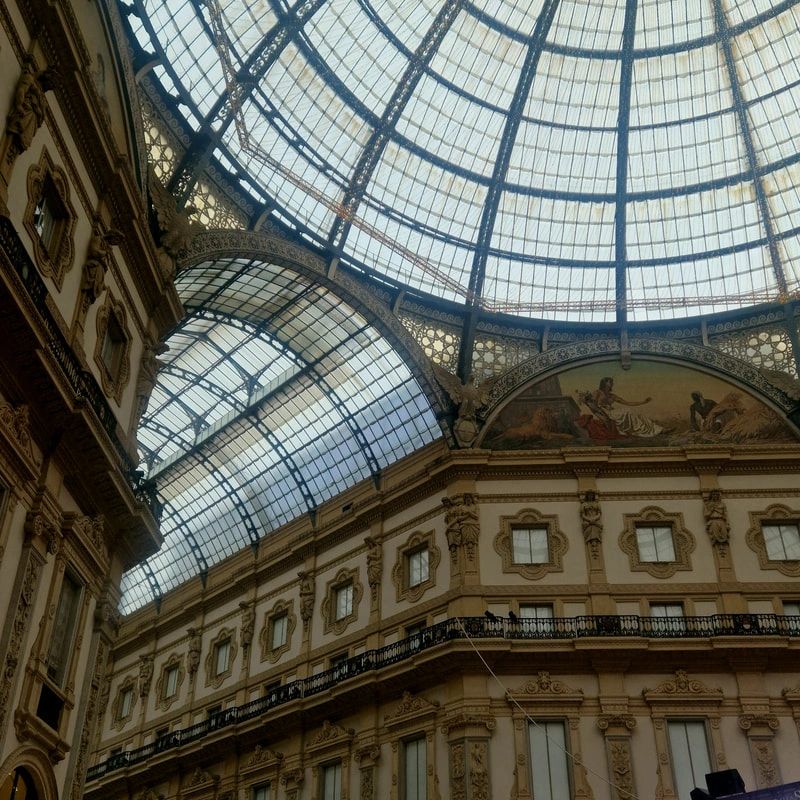
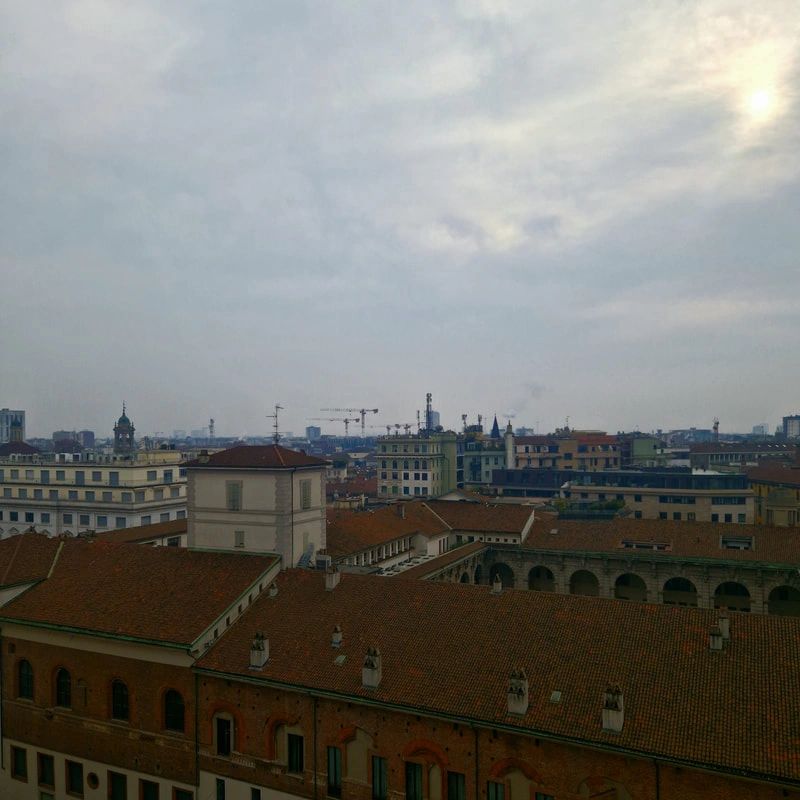
The next morning, my host recommended a fantastic breakfast spot, and he wasn’t wrong – the croissant with crema was divine, rivaling even French croissants. I had a ticket for the Duomo at 12:30pm, and I had left early, so I had time to take a leisurely walk around the city. One of the other places I wanted to see was the Galleria Vittorio Emanuele II, Italy’s oldest shopping gallery, filled with designer boutiques. While I had no intention of buying a Prada handbag, the building was breathtaking, though the swarms of people made it difficult to linger.
The Galleria
I didn’t have far to go after this as the Galleria is directly next to the Duomo. After climbing what must have been at least 100 steps, I reached the rooftop. The view of Milan was stunning and humbling, making me feel beautifully insignificant. On the highest terrace, I even witnessed a wedding proposal! Everyone applauded, and it brought tears to my eyes for some reason – it must be the hopeless romantic in me. In the square where the Duomo stands, there were some Christmas markets where I had a quick browse, but I found the crowds too overwhelming to stay long.
As with most of my trips, I wanted to visit a museum to learn something new. I read online about the Fondazione Prada, a museum of contemporary art and culture that sounded right up my street. It was a long walk from the Duomo, but I did it slowly, scattered with coffee breaks. I managed to get a free ticket, so I wandered around. I found it underwhelming because the exhibits were quite sparse, and the climb up the ten floors of the main building was more hassle than it was worth. I was still glad I checked it out.
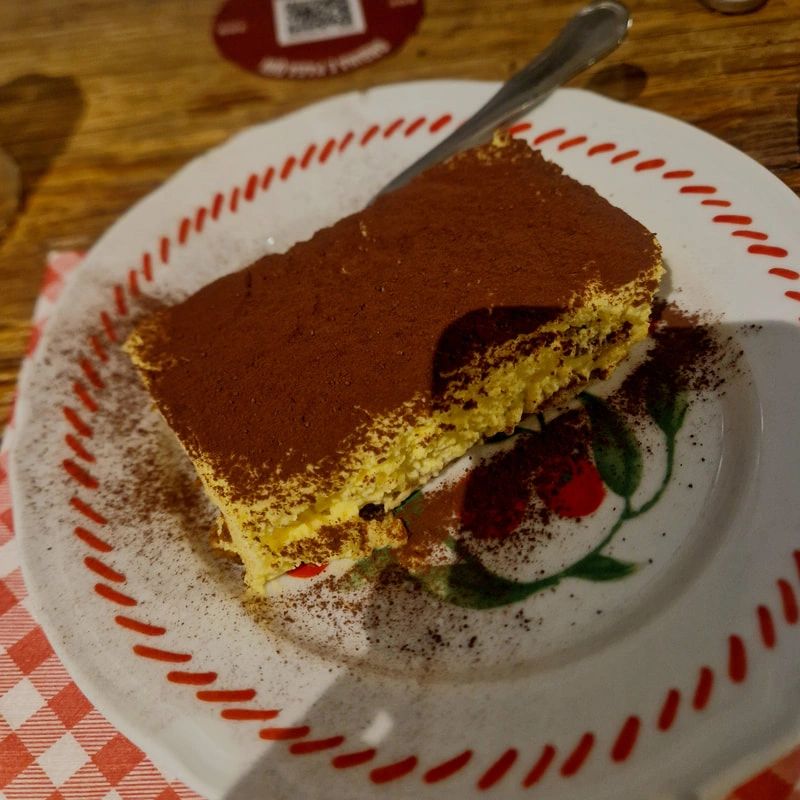
I knew that as well as pizza, I had to try Italy’s other iconic food: pasta. I went to a restaurant called Miscusi, recommended by my Milanese friend. I ordered a sort of vegetable pasta that I enjoyed, although I prefer my pasta less al dente which seems to be the Italian norm. I had a similar plan to order tiramisu after my meal, but ended up too full again! When I told my host, he insisted I try it before leaving Milan. On my final day, I made a detour to another Miscusi branch for dessert (as I didn’t want the staff to see me there two days on the trot), and I’m so glad I did. I never thought I’d like tiramisu – I’m a coffee lover, but I generally don’t like it in desserts.
My long-awaited tiramisu
The journey home was less smooth. I saw my coach to Geneva at the station, so I showed the driver my ticket, to which he told me to wait for the next coach. I was horrified upon checking the Flixbus app to see it had already departed! I was probably less stressed than I should have been, but due to enough stress and anxiety to last me a lifetime over the past 3 months, I was surprisingly calm. I was confused as to how it had happened but I knew there was no point in trying to change it. I caught the next coach at 5:30pm, but the delay and dehydration made me feel unwell on the journey. I finally got home at about midnight, both exhausted and happy from my trip.
Besides my coach mishap, I had lots of fun in Milan. I think I chose well with all three of my solo trips – I got to experience three beautiful cities with three lovely Couchsurfing hosts. I’d definitely visit Italy again, although I would try to learn some Italian next time. This is the first time in a while that I’ve been in a country where I don’t speak the language, and I found it a bit intimidating. My A-Level Spanish knowledge somewhat helped, but I couldn’t produce any Italian beyond “ciao” and “grazie”. My next trip will be on a plane back to Manchester for Christmas – travelling is fun but there’s no place like home.
In my article about what I do for my mental health whilst abroad, I wrote that I attend social events with the mindset of having a new experience, rather than actively seeking to make friends. This shift in perspective stemmed from my previous approach, which often left me feeling pressured and disappointed when I didn’t ‘connect’ with someone. I went to a bar crawl in Geneva a few weeks ago with my new mindset, and what do you know? I ended up making a friend! It just goes to show that building connections is easier when you don’t force it – people who enjoy your company will naturally gravitate towards you. My new friend is from Istanbul, and we bonded over our mutual Turkish heritage. He studies in Lausanne and he invited me to visit so he could give me a tour of the city. I’d never been before, and since the train tickets weren’t too expensive (by Swiss standards), I thought I had nothing to lose.
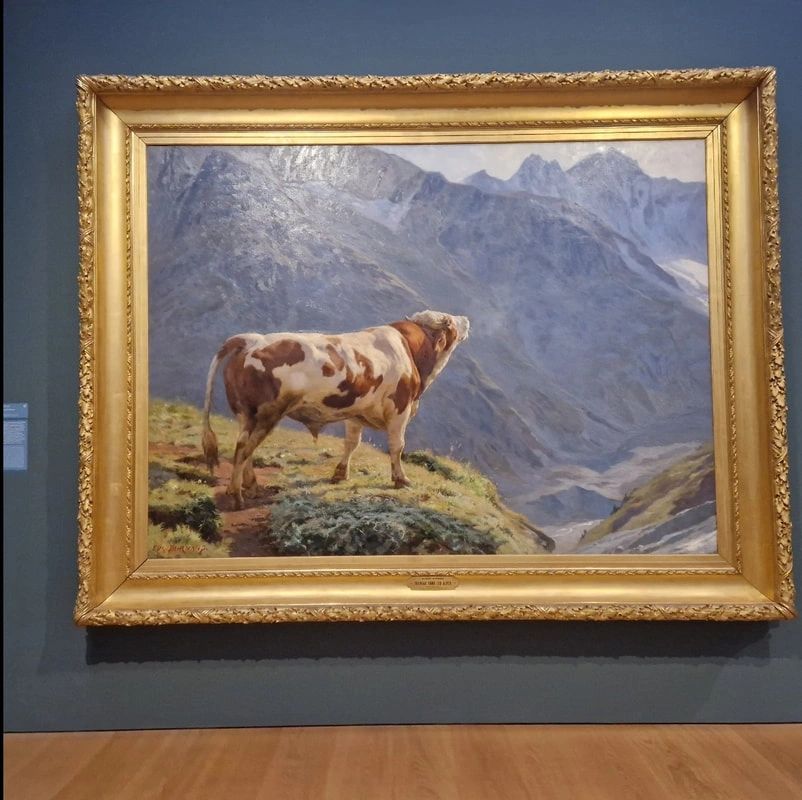
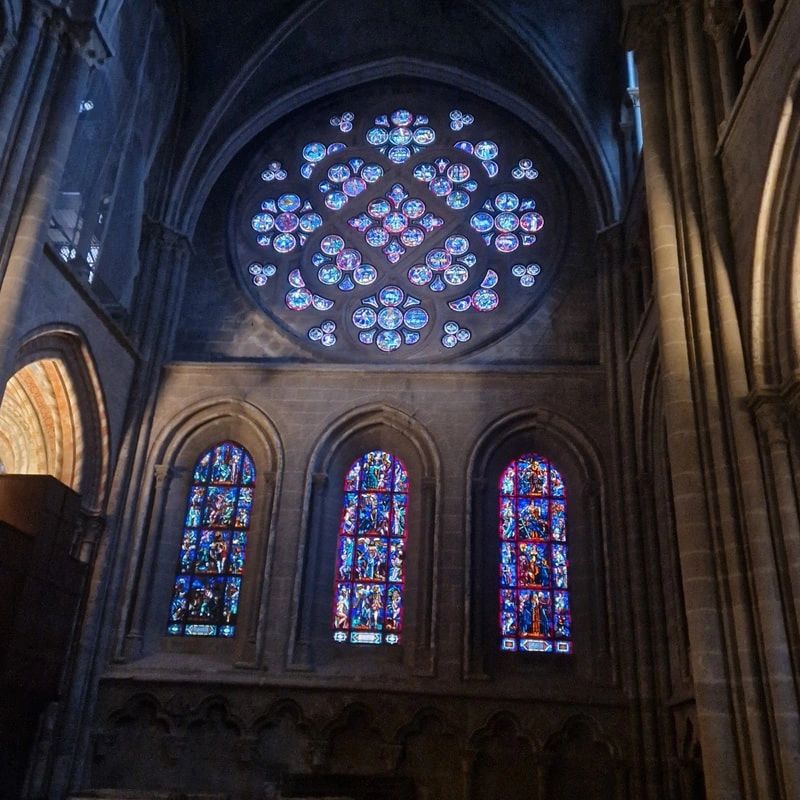
I had a fantastic day with my unofficial tour guide. We started at the Musée Cantonal des Beaux-Arts, which reminded me of the museum I visited in Lyon. This one was more manageable since it had less rooms, but that doesn’t detract from its quality. My favourite piece was a painting of a bull in the Swiss Alps, fittingly titled *Bull in the Alps*. Next, we headed to the ‘coastline’ of Lake Geneva, which offered breathtaking views. Living in Switzerland means enjoying the best of both worlds – the tranquility of a beach setting paired with stunning mountain scenery. Our next stop was the Palais de Rumine, home to Lausanne’s cantonal museum of natural sciences. I was already in awe of the building’s architecture, and the interior didn’t disappoint either. It featured several sections, including an archaeology exhibit and a massive library. Walking through it made me nostalgic for trips to Manchester Museum with my mum as a child – a piece of home away from home. As the sun set, we climbed a few flights of stairs to visit the cathedral. Though relatively small, it was absolutely stunning.
Bull in the Alps
The stained- glass from inside the cathedral
On our way to the Christmas markets, we stumbled upon a street performance featuring Christmas music, dancing elves, and even a polar bear! We paused to watch it for a few minutes. I’ve always shocked my friends by admitting I’ve never been very interested in Christmas – I used to think it was overrated, and that early celebrations made the actual day feel anticlimactic. As I stood there watching everyone dance and enjoy themselves though, my perspective shifted. I’ve never looked forward to Christmas as much as I do now, because it means returning home to be with my loved ones. I still think it encourages consumerism and overpriced tat, don’t get me wrong, but I now understand the appeal. For some, it’s about presents; for others, celebrating the birth of Christ. For me, it’s about family and togetherness. We eventually made it to the Christmas markets, where I treated myself to some cheesy chips – sometimes a vegetarian in Switzerland has to make do!
After a long but rewarding day in Lausanne, my friend mentioned that he and his friends were going to the Christmas markets in Montreux the next day and invited me to join. My initial instinct was to decline, because there would be a lot of people I didn’t know, and I’ve grown used to spending time alone in Switzerland. But I reminded myself that being on a year abroad is about stepping out of my comfort zone. A friend had also told me that Montreux’s Christmas markets were a must-see, so I had even more reason to go. When I learned they were meeting at 4:30pm, I hesitated. These days, I’m typically in bed by 9pm, but I realised that this was just an arbitrary rule I’d set for myself. After all, I used to work night shifts at a club until 5am, so it’s not like I’m incapable of staying up late (not that 4:30pm is even late anyway!). So, I agreed.
Everyone else must have had the same idea because the train was absolutely packed. One of my pet hates is when people put their bags on seats on crowded trains, and this journey was no exception. I finally found a seat, though I started feeling anxious during the ride. Once again, I reminded myself that I had nothing to lose. When I arrived, my friend and his group welcomed me warmly. My earlier anxieties faded, and I started to enjoy myself. As I said before, my friend is from Turkey, a country that doesn’t even celebrate Christmas, but it shows that anyone can get involved in the fun and the Christmas spirit. The market itself heightened my excitement for returning home, where I’ll be able to enjoy a traditional Christmas dinner with my favourite people (albeit with a Quorn roast for me!). I was also surprised to learn about the Freddie Mercury statue in Montreux, as well as a Queen museum that I unfortunately didn’t have time to visit. I had no idea that Freddie Mercury owned a house in Montreux – every day’s a school day!
I finally went to bed at the *extremely late* time of 11pm, which didn’t hurt my sleep schedule too much. This weekend taught me two valuable lessons. First, you miss 100% of the opportunities you don’t take. I was initially hesitant about both outings, but agreeing to them allowed me to explore new places and meet new people. I even received an invite to a raclette evening in Lausanne as a result – proof that these experiences can lead to further opportunities. Second, living abroad makes you appreciate the things you once took for granted at home. For me, that includes Christmas, but also the charm of messy nights out in Manchester, shops open seven days a week, and the simple joy of seeing friends who live minutes away. When I return to the UK, I’ll never take those things for granted again – that’s for sure.
One of my teachers from Lancaster advised me to keep myself busy with trips during my year abroad, which is why I booked a weekend in Bern. The week leading up to my trip had been hellish: I was tired, on edge, and stuck in my own head. I was looking forward to escaping my worries for a few days. To get excited, I researched the best things to do and see in Bern, but I hadn’t planned anything concrete and was mostly playing it by ear. I had arranged to stay with another Couchsurfing host, and having already done this in Lyon, I felt less nervous about it. My coach was delayed by an hour, which was a bit irritating, but Flixbus gave me 15% off my next journey, so it wasn’t all bad!
My host texted me to say that he had been in a bike accident and had to go to hospital, so he wouldn’t be there when I arrived. When I got to his place, I found it to be a pleasant little apartment, and I had the living room to myself. He had left some keys in the letterbox for me, but since he didn’t have his own set, I had to let myself in, retrieve the spare set from inside, then climb down four flights of stairs to return the original keys to the letterbox. What a faff! After that, I went to sleep on my ‘couch’ as it was already quite late.
The next morning, I finally met my host, stitches on knee. We had originally planned for him to show me around Bern, but he understandably couldn’t anymore. He was very friendly, and we joked about how British people don’t know how to make coffee after he invited me to help myself whilst I stared confused at his Moka pot. I tried to defend myself by explaining that I use an espresso machine at home, but I still felt I had let down my fellow Brits. Since he couldn’t accompany me, he showed me a map and explained how to get to the Alte Stadt (old town) from his apartment, assuring me that Bern is a small and easily navigable city. I set out for the day without a fixed plan, simply curious to see where it would take me.
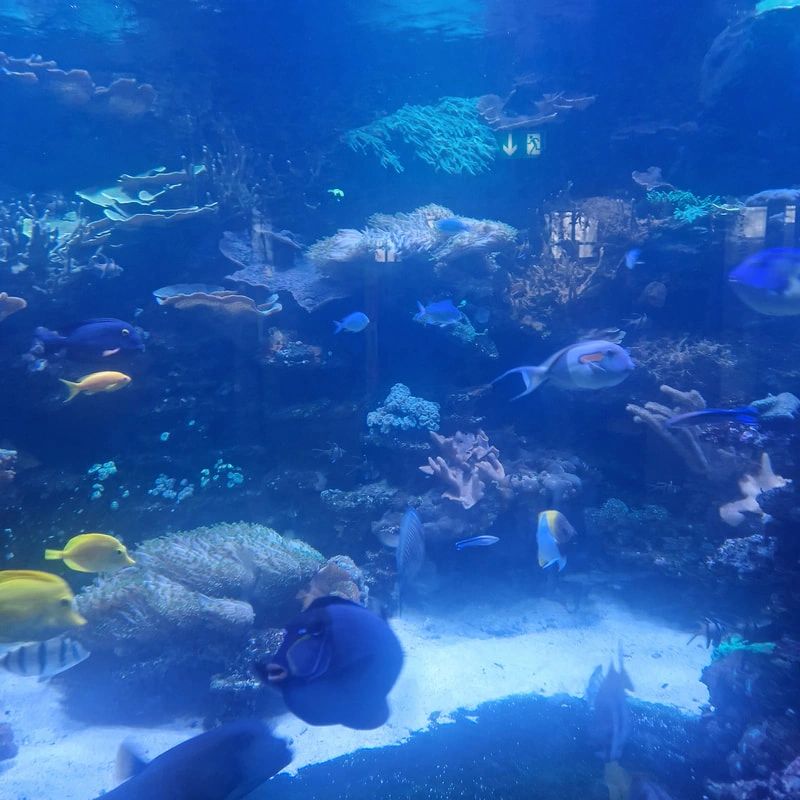
The first thing I noticed about Bern was how cold it was. Maybe I was just unlucky with the weather, but it felt much colder than Geneva. The second thing that struck me was how much more “Swiss” Bern felt compared to Geneva: the architecture, especially in the Old Town, seemed more stereotypically Swiss. I guess Geneva’s modernity and proximity to France are to blame for the difference. I decided to vist the Dählhölzli Zoo after seeing a sign for it and remembering it from the travel guides I’d read. For just 9 francs, I got to see puffins, moose, monkeys, and more. The highlight of the zoo was the aquarium, not just because it was away from the biting cold, but because the bright colours of the fish and coral were incredibly therapeutic.
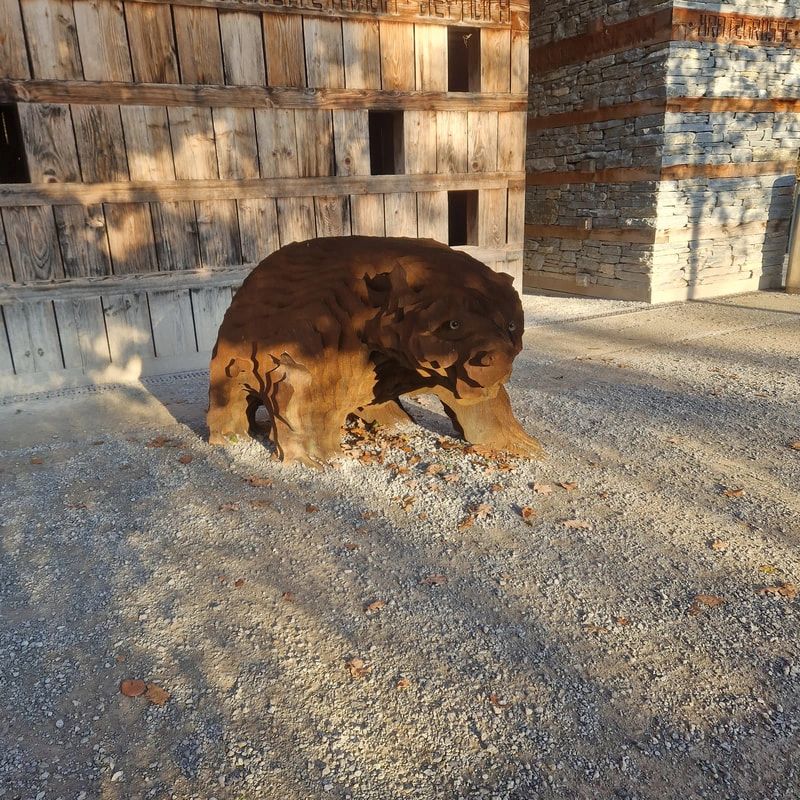
I was also eager to see Bern’s iconic bears. My host had warned me they might be hibernating, but I still tried my luck at the bear pit. Sadly, he was right, and the closest thing I got was a wooden bear carving nearby. As a consolation prize, I bought a sticker from a souvenir shop to add to my laptop’s growing collection. I realised I was close to the Rosengarten (rose garden), which I’d also heard was lovely. After a steep uphill walk, I arrived just after sunset, so I couldn’t see much, but I enjoyed sitting in the restaurant with a cup of rooibos tea, reflecting on the day in my notebook.
The only bear I managed to see
The next morning, I was still tired from walking 23,000 steps the previous day. I had forgotten that shops in Switzerland are closed on Sundays, which was annoying since I had skipped shopping on Saturday, thinking I’d have time later – silly me! Oh well, I decided to use the time to walk around and see anything I’d missed. Mindful of the fact my train home was at 5:30pm, I left my accommodation early to make the most of my last day.
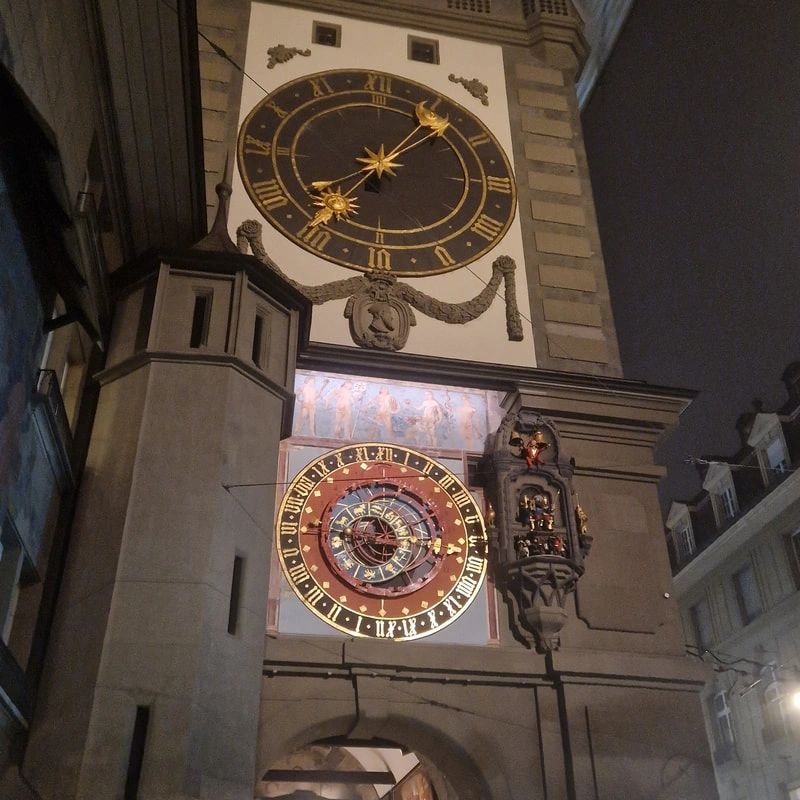
The night before, I had stumbled upon the Zytglogge (clock tower) in the dark, so I returned to see it properly. It’s a prime example of what I mean when I say that the Bernese architecture feels much more Swiss, and I’d highly recommend visiting it if you’re ever in Bern. Although I didn’t go inside to see the mechanics, the exterior alone is impressive. I later learned that it always shows the current zodiac sign, moon phase, time of sunrise and sunset, and the date – fascinating details I wish I’d known earlier!
The Zytglogge, with its quintessential Swiss architecture
While wandering through the Old Town, I came across a musical instrument museum. As a music enthusiast who has played the violin since I was seven, I couldn’t pass up the opportunity. It featured mostly woodwind and brass instruments, which wasn’t what I expected, but I wasn’t too disappointed, especially since the ticket was only 5 francs. I even saw some impressively long alphorns! Next, I visited another famous Bern landmark: Einstein’s house. I didn’t know much about him beyond his theory of relativity, so I learned a lot of interesting details (like the fact he married his cousin!). There was one quote that particularly stood out to me: “Particularly in stressful situations, music and playing the violin helped him to regain strength and inner peace.” I could definitely relate to that.
I made sure to leave early to collect my bags and catch my train on time. It was a shame I couldn’t stay longer, as Bern is a beautiful city with much more to explore. My host invited me to come back when it’s snowing and he’s not injured, and I told him I would if I could. The train ride back was a reminder of how expensive Switzerland can be: a bottle of Coke Zero cost me 5.40 CHF! Still, I felt refreshed from my trip, and even if my mind was still racing, I was proud to have travelled alone once again, as I had in Lyon. Next up: Milan, which I’m really looking forward to. I’ve never been to Italy, but I’ve always dreamed of going.
The past week (at the time of writing this) was my reading week in Geneva, meaning I had no classes. I had two options for spending the week: either fly home or take a trip to a nearby city. I considered going home, as a flight to Manchester was only about £80, but I thought that was the easy option – and once back, I wouldn’t want to leave again. I also didn’t want to miss the opportunity to travel while living in such a convenient city in the heart of Europe. So, I decided to book a coach to Lyon and see what the south of France had to offer. I planned to keep the trip as low budget as possible, as Swiss prices have been a real curveball for me! Someone had mentioned an app called Couchsurfing, where you can stay at people’s houses for free with just a £3 monthly subscription. It sounded a bit scary, but I tried it out and secured a stay with a couple who lived in Lyon.
I had a friend from Lancaster who was studying in Lyon, so I asked her if she was free to show me around. She greeted me as I got off the coach and showed me one of Lyon’s most beautiful sights: the Basilica. We had to wait what felt like hours to get on the metro because there had been a fire on one of the lines, but it was definitely worth the wait. I was in awe of its gothic architecture and stained-glass windows, as well as by the fact it was free to enter! There was an area behind the Basilica where you could see the entire city skyline, which was especially beautiful at sunset. We sat in the café and caught each other up on how our years abroad were treating us. She was heading to Bordeaux the next day to meet some of our other friends from Lancaster, so I would be on my own for the rest of the trip. She assured me that I’d be fine and reminded me I could always call her if I needed help.
It was then time for me to meet my Couchsurfing hosts. My friend had told me which bus stop I needed to get off at to reach their house, so I was sat nervously, making sure I didn’t miss it. I got there in one piece, and I could instantly tell I’d made the right choice by deciding to stay with these people. They welcomed me warmly and made me feel at home right away, even serving me a delicious meal. They were big fans of Japanese culture, as they had met in Japan, and everywhere I looked was memorabilia from anime, Nintendo – you name it. If it was Japanese, it was probably in their house! They even had some Moomin items which made me so happy that I showed them my Moomin tattoo. After a relaxing evening chatting and getting to know them, I headed to bed early since I had a big day ahead: I’d booked an appointment to get a tattoo in Lyon.
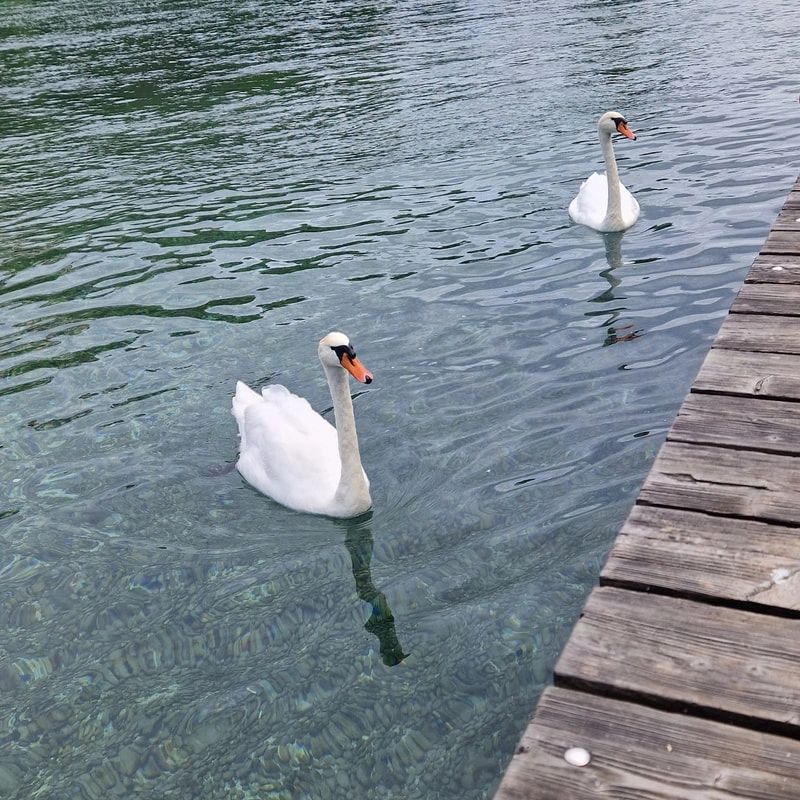
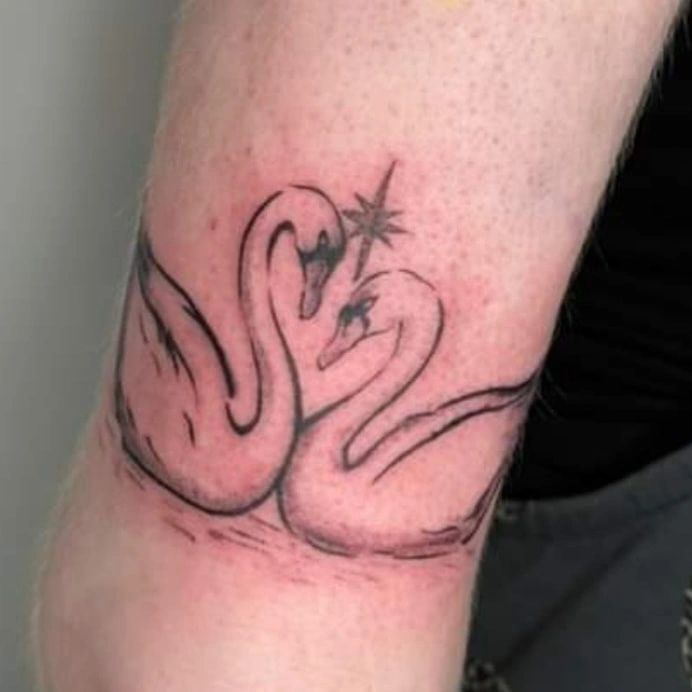
One of my first thoughts when I started my year abroad was that I wanted to get a tattoo to commemorate the experience, though I wasn’t sure what to get. During my first few weeks in Geneva, I kept noticing swans. They reminded me of when I lived by the canal in Lancaster and saw a mother swan with her cygnets every day in Spring. This made me curious about their symbolism, and I discovered they represent transformation, wisdom, and intuition – qualities that resonated with me. I know a lot of people don’t believe in signs, but every time I saw a swan after learning this, it brought me comfort that being abroad was meant to be a period of transformation for me. After I booked the tattoo appointment, it felt as though I saw them everywhere! I stayed in a hotel with my mum that had a huge swan mural, we were staying near a shopping centre called Les Cygnes (The Swans), and, of course, we saw swans in the lake near the Jet d’Eau.
Getting a tattoo in a foreign country is a little daunting, especially when you’re not completely fluent in the language. I didn’t have anything to worry about, though, because the artist was lovely and clearly very skilled. Out of the eleven tattoos I’ve had, this one was the most painful due to having both lines and shading, but I’m over the moon with it. It makes me happy every time I look at it, because it serves as a reminder that I have all the wisdom I need to get through this year and any hardships that come my way.
The finished result – it looks far less red now!
On the third day of my stay, I booked a river cruise on the Saone. I didn’t know how to get to the dock, so my hosts kindly offered to show me the way. Along the way, they took me to what they called the best spot for boba tea in Lyon. It was the only place I tried, so I’ll have to take their word for it – but it was exactly what I needed. I enjoyed the cruise, which allowed me to see many of Lyon’s wonders without walking the entire city – people who live here must stay fit with all the steps and cobbled streets! This trip prompted me to start a “commonplace book”, a notebook I now carry everywhere to jot down anything that comes to mind or that I want to remember. I scribbled down a lot of facts during the cruise to remember what the guide shared. I won’t bore you with them all here; you might not want to visit if I give everything away!
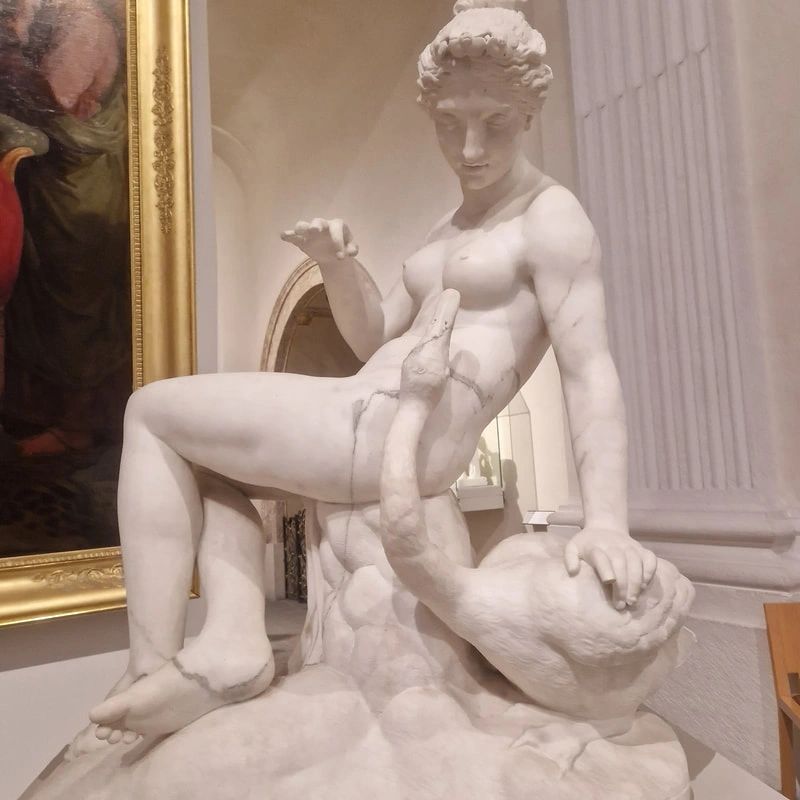
I decided I needed to do something cultural during my stay, so I went to the Musée Cinéma et Miniature, which wasn’t very far from where I’d gotten off the boat. To be honest, it wouldn’t have been my first choice, but it was unexpectedly fascinating. It had a room dedicated to one of my favourite films, Beetlejuice, and I jotted down some facts in my book. On my last day, I extended my cultural knowledge even further by visiting the Musée des Beaux-Arts, which was only 4 euros. I spent hours there, admiring the incredible paintings and sculptures, and I don’t think I even got to see every room. I was especially interested in the sculptures based on Greek mythology, which inspired me to start listening to a podcast on the subject. It’s an area I’ve always been interested in but never really explored in depth.
Even more swan imagery showing up in the museum
On my final day, I was anxious about missing my coach, though it ended up being late. I didn’t get back home until about 11pm, so I had an amazing sleep that night. For my first solo trip, Lyon was overwhelmingly positive. I’m glad I decided against going back to the UK and instead stepped out of my comfort zone to experience something new. I’m already trying to book my next solo trip before going back home for Christmas, and I’m hoping my next hosts are as great as the ones I stayed with in Lyon.
Traduction française :
Mon premier voyage seule, à Lyon
La semaine dernière (à l’époque de l’écrire), c’était ma semaine de lecture à Genève, c’est-à-dire que je n’avais pas de cours. Deux options s’offraient à moi : rentrer dans mon pays natal ou partir en voyage dans une ville proche. J’ai envisagé de rentrer chez moi, car un vol pour Manchester ne coutait que 80£, mais j’ai pensé que c’était le choix le plus facile – et une fois là-bas, je n’aurais probablement pas envie de repartir. De plus, je ne voulais pas manquer l’occasion de voyager, habitant dans une ville pratique, au cœur de l’Europe. J’ai donc décidé de réserver un trajet en autocar pour Lyon et de découvrir ce que le sud de la France avait à offrir. J’avais l’intention de rendre ce voyage aussi abordable que possible, car les prix suisses ont été un vrai choc pour moi ! Quelqu’un m’a parlée d’une application qui s’appelle Couchsurfing, où l’on peut loger gratuitement chez des gens, moyennant un abonnement mensuel de 3£. Cela me paraissait un peu effrayant, mais j’ai essayé et j’ai trouvé un hébergement chez un couple vivant à Lyon.
J’avais une amie de Lancaster qui étudiait à Lyon, alors je lui ai demandé si elle était libre pour me faire visiter. Elle m’a accueillie lorsque je suis descendue de l’autocar et elle m’a montrée l’un des plus beaux monuments de Lyon : la Basilique. On devait attendre ce qui semblait être des heures pour prendre le métro parce qu’il y avait un incendie sur l’une des lignes, mais cela valait absolument la peine d’attendre. J’étais émerveillée par l’architecture gothique et les vitraux, ainsi que par le fait que c’était gratuit ! À l’arrière de la Basilique, il y avait un endroit d’où l’on pouvait voir toute la silhouette de la ville, qui était particulièrement jolie au crépuscule. On s’est assises dans le café et on a échangé des nouvelles sur la façon dont se passait notre année à l’étranger. Elle partait pour Bordeaux le lendemain pour retrouve d’autres de nos autres amis de Lancaster, donc je serais seule pour le reste de mon voyage. Elle m’a assurée que je me débrouillerais bien et m’a rappelée que je pouvais toujours l’appeler si j’avais besoin d’aide.
Ensuite, il était temps pour moi de rencontrer mes hôtes de Couchsurfing. Mon amie m’avait indiquée l’arrêt de bus où je devais descendre pour rejoindre leur maison. Je m’y suis assise avec une certaine inquiétude, vérifiant que je ne manquais pas le bus. Je suis arrivée en un seul morceau, et j’ai su instantanément que j’avais pris la bonne décision en choisissant de rester avec ces gens. Ils m’ont accueillie chaleureusement et m’ont mise à l’aise. Ils étaient de grands passionnés de la culture japonaise, car ils s’étaient rencontrés au Japon, et partout où je regardais, il y avait des souvenirs d’animés, de Nintendo, et bien plus encore. Si c’était japonais, il y avait de fortes chances que ce soit chez eux ! Ils avaient même des objets des Moumines, ce qui m’a rendue si heureuse que je leur ai montré mon tatouage des Moumines. Après une soirée relaxante à bavarder et à faire connaissance, je me suis couchée tôt, car j’avais une grande journée devant moi : j’avais réservé un rendez-vous pour un tatouage à Lyon.
L’une de mes premières idées en commençant mon année à l’étranger était de me faire tatouer pour commémorer cette expérience, mais je ne savais pas quoi choisir. Pendant mes premières semaines à Genève, je remarquais souvent des cygnes. Ils me rappelaient le canal près de chez moi à Lancaster, où je voyais chaque jour, au printemps une mère cygne avec ses petits. Cela m’a rendue curieuse à propos de leur symbolisme, et j’ai découvert qu’ils représentent la transformation, la sagesse, et l’intuition – des qualités qui me parlent. Je sais que beaucoup de gens ne croient pas aux symboles, mais chaque fois que j’ai vu un cygne après avoir appris ça, je fus confortée dans l’idée que cette année à l’étranger devait être une période de transformation pour moi. Après avoir réservé le rendez-vous pour le tatouage, c’était comme si je les voyais partout ! Je suis restée dans un hôtel avec ma mère, où il y avait une énorme fresque d’un cygne, on restait près d’un centre commercial appelé Les Cygnes, et bien sûr, on a vu des cygnes sur le lac près du Jet d’Eau.
Se faire tatouer dans un pays étranger est un peu intimidant, surtout on ne parle pas parfaitement la langue. Cependant, je n’avais rien à craindre parce que l’artiste était sympathique et clairement très qualifié. Sur mes onze tatouages, celui-ci a été le plus douloureux en raison des lignes et de l’ombrage, mais j’en suis ravie. Il me rend heureuse chaque fois que je le regarde, car il me rappelle que j’ai toute la sagesse nécessaire pour traverser cette année et surmonter les difficultés à venir.
Le troisième jour de mon séjour, j’ai réservé une croisière fluviale sur la Saône. Je ne savais pas comment arriver au quai, alors mes hôtes m’ont gentiment proposée de me montrer le chemin. En chemin, ils m’ont emmenée dans ce qu’ils considéraient être le meilleur bubble tea de Lyon. C’est le seul que j’ai essayé, donc je les crois sur parole – mais c’était exactement ce qu’il me fallait. J’ai apprécié la croisière, qui m’a permise de voir beaucoup des merveilles de Lyon sans avoir à parcourir toute la ville à pied – les gens d’ici doivent rester en forme avec tous les escaliers et les rues pavées ! Ce voyage m’a poussée à commencer un « journal de bord », un carnet que je garde maintenant sur moi partout pour noter tout ce qui me vient à l’esprit ou ce dont je veux me rappeler. J’ai beaucoup griffonné pendant la croisière pour retenir ce que le guide partageait. Je ne vais pas vous ennuyer avec tous des faits ici : vous n’aurez peut-être pas envie de visiter Lyon si je révèle tout !
J’ai décidé que je devais faire quelque chose de culturel pendant mon séjour, alors je suis allée au Musée Cinéma et Miniature, qui n’était pas très loin d’où j’étais descendue du bateau. Pour être honnête, ce n’était pas mon premier choix, mais contre toute attente, c’était fascinant. Il y avait une salle consacrée à l’un de mes films préférés, Beetlejuice, et j’ai reporté des faits dans mon carnet. Le dernier jour, j’ai enrichi mes connaissances culturelles encore plus loin en visitant le Musée des Beaux-Arts, qui coutait seulement 4 euros. J’y ai passé des heures, en admirant les peintures et les sculptures incroyables et je ne pense même pas avoir vu toutes les salles. J’étais particulièrement fascinée par les sculptures inspirées de la mythologie grecque, qui m’ont inspirée à commencer à écouter un podcast sur le sujet. C’est une discipline qui m’a toujours intéressée, mais que je n’ai jamais explorée en profondeur.
Le jour de mon départ, j’étais nerveuse à l’idée de manquer mon autocar, même s’il a fini par être en retard. Je ne suis rentrée chez moi qu’à 23h, alors j’ai très bien dormi cette nuit-là. Pour mon premier voyage seule, Lyon a été une expérience extrêmement positive. Je suis contente d’avoir choisi de ne pas rentrer au Royaume-Uni et d’être sortie de ma zone de confort pour découvrir quelque chose de nouveau. J’essaie déjà de planifier mon prochain voyage seule avant de rentrer chez moi pour Noël, et j’espère que mes prochains hôtes seront aussi formidables que ceux avec qui j’ai séjourné à Lyon.