
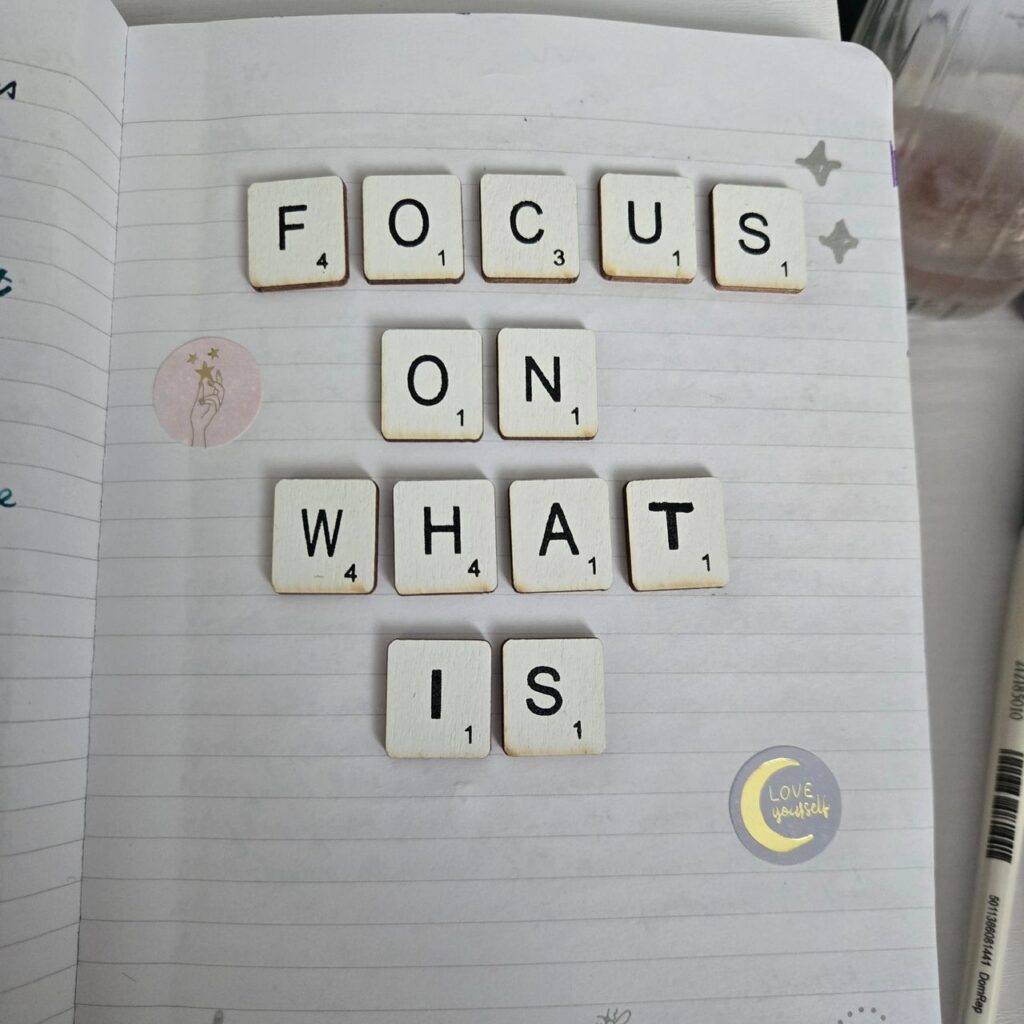
Five years ago today was a turning point in my life, though I wasn’t aware at the time. 16-year-old me was dabbling in spirituality and witchcraft, and I’d heard about the miraculous benefits of journaling. These benefits weren’t limited to magical ones; it’s a simple way to offload thoughts and manage stress. As someone who had gone through several bouts of diary writing before giving up, I wanted to give it a go.
This was my first ever entry from the 15th March 2021:
“I’m not really thinking about much right now. I was angry at myself earlier on for not speaking to [boy I liked at the time] at college today but there’s always tomorrow. I will speak to him tomorrow because there’s not really any disadvantages to doing so. Maybe I’ll speak too much and regret something I say but [friend from college] will be there to help defuse the situation. Even if he doesn’t like me, then I know it’s his loss because my worth is not defined by the attention I receive from boys. I can lead a fulfilling life without them. I’m really thankful for the high levels of self-confidence I’ve had today and for the past few days/weeks. I hope I always remember that life is too short to hate the way I look. Any person who’s a good friend will love you all the same no matter how you look. I’m also thankful for the fact that I did my German homework today without putting it off (too much). Thank you, past self.”
I don’t remember my exact sentiment at the time of writing, but I feel as though I was writing what I thought I should be writing. The reason I say this, is because I don’t think that it reflects my general memories of being at college (which I wrote about in my Valentine’s Day post). Even when I’m writing in my journal now, I get this feeling on occasion: where I have the awareness to understand that a situation is less bad than my anxiety thinks, but my brain still doesn’t believe the optimistic things I’m writing, making it feel inauthentic. These sorts of situations have taught me that journaling is a skill where you gain strength over time when you surrender to the fear of judgement.
One of the other obstacles I’ve encountered while journaling (though it isn’t strictly bad because it’s all part of the experience), is realising that I’m writing about the same problems and not wanting it to be repetitive. The biggest hindrance, which applies to both this and the previous point, is I sometimes treat journaling as if I’ve got an audience. When I realise that the only audience is future me, I do still worry about what she’s going to think since I sometimes cringe at my old entries. I’ve taken a more optimistic stance about it now, where I use those entries as proof of my growth and development. As well, recognising patterns in your thinking is the key to making positive change with journaling. This means that if I notice that I’m having a recurring problem, I’ll step back and think about what I can do to change it. If I can’t do anything about it, I try to simply let it be.

That’s enough of the ‘negatives’; I want to talk about all the great parts too. As I said, I love journaling to document my life because I can reminisce on happy times and witness how I’ve changed. I find it especially valuable to read my entries from Geneva because I sometimes forget just how different things are now. If I’m having a bad day, I might tell myself that I’m ‘just as bad as when I was in Geneva’, but reading those entries proves otherwise. I’m not ready to share them here, but all I can say is I’ve put in a lot of mental work to combat how horrible I felt, and I’m proud to say I’ve improved massively.
The world of journaling also introduced me to another interest of mine: stationery and pens. It’s made me very picky about the type of notebook that makes the perfect journal, and any that doesn’t meet this standard makes journaling far less enjoyable. In my humble opinion, the perfect journaling notebook should be hardback, it can’t be spiral bound, there has to be quite a lot of lines but they can’t be too close together, and the paper has to be decently thick. That last piece of criteria is because I also love fountain pens, where the ink will feather on flimsy paper. All of this to say, that personalising the experience will make you excited to do it regularly.
My journal unearths a lot of gems that I may have forgotten about, which can be quite funny. For example, in my 2nd year of uni, I was writing about all the stress that was accompanying my year abroad and I wrote something like, “Bottom line is, I’m going to get through this bastard degree even if it kills me.” I really need to find the quote to contextualise my graduation post. Another one that I’m really glad that I documented, is the day I first met Lewis in Currys. I wrote something along the lines of, “This really good looking guy served me in Currys but I don’t know whether he was flirting or just being nice.” Hindsight showed that the former was true. It’s so beautiful to have a record of your thoughts because you can look back at how you felt before an event and see whether you were right. For example, I’ve recently been writing about my expectations for my Master’s, which will be especially interesting to read back in the midst of next year.
It goes without saying that I’ve grown a lot from doing this for five years and I’d highly recommend it to anyone. Even if you don’t feel you have the time, write just one sentence a day. I know people who do this and it obviously isn’t quite the same, but it’s a start. I have admittedly had some dry patches in the time I’ve kept a journal, which is normal because life gets in the way sometimes. But don’t let that be an excuse not to bother; having excerpts from some parts of your life is better than none at all. They’ll be even more curious to read in decades to come.
Leave a Reply