Along with reading, languages, and everything else, another passion of mine is feminism. It formed the basis of my dissertation, which explores women’s treatment by avant-garde French philosophy, though it extends far beyond my academic interests: it influences my relationships and the way I move through the world. Because of this, I wanted to write a piece about why I remain a feminist in 2026.
What feminism actually is
I’ve had countless conversations where it’s been assumed that feminists are just man-hating lesbians, which is far from true. I guess this assumption comes from our patriarchal society believing that any push for equality is threatening. On the contrary, many feminists maintain that the patriarchy negatively affects men too, such as through its ignorance of male mental health, which we want to dismantle. In fact, Britannica says that feminism is “the belief in social, economic, and political equality (not superiority) of the sexes”.
How my upbringing played a part
As the only daughter of a Turkish dad, I often witnessed the difference in his treatment of me versus my brother. He’s always been very protective of me but never my brother. Even as a child, I understood that it was because I’m a girl. I see it from a cultural point of view, though he no longer lives in a country with such gender disparity…
Secondary school reinforced this belief in ways I couldn’t articulate at the time. Nobody was ever romantically interested in me, which made me sad until I realised that A. the likelihood of marrying your childhood sweetheart is very slim, and B. the majority of boys in my year were horrible. The latter point became clear when I’d overhear boys bragging about who they’d ‘pulled’ at parties and who the ‘fittest girl in the year’ was. Even as an inexperienced adolescent, I found these conversations disgusting.
Going to college sharpened my awareness. This may sound contradictory if you’ve read my Valentine’s Day post, but I was known as a bit of a ‘man-hater’. I was aware of the cognitive dissonance — I hated men while fantasising that they’d like me — but I’ve since learnt that the patriarchy enforces these dissonances. For example, everyone knows that women can live perfectly fulfilled lives without a partner, yet singles are often on the hunt for one. This arises from the constant stigmatisation of singlehood, where we’re led to believe that unmarried women become crazy cat ladies.
University was the first time I experienced feminism as community instead of mere theory. I was intrigued by Lancaster’s Feminist Society when I first started. However, I was also anxious about going to my first session as I feared they’d think I was a ‘fake feminist’ for wearing makeup. When I arrived, I saw that everyone was extremely welcoming and nobody was judged for such superficial things. I understand now that, had my fear been true, it would have shown that they aren’t supportive feminists anyway.
The bigger picture
Makeup can be a bit of a double-edged sword in feminist debates due to the patriarchal expectation that women need to wear it or else they’re ‘not making an effort’. This is upheld by society’s objectification of women, where we’re treated as things to be admired instead of complex individuals. Building on this, is the normalisation of weight-loss drugs and cosmetic surgery, both of which carry serious health risks that are often downplayed. This feeds us the idea that who we are is irrelevant if we don’t look the part.
When I first understood that fact, it made me feel guilty for wearing makeup. I thought I was a ‘bad feminist’ for wearing something designed to force women into rigid beauty standards. I recently read a book called The Beauty Myth (which I’d highly recommend), where the author discusses that wanting to look pretty isn’t wrong, but the problem lies in our lack of choice. I’ve concluded that my relationship with makeup is healthy as I don’t feel incapable of leaving the house without it. I still approach it with self-awareness, though, questioning whether I’m wearing it to hide ‘flaws’ or because I enjoy it.
The book also discusses the political weaponisation of these beauty standards that ensure the constant dissatisfaction of women. For example, the extremely skinny women we see in the media are deliberately placed to send us messages that “this is how a woman should look”, making us feel insecure about our own appearance. Ultimately, this leads to women who are so preoccupied with ‘improving themselves’ that they don’t even notice the systemic issue and speak out against it. This also benefits the economy as women will spend money on trying to ‘fix’ their problems. If women understood that they don’t need to waste money on chasing these mythical beauty standards, the cosmetics industry, to name just one, would collapse. This means that, in brief, it is not in capitalism’s interest to allow us satisfaction with our appearance.
I get so angry when I hear people say that “feminism has already been achieved”. It’s an ignorant point of view that disregards the non-Western world, where some girls are denied education and some women still can’t vote. Even at our own front door, we see that, although we’re ‘equal’ on the surface, there are countless factors that make our life more difficult. Feminism, in my opinion, is about freedom: the freedom to exist as a woman without being reduced to our appearance and desirability. The fact that so many women are still unable to do this, is exactly why I remain a feminist.
I feel that I haven’t mentioned it a lot on here recently, but languages are a huge interest of mine. Although a natural monolingual, having a Turkish dad means I was subtly exposed to an unknown language that perplexed me as a child. Nowadays, languages make up a large chunk of my daily projects in my French degree that I hope will carry over into my future career. This fails to mention the fact that everyone’s brains, even monolinguals’, use language!
Since coming to uni, and especially in the past year, I’ve observed how my relationship with languages has changed. In short, I was once fascinated by the idea of learning as many languages as possible, but I’ve now accepted that this may not be realistic or necessarily beneficial. I’ve also started to embrace the cultural side of languages, which I never prioritised at the start. This post will take you through a timeline of my life, marked by my particular relationship with languages at that point.
Growing up
For some context, my dad went to an English-speaking school in Turkey and has lived in the UK since 1996, so his English is very good. When my mum first met my dad, she briefly lived in Marmaris but didn’t pick up the language since it’s such a touristy area. Even now, we can both say a few words but not much beyond this.
As a child, I used to ask my dad questions like, “Do you think in English or Turkish?”, because I couldn’t fathom knowing another language besides English. I used to love telling people that I was Turkish despite not knowing a word of the language. My mum tells me now that his long work days meant he had no time to teach me, but I disagree with this. I’ve read stories of parents who exclusively speak their mother tongue with their child, resulting in bilingualism, so it may have worked if my parents had thought of such a system.
My dad once took my brother and I to a Turkish school in Manchester in an effort for us to learn the language. My only memory is copying down pages of Turkish, understanding nothing, and leaving even more confused. I don’t think this is the best way of language exposure for children.
We also went through a few stints of my dad being my Turkish teacher. It would go something like this:
Me: How do you say ‘My name is Ela’ in Turkish?
Baba: Benim adım Ela.
Me: Okay, but how? How do you get to that?
Baba: What do you mean?
Me: Well, how would I say, ‘My brother’s name is Derin’?
Baba: Kardeşimin adı Derin.
Me: Yeah, so I understand that adı probably means name, but why does it have an m at the end when I say my name but not his name?
Baba: It just does. When you say something about yourself, you add m or ım but not for other people.
Me: Okay. So how do I say, ‘your name is Mehmet’?
Baba: Adınız Mehmet
Me: Why does that have z at the end? And why is it only two words?
Baba: That’s just how you say something to someone.
I would then get too frustrated and give up. He was never good at explanations and he’d become equally frustrated with me for lacking the instinctive knowledge. This marked the temporary end of my language learning journey.
Primary school
Spanish was one of my favourite subjects at primary school. We mainly learnt the basics like numbers and days of the week, which little me enjoyed. In year 6, we were assigned pen pals over in Spain, where everyone in the class gave me the letters to translate. I wasn’t fluent by any means, but I could understand more than anyone else in the class. However, I’d say that my skill was overlooked because I was generally bright at school. Music was my real favourite subject, so this received the most attention.
Secondary school
In year 7, I had to study both French and German. German was my new favourite subject and I always achieved high marks in tests. As for French, I was naturally good but I didn’t particularly like it. I was the student that all the smart kids hated; I was fairly apathetic about my studies, did all my homework the night before, yet my grades were good. Part of me hated this too because it’s given me a bit of ‘imposter syndrome’ over the years (i.e. where I feel undeserving of where I am because I didn’t ‘work for it’).
The joys of going to a grammar school meant I had to pick up Latin in year 8. I absolutely hated it, in part because I wasn’t a fan of the teacher. When I look back, I think that Latin is valuable for linguists as it teaches them the structure and origins of languages, which is especially useful for Romance languages. With this being said, I’d rather learn a modern language than a dead one.
We soon had to pick our options for year 9: three languages out of French, German, Spanish and Latin. For some inexplicable reason, I chose the same three that I’d done in year 8. At the start of year 9, I was speaking to a friend in the year above who warned me not to continue Latin and she came with me to change my options. We haven’t spoken for years, but I’m forever grateful for her encouragement.
Remember when I said I didn’t particularly like French? That all changed in year 9 when I had a new French teacher. He made me enjoy French through the interesting stories he’d tell us about his life in France. French overtook German as my favourite subject to the extent that I’d practise French verbs every night. As someone who was lazy when it came to school, it was a shock that I’d found a passion for my studies because of one teacher.
This made me excited not only for my French classes, but also for my other language classes. I realised how much I enjoyed them and I believed I’d found my calling. However, this made my GCSE options quite difficult; I had six options, two of which had to be sciences. I could have theoretically chosen three languages, but this would have meant I’d only have one other option that was neither language nor science.
I had a meeting with my head-of-year, where I argued that I was clearly cut out for languages and I wasn’t planning to pursue a career in sciences anyway, so it’d be pointless for me to do two sciences. Thankfully, she agreed to let me study just one, so my GCSE options were as follows: French, German, Spanish, Chemistry, History and Music.
Languages continued to be my favourite subjects in years 10 and 11. Deciding my A-Level options was even more difficult than at GCSE. I wanted to continue learning three languages, but I’d been warned by people studying one that doing even a single language at A-Level is a lot of work. I wasn’t really passionate about anything else and I didn’t know which ones I’d choose if I had to narrow it down…
College
I took the plunge and continued with all three. Because of my high GCSE results, my college also wanted me to choose a fourth subject. I chose Law as my affinity for arguing led people to think I’d make it a good solicitor. This gave me a backup if I found that studying three languages was too much. Funnily enough, Law was the one I dropped after the first few weeks.
Frankly, I loved college and it was one of my favourite times of life; I was studying exactly what I wanted at a great college, surrounded by a lovely group of friends. Many people thought I was insane for my A-Level options but I didn’t regret my choice. Of course it was hard at certain points, but no more than if I’d chosen anything else. I’d also rather be stressed about something I care about because it’d give me the motivation to power through.
I had to make decisions once again, this time with university. Many unis in the UK allow the study of three languages, but I started to question whether this would be useful. I thought that I’d rather dedicate my time to learning two, as it’d allow me to really master them, over spreading myself thin through learning three. I chose French and German, not because I don’t like Spanish, but because it was my least favourite of the three. German was really my first love from starting secondary school, and French was my second.
University: years one and two
Studying languages at university was nothing like how I expected. In my first year, I had one hour per week of speaking, writing and grammar for each language, as well as a context lecture in English. Considering I had 3 90-minute and one 45-minute class for each language at college, I was expecting uni to be far more intense. I was also baffled that the cultural classes were in English; I envisaged myself doing everything in foreign languages at uni.
I really started to resent the context/culture classes because I believed I’d come to uni to learn languages, yet I was being taught in English! We learnt about the French Revolution and German films, leading me to question, “Why do I have to learn History/Film Studies in a language degree?” People often stress the importance of learning a country’s culture when learning its language, but 18-year-old me found it futile. However, I couldn’t do anything about it, so I begrudgingly got on with it.
Although I still don’t regret my A-Level choices, there was one problem with them that became very apparent when I started uni; I was completely clueless when it came to academic practice. What I mean is I had no idea how to write an essay, find sources, reference, so on and so forth, because I never had to at college. I somehow managed to get a B in my first essay, despite it being the most cringeworthy writing I’ve ever produced.
My attitude towards culture subtly started to shift in second year. We learnt about Sigmund Freud in German context, whom I find fascinating as a feminist. No matter what subject you study, there’s a good chance you’ve come across Freud in some way, and his outdated views on women made me angry. Angry in a productive sense, because it shone a light on my academic passions.
At the end of second year, I had to choose whether I wanted to write a dissertation in my final year. One of the reasons I chose to do a dissertation, was because the alternative was taking two more cultural modules, which would probably result in a similar amount of work anyway. The dissertation also had the advantage that you can choose your exact topic, so I was bound to find it more engaging.
I told the staff that I wanted to base my dissertation on something related to Freud and gender theory. They declined Freud as there was nobody in the department with the expertise, but one of my German teachers suggested some radical feminist writing inspired by Freudian concepts. I came across Elfriede Jelinek, an Austrian author, who fit the bill. Her most famous book is called The Piano Teacher, which I’d recommend only if you’re interested in weird literature!
Something I didn’t mention earlier, was that I also justified studying two languages at uni by saying “I’ll continue to learn Spanish in my own time”, which did not happen. During the Summer after second year, though, I was hit with a sudden burst of motivation to pick it up again, as well as to regularly practise my other two. This only lasted a few months, admittedly, but it taught me that the Spanish is still in my brain — it just needs reactivating.
Year abroad
I thought that Geneva would be the perfect place for the first half of my year abroad since it’s not only the home of the UN, but it’s also in a country where both of my degree languages are spoken. If you’ve read any of my other posts, you’ll know that I regretted this decision as it was the worst time of my life. On the bright side, studying in the Faculty of Translation and Interpreting taught me a lot about the French language, and living in a foreign country allowed me to absorb the local culture. I took two German modules that I quickly dropped since they were far beyond my level.
Since I was then only studying French modules, I was anxious about my level of German. I was supposed to be spending the following term in Austria and my German had become very rusty. In the first two years of my degree, I was also beginning to find advanced German much harder than French, so I was worried that I’d be unable to get by. In a way, I resolved the issue by not completing my year abroad, but this also came with its own problems.
My uni told me that I’d only be allowed to continue with French as I didn’t go to a German-speaking place on my year abroad. I was very disappointed by this because, as I said, German was my first love. Although I found it difficult the longer I learnt it, I joked that it was Stockholm Syndrome and I still adored it. It also meant I had to find a new topic for my dissertation.
I eventually came to terms with the decision. I sometimes found myself overwhelmed at balancing the two because I’d feel unable to study French without dedicating the same time to German, so at least I didn’t need to worry about that anymore. I also knew that many unis accept Master’s students in languages they didn’t study at undergrad, so the door wasn’t necessarily closed on German.
I found a new topic for my dissertation: a French author called Virginie Despentes, who equally writes radical feminist literature. On top of my dissertation, I also had to choose four cultural modules to make up the lost credits from German. I was worried about how much work this would entail, but I reasoned that it’s easier to get a good mark on a well-researched piece of coursework than a German exam since language proficiency requires consistent effort throughout the year. Despite my worries, I knew I had to embrace the reality of final year.
University: final year (now)
I’m still annoyed that I was made to drop German because I don’t think it was my fault that I couldn’t complete my year abroad. However, it may have been a blessing in disguise; the stress of coursework deadlines is less severe than the stress of constantly maintaining two languages. It’s also worked out perfectly because I’ve been accepted for a Master’s in Audiovisual Translation & Localisation with both French and German! My German is still rusty, but I’m going to practise it over Summer to ensure a decent level. What’s more, is that there won’t be any speaking exams on my course, which was my weakest skill in German. Maybe everything does happen for a reason.
My dissertation topic ended up branching out a lot from just Virginie Despentes: it became an exploration of her and Catherine Millet (another French writer) through the lens of Georges Bataille (a French philosopher). It made me fall in love with research and question why I hated learning these things so much in first year! I’ve heard so many stories about the horrors of dissertation writing but I genuinely loved it. My supervisor is trying to persuade me to do a PhD as he can tell I’m a good writer, but I’ll do my Master’s before deciding that.
That brings me to where I am now. This year is my first year of uni where I’ve enjoyed the culture more than the language side of my degree, which has made me less interested in the languages themselves. When I first became a language lover, I’d fantasise about becoming a polyglot and impressing people by knowing ten languages, but I don’t know if I want that anymore. I feel conflicted because I’m not not interested in learning them, but I’m currently more fascinated by research and writing within a multicultural context.
If I could live more than one life, I’d definitely learn more languages. Part of me wants to pick up Spanish again as it’s fairly similar to French anyway, but I need to prioritise German this Summer. If I was to learn a new language, it would be Dutch because I think it sounds cool and it’s very close to German, but it’s all a matter of balancing that alongside my other commitments. I’m also semi-regularly pressured by my dad to learn Turkish, which actually discourages me from wanting to, and it’s a very difficult language for English speakers.
I’ve accepted that my relationship with languages strengthens and weakens, grows and fades, and generally evolves, over time, but they’ll always be important in my life. Even the most avid polyglots don’t practise every language every day, and they may even take hiatuses from practising certain languages. Maybe this will be me in the future, but it’s hard to tell when my academic life revolves around them. Check back with me in five years — maybe I’ll have four languages on the backburner while trying to learn another!
In the midst of my time at home last year, I read a book called Buy Yourself the Damn Flowers by Tam Kaur. She introduced me to the notion of ‘dating yourself’, which strengthens self-worth as you learn about your standards and how to enjoy your own company. She recommends it to anyone, whether single or in a relationship, and it brings all sorts of benefits. There are many layers to dating yourself, from going on ‘solo dates’, which I’ve always done, to giving yourself presents.
Kaur mentions another benefit: you get to understand your love language and how you function best in relationships. Maybe you haven’t heard of this before, but the five love languages are acts of service, words of affirmation, gift-giving, quality time and physical touch. It’s essentially how we feel loved in relationships, and it varies from person to person. It can contribute to relationship incompatibilty, as someone may (for example) express love by giving gifts when their partner feels loved through quality time.
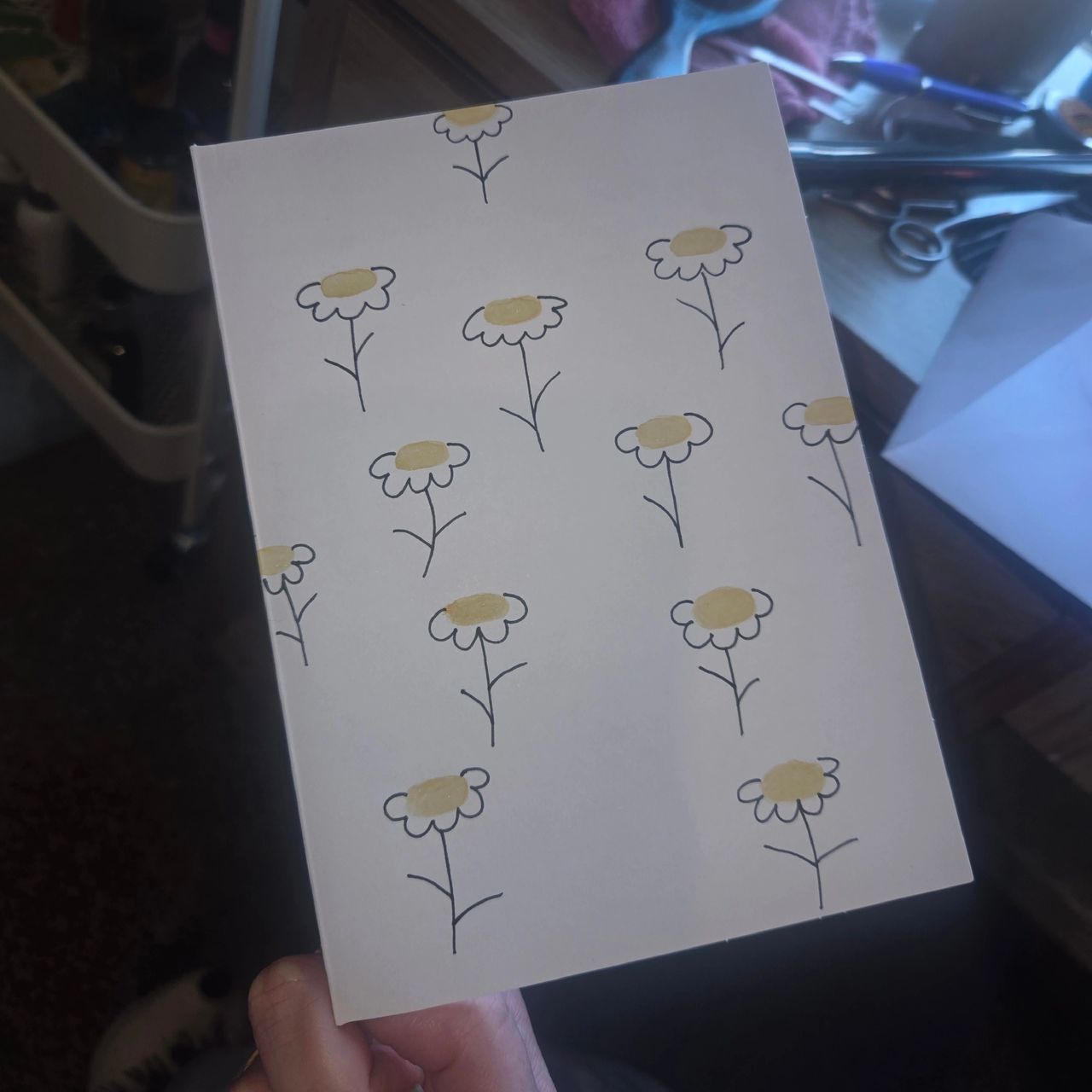
My love language has always been words of affirmation. This doesn’t mean that I don’t appreciate other forms of love, but I need to be regularly reassured and reminded that I’m loved. The book advises people in my boat to write letters to their future selves on their quest to date themselves. So, on the 13th March 2025, I wrote two letters to myself for six and twelve months later. I painted them with watercolours and put in the same effort as when I make cards for my loved ones. I added unscripted, heartfelt messages, put them in my drawer and forgot about them.
I knew that the September card would be opened shortly before my return to uni, so I included reminders of how capable I am and to never give up on what I’ve fought so hard for. When I opened it, I got very emotional because I was still anxious and I was thinking about how long I’ve struggled.
As for the March one, I honestly felt very proud of myself when I read it. Have a read and try to guess why:
“To future Ela,
I’m assuming you’re probably having a bit of a stressful time right now, what with being in final year of uni and having to balance your dissertation, your other modules, and whatever other social or extra-curricular activities you have going on. My advice to you is to remember what and who you’re doing it all for. You’re doing it for me: 20-year-old past you who went through the worst time on her year abroad and didn’t even know if she would still be able to finish her degree. You’re doing it for 5-year-old us who had a major operation on her leg and went through far more than any child should. You’re doing it so to get a Master’s and a career that fulfills us. Never forget this.
For these cards I’ve written, you’ll see that I did watercolour paintings on the front as I’ve been enjoying it recently, and I find art relaxing. I hope you’re still keeping up with doing creative stuff, but don’t feel bad if you haven’t. If you’ve been feeling overwhelmed with uni lately, start it again. Get out the colouring books, watercolours or scrapbooks – you’ll feel better.
I also hope you’ve been doing some writing. At the moment, I’ve been posting every two weeks. I don’t know if you’ll be able to stick to this or even have enough ideas to maintain it, but don’t forget that you have hobbies, so don’t lose yourself to uni. It is important, but you shouldn’t burn yourself out.
I hope we’re doing better mentally. I know we feel insecure sometimes but I hope we’ve progressed enough in our self-love journey to realise that we’re the most important person in our life and we need to do what’ll make US happy, nobody else. I hope we’ve learned how to manage our anxiety better and stop fearing the worst because life’s too short for that. We live on a floating rock – don’t overthink it.
I don’t know what specifically will be on your mind right now, but I know you’ll get through it all. This time a few months ago, I believed that I was never going to be happy again and there was nothing to look forward to but I’ve realised that couldn’t be less true. Life is a blessing. There is beauty all around. I love you. You’re amazing. I’m always rooting for you.
Lots of love,
Ela from the past xoxo”
If you didn’t guess, I’m proud because past me assumed I’d be doing much worse than I actually am. I thought that I’d have given up my blog, abandoned my hobbies and resigned myself to exclusively doing uni work, none of which has proven true. I won’t lie and say I’m not at all stressed about uni but I’ve cut myself some slack. This is in part because (amazing news!) I got a conditional offer for a Master’s, which only wants a 2:1. The other reason, is that I’m only human and uni isn’t a life-or-death situation in any case.
Shortly before starting my final year, I wrote a card to open when I graduate. I don’t remember exactly what I wrote, but it’ll probably make me teary-eyed like the other ones have. I also have a couple in my journals for when I’m having a bad day to remind myself that it’ll get better, proving that you don’t have to do it as formally as a proper letter or card.
You should give it a go, especially if your love language is words of affirmation. Even if it isn’t, I don’t think a kind message to your future self would go unappreciated. If you’re less artistically daring than me, write it on a piece of paper or a nice card. I’ve found it empowering to witness my growth through letters and to remember that I’ve always got my own back.
I’d recommend the whole book in general if you want to learn more about self-love. It’s full of ideas for expressing love to yourself depending on your love language, so give it a read if writing letters doesn’t resonate with you. Hopefully you find some value in loving yourself.
If you read the first part about our getaway to Paris, you’ll remember that I left it at the moment I was about to get on Hyperspace Mountain at Disneyland. To be honest, it didn’t go down too well; I spent the entire time screaming and panicking. Ironically, I realised afterwards that I was in my own head about it, made worse by the pressure I was putting on myself. Part of me wishes I went on it again to prove I was capable. Maybe if I come again…
After I’d calmed down, I discovered that the ride was actually the biggest in the park. This made me want to try some of the other big rides since none of them would have been as bad as that one. Lewis was dubious about this, which is understandable, but I guess I can be confounding at times. We went on the Pirates of the Caribbean ride, which was dark and wet more than anything, and Lewis wasn’t a fan since he doesn’t like animatronics. The last ride we tried was Big Thunder Mountain, which I did genuinely enjoy. I felt good that I’d partially redeemed myself as a scaredy cat on rides.
At this point, we were very tired and wanted to go home. Since it is Disneyland, the park doesn’t have many big rides anyway, and we didn’t think that any would be much better than what we’d already tried. As we were leaving, we typically got caught up in watching one of the parades. We’d definitely had enough of Disney after that, so we got our train back and chilled at our accommodation again. I am grateful that I got to see Disneyland in spite of what happened. Lewis said that he thinks he’s too old for theme parks, but I found it nice to unleash my inner child. Each to their own.
Day 4
Lewis had a voucher for an AirBnB experience which he used for a coffee roasting workshop; we both love our coffee so it’s something we’d both enjoy. On the way, we found an Aladdin’s cave of a kilo shop, chock-full of pretty vintage clothes priced by weight. We could have spent hours in there, but I limited myself to buying one skirt and one dress. I don’t often wear skirts or dresses, but I’ll be more inclined to wear them if they look this nice.
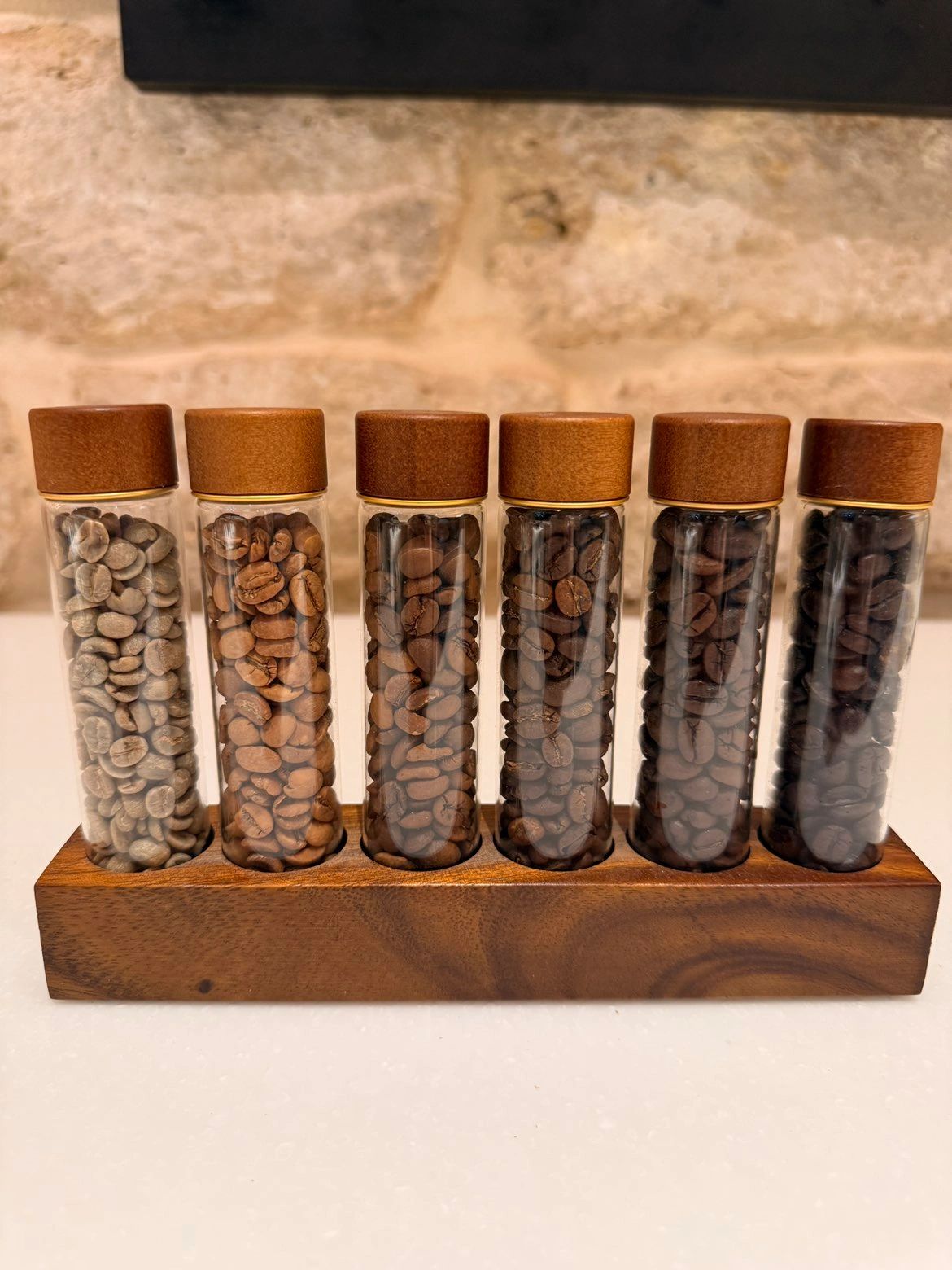
Our coffee-roasting guide started by telling us about the history of passages couverts – narrow pedestrianised passageways covered by glass – since his workshop was nestled in one of the oldest ones in Paris. We were then taken into his workshop, where he showed us his roasting machine and explained the history of coffee. Next, it was our job to roast our own beans! Witnessing the process was very interesting and we were given our self-roasted beans to take home. It was a unique experience and one of our favourite parts of the trip.
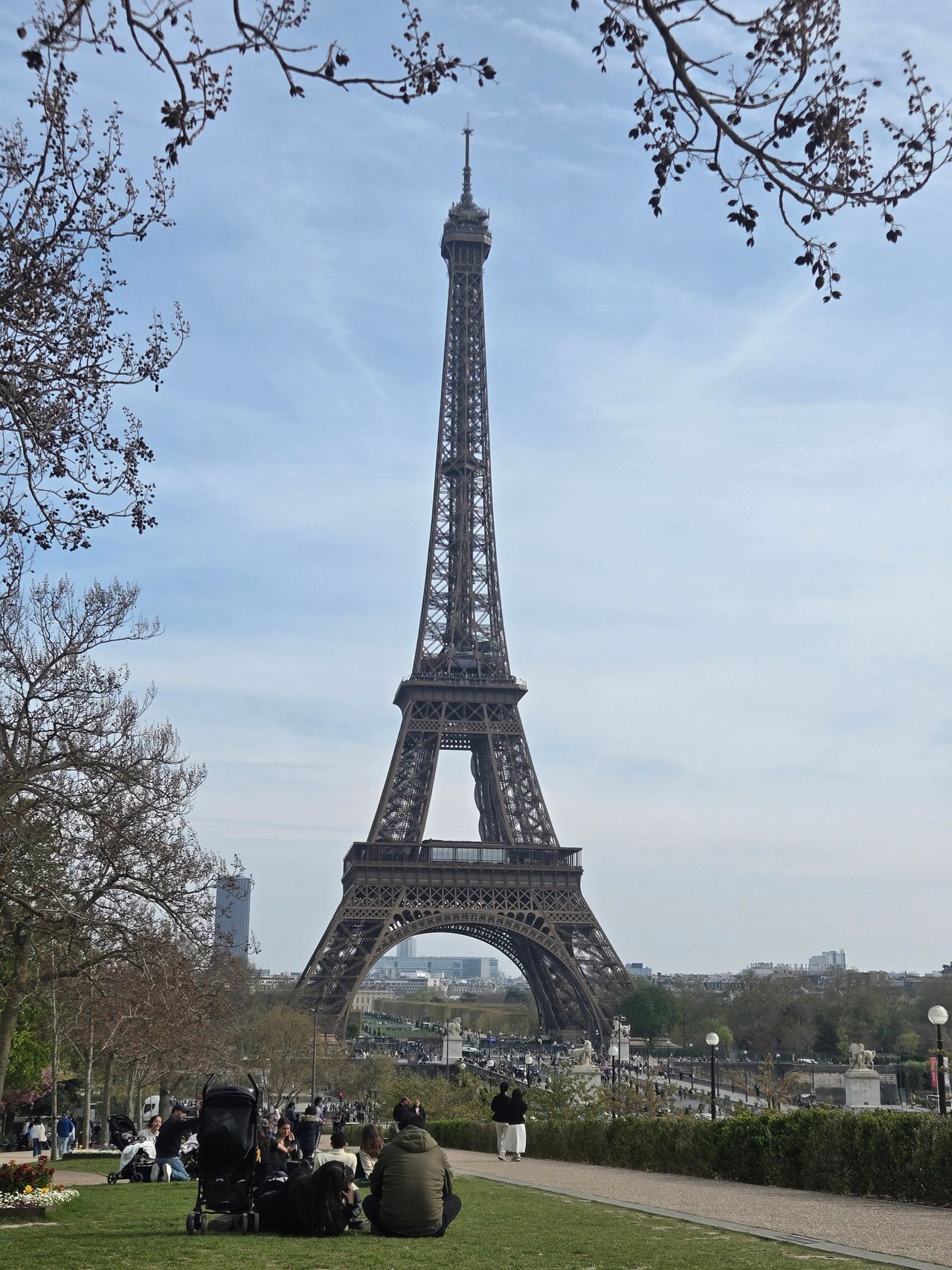
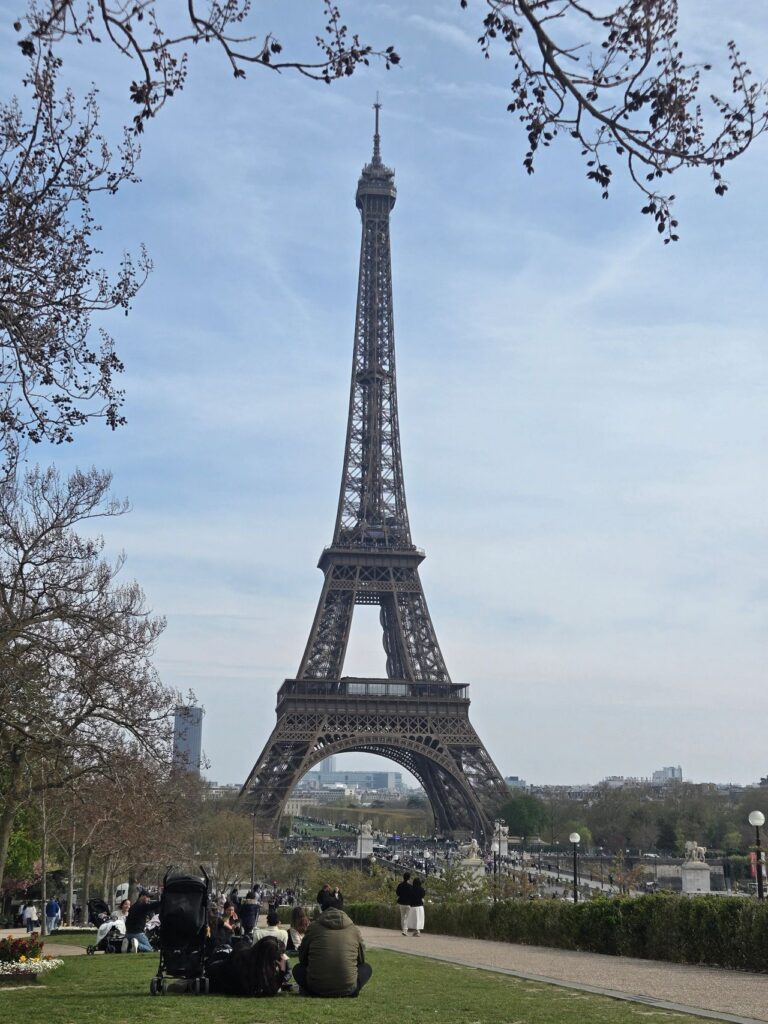
Post-roast, we took the Métro to the Trocadéro, which boasts the city’s best view of the Eiffel Tower. We each bought a crepe from a nearby stand, with which we peacefully sat and ate, marvelling in the amazing view. I cast my mind back to when I came here with my family in 2018 and I concluded that we didn’t visit many of the sites I saw on this trip. This explains why I didn’t like Paris so much the first time, and why I’ve now changed my tune.
We took a long walk towards Les Champs-Élysées: somewhere I do remember going last time. It was extremely busy, discouraging us from wanting to stay for long. We looked in a few shops but realised we couldn’t really afford anything, so we sat in Starbucks for a while until it was time for our réservation.
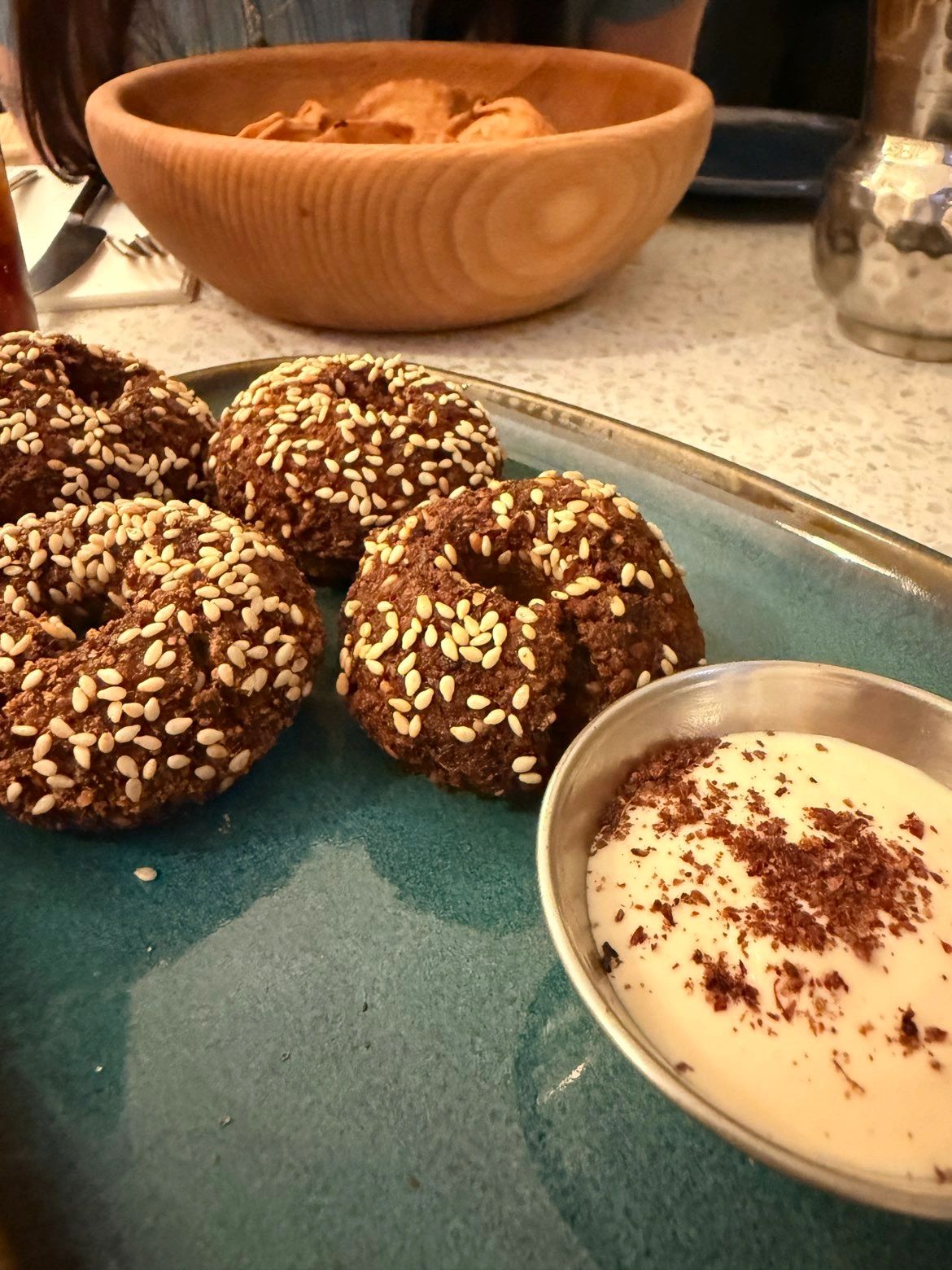
As it was our last night, we booked a table at Qasti Green, a vegetarian middle-Eastern restaurant. Typically, it was very close to where we’d been for coffee roasting a few hours before, so we did a U-turn back to the 2nd arrondissement. The restaurant had a lovely atmosphere and even lovelier food: I ordered spinach fatayehs to start and tofu ‘chicken’ shawarmas for my main. Lewis said that he’s going to try and make the shawarmas himself, which my stomach shall patiently await.
Lewis’ falafels
We were stuffed once we’d finished, so we waddled back to the Métro station and lay down at our apartment until we drifted into a food coma.
Day 5
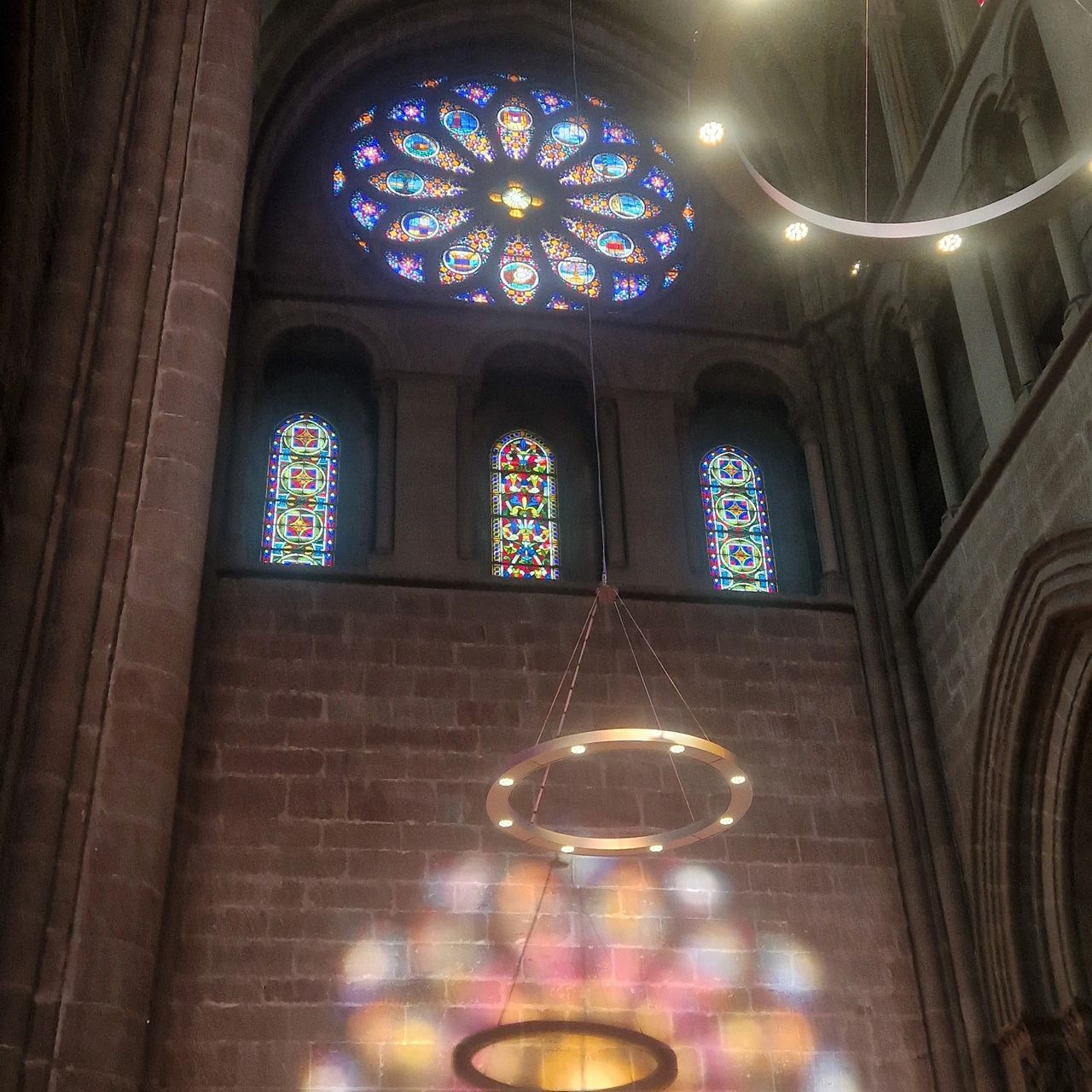
We checked out early to make the most of our last few hours in Paris. However, this meant that we had to wander the city with our suitcase and two very heavy rucksacks, slowing us down. Our first stop was St. Chapelle cathedral with its gorgeous stained-glass windows. I’d highly recommend anyone visit this beautiful place, and it’s small enough to not eat up too much of your stay.
I’d read everywhere online that Montmartre is a must-visit area of Paris thanks to its rich history, so that was next on our itinerary. We’d been very lucky with the weather during our trip as it was a large contrast to the unusually cold Spring back home, but it finally caught up to us; the heavens opened the very moment we arrived! I’d chosen to wear the dress I bought yesterday, which felt like a sign not to wear dresses but I’m not dissuaded that easily.
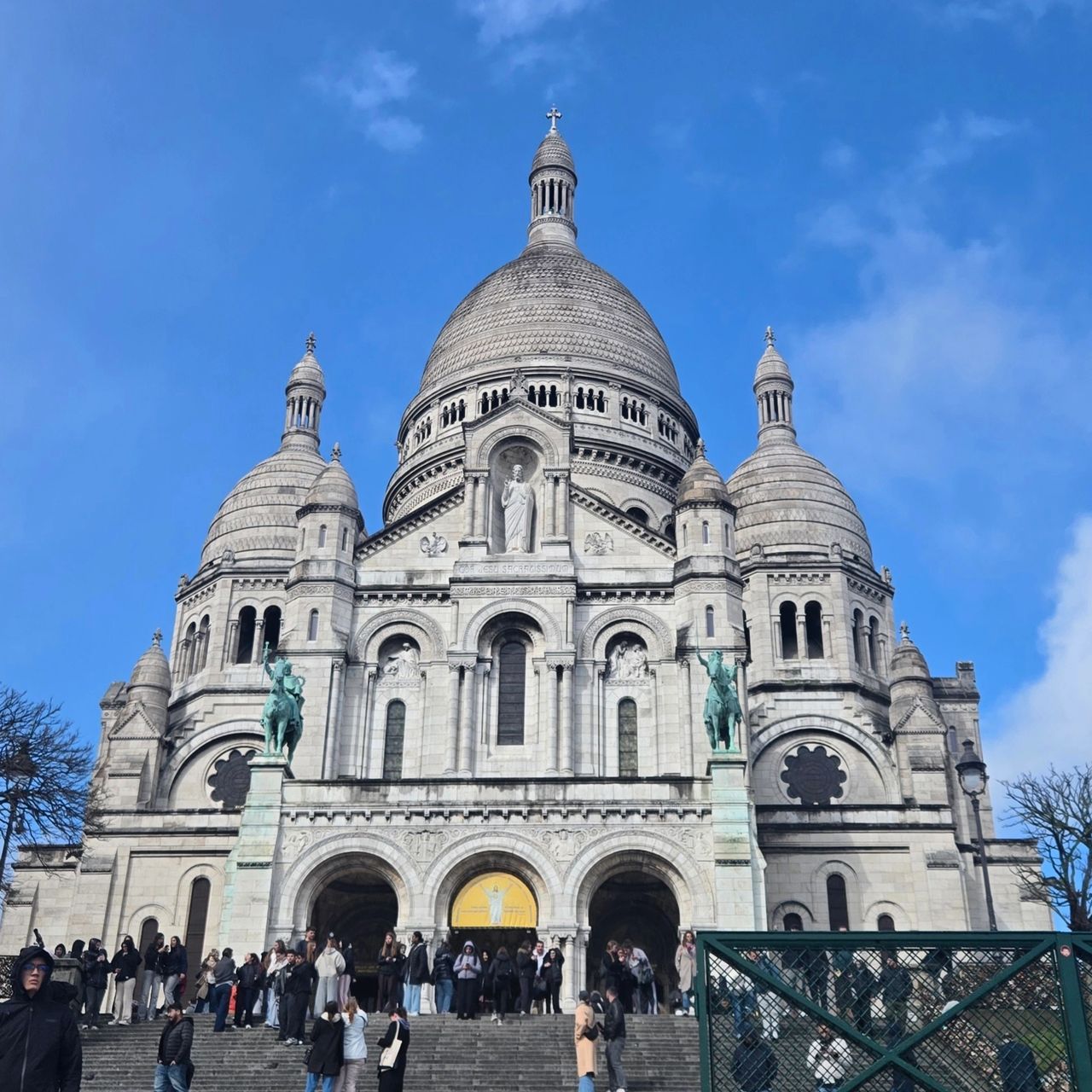
We had planned to go to the Sacré-Coeur but we were no longer in the mood for it after being turned into drowned rats. Instead, we went to a café, got changed in the toilets, and sat with coffees until the rain had gone off. I’m sure that Montmartre is lovely when the sun’s out, but this day sadly didn’t sell it to us.
We at least saw the exterior
Our flight wasn’t until 9:30pm, which we foolishly thought was a good idea at the time. However, we’d frankly had enough at this point and just wanted to go home. We took the train to the airport early and asked about catching an earlier flight. There was one going to Manchester about two hours before for an extra £50 per person, which we declined. For far from the first time on the trip, we killed time in a café until it was time to fly.
I wasn’t in the best mood after the day we’d had, but an opportunity presented itself that left me feeling a little more positive. A woman had asked the barista in Starbucks whether her jacket had been handed in as she’d lost it, but the barista didn’t speak English. I asked the woman if she needed help and I thus became her interpreter. The barista said that the lost-and-found was at the train station, so her problem was sadly left unresolved, but I was happy that I was of some help.
We were absolutely shattered by the time our flight rolled around, and even more so after landing and going through passport control. Fortunately, my dad picked us up and took us on what felt like the world’s longest drive, but we were eventually tucked back into our Lancastrian bed. Although there were parts of the trip that didn’t go to plan, they were all learning experiences for next time. I’m looking forward to the many more holidays that Lewis and I have yet to go on.
The end of my last ever term at Lancaster along with Lewis’ final week of paid leave meant one thing: our first holiday together! Lewis was adamant that we went to a Francophone place for me to practise my French, so what better place than the city of love? I’d been before as a child and I don’t remember being particularly wowed, but I thought that it must be better as a romantic trip, so I thought, “Why not?”
Admittedly, the trip did not get off to an amazing start; Lewis’ friend Matt kindly offered to drive us to the airport (at 4:30am, might I add!), but his car broke down. He’d had the car repaired a few days prior, but it refused to get back up to speed whenever we slowed down. I was sitting in the back of the car, jittery and catastrophising that we’d miss the flight, yet Lewis was surprisingly calm. We thankfully arrived 15 minutes before bag drop closed, which meant we had to scamper across the airport!
Day 1
Once we arrived at Charles De Gaulle, we ordered an Uber to our accommodation. We technically could have used public transport, but we were so tired that we couldn’t be bothered. After an hour or so of driving, we got to our AirBnb, which was tucked away in a lovely little courtyard in the third arrondissement. Though smaller than expected, I found it reasonable considering the price of Paris.
We unpacked and lay down for a while after a long morning of travelling. Eventually, we ventured out to explore the area. My first priority was the supermarket to get some milk for my morning coffee, where I found my all time favourite cereal: dark chocolate Special K. I tried it for the first time in 2019 on a French exchange with Fosbrooks, and it’s never left my mind since. Needless to say, I brought home a box of the little clusters of joy. They sadly don’t sell it in the UK, but I found out last night that we do have a milk chocolate version which may well be nicer. Oh well!
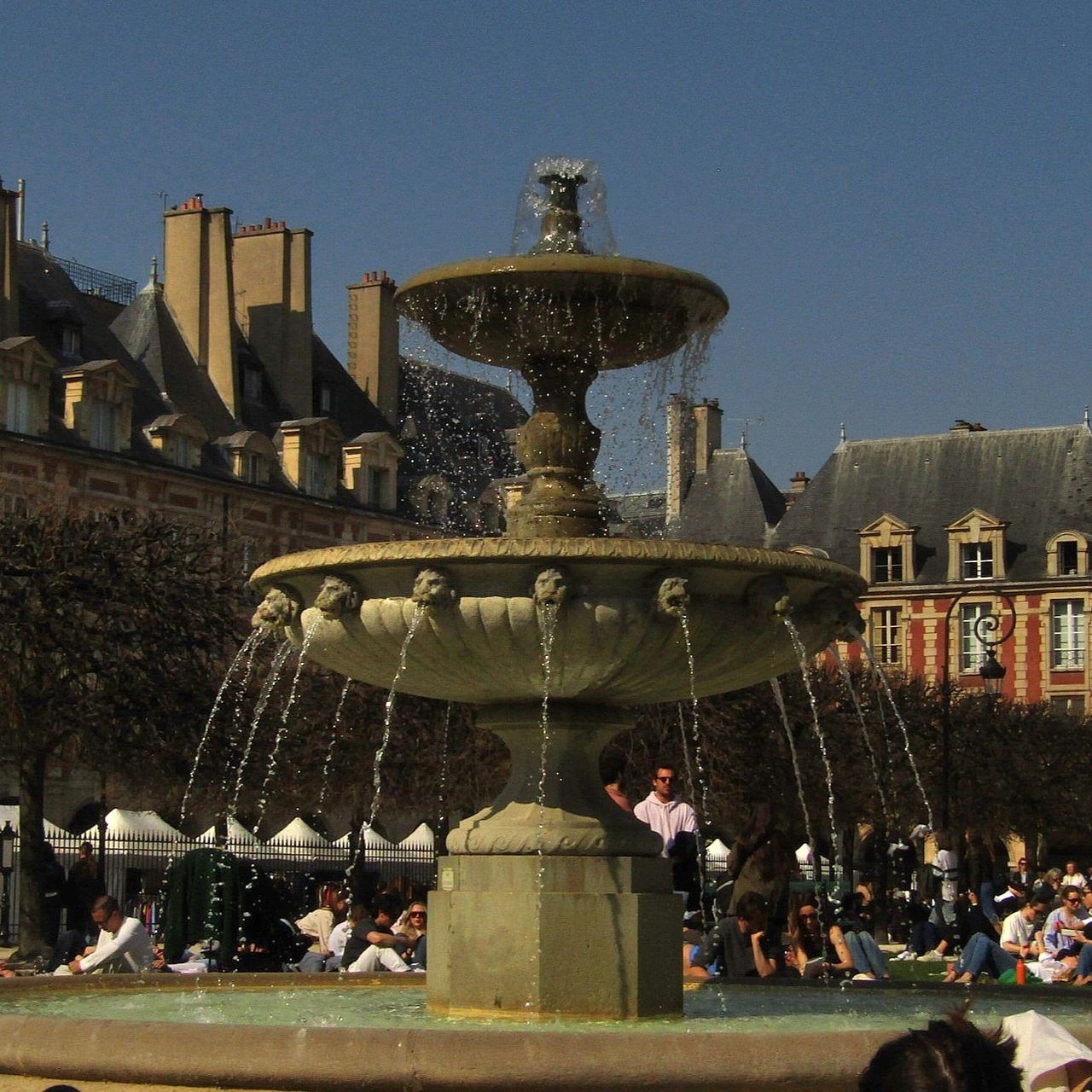
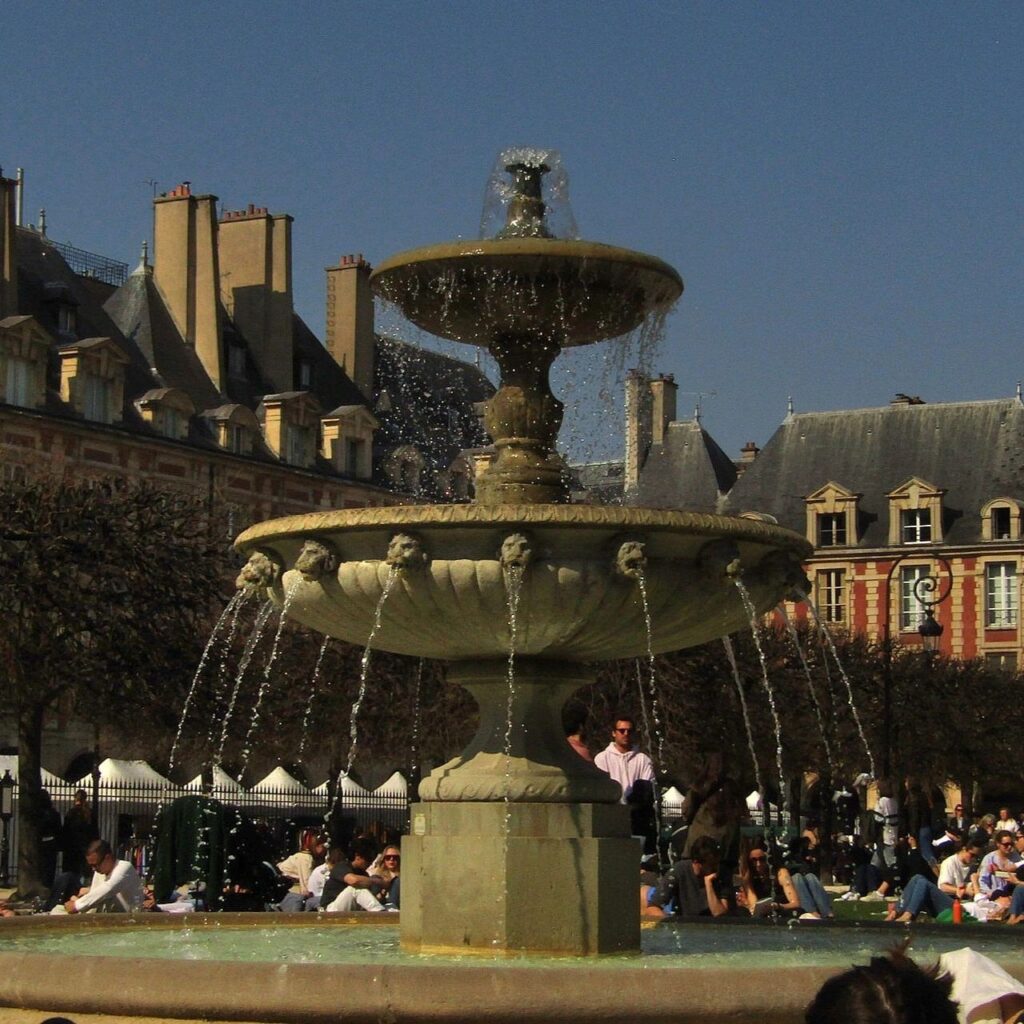
Since we were in France, we obviously had to try the bakeries. The first one we visited was Land & Monkeys, where I ordered a foccaccia and a browkie (a cookie/brownie hybrid). We walked a few minutes to Place des Vosges, one of the city’s five royal squares, to enjoy our feast. It was very serene to sit by the fountain since the weather was nice and warm. We noticed that there were also some market stalls surrounding the square, where I bought a bracelet and I went halves with Lewis on a new jacket for him.
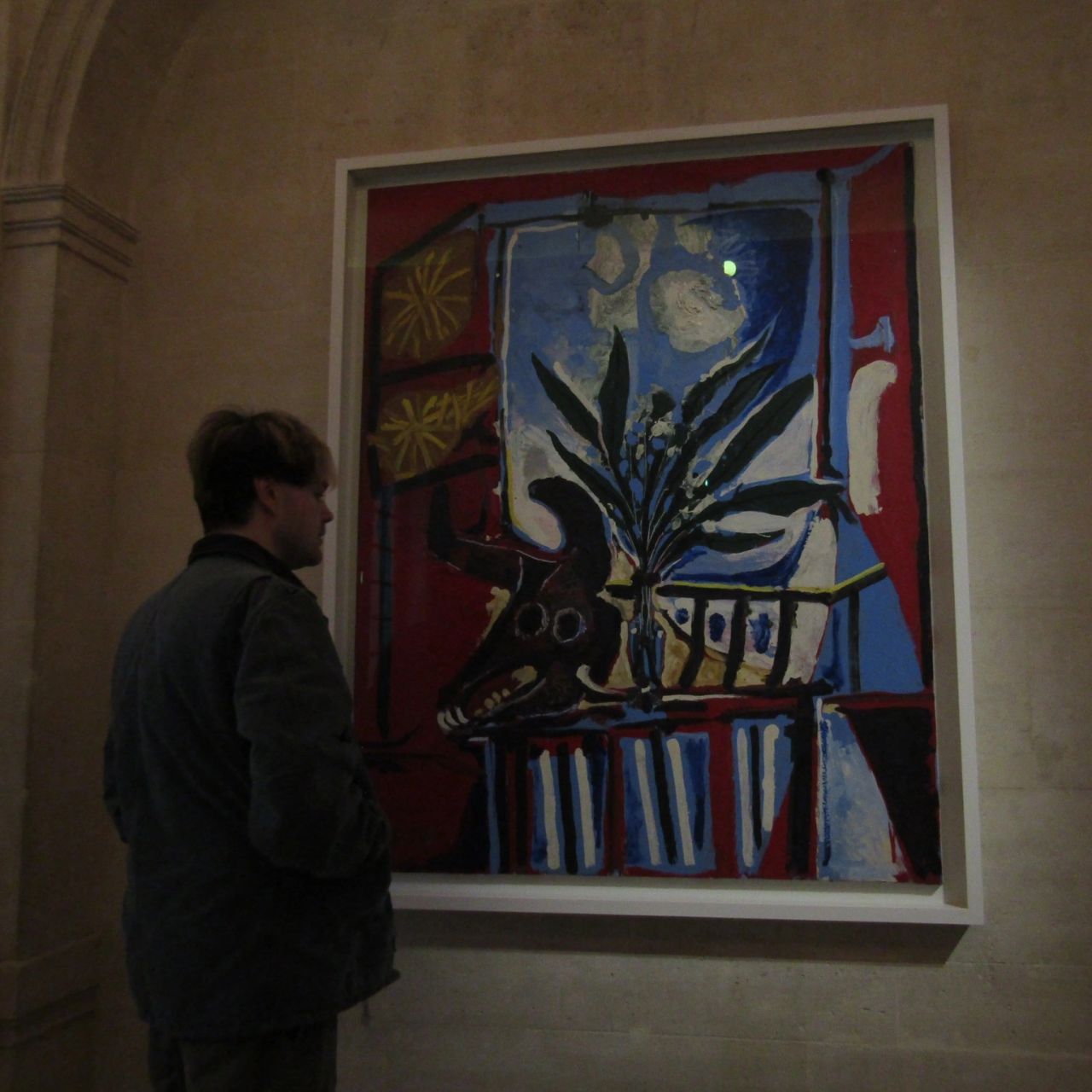
We happened to be staying around the corner from the Pablo Picasso Museum. I think some of the exhibitions were sadly closed, but it was nevertheless interesting to have a look. To my upset, we learnt that the museum had hosted Georges Bataille (the philosopher whom I’m writing about in my dissertation) exhibitions that had passed us by. Lewis and I commented on the huge range of Picasso’s work, as we never even knew that he made sculptures as well as paintings. Every day’s a school day.
Since we’d already eaten from the bakery, we weren’t massively hungry for tea. Instead, Lewis went to Carrefour for a baguette, cheese, and some other snacky bits. We then spent the night grazing and watching French TV. We were especially interested by French game shows because we love watching them back home, and it was good language practice for me to translate the questions. We were soon tired after our busy day, so it was time for bed.
Day 2
We’d booked tickets for the Louvre, for which we purposely chose a later slot to give us time to mooch over. It was a 30-minute walk from our apartment, so we took a leisurely stroll and stopped at another bakery en route. I chose this one because of the name: French Bastards, which I found comical. I had a pistachio babka, which I’d never heard of before yet thoroughly enjoyed. We also had time to look in some shops, so I bought a jacket from Uniqlo; the leather jacket I brought was making me way too hot.
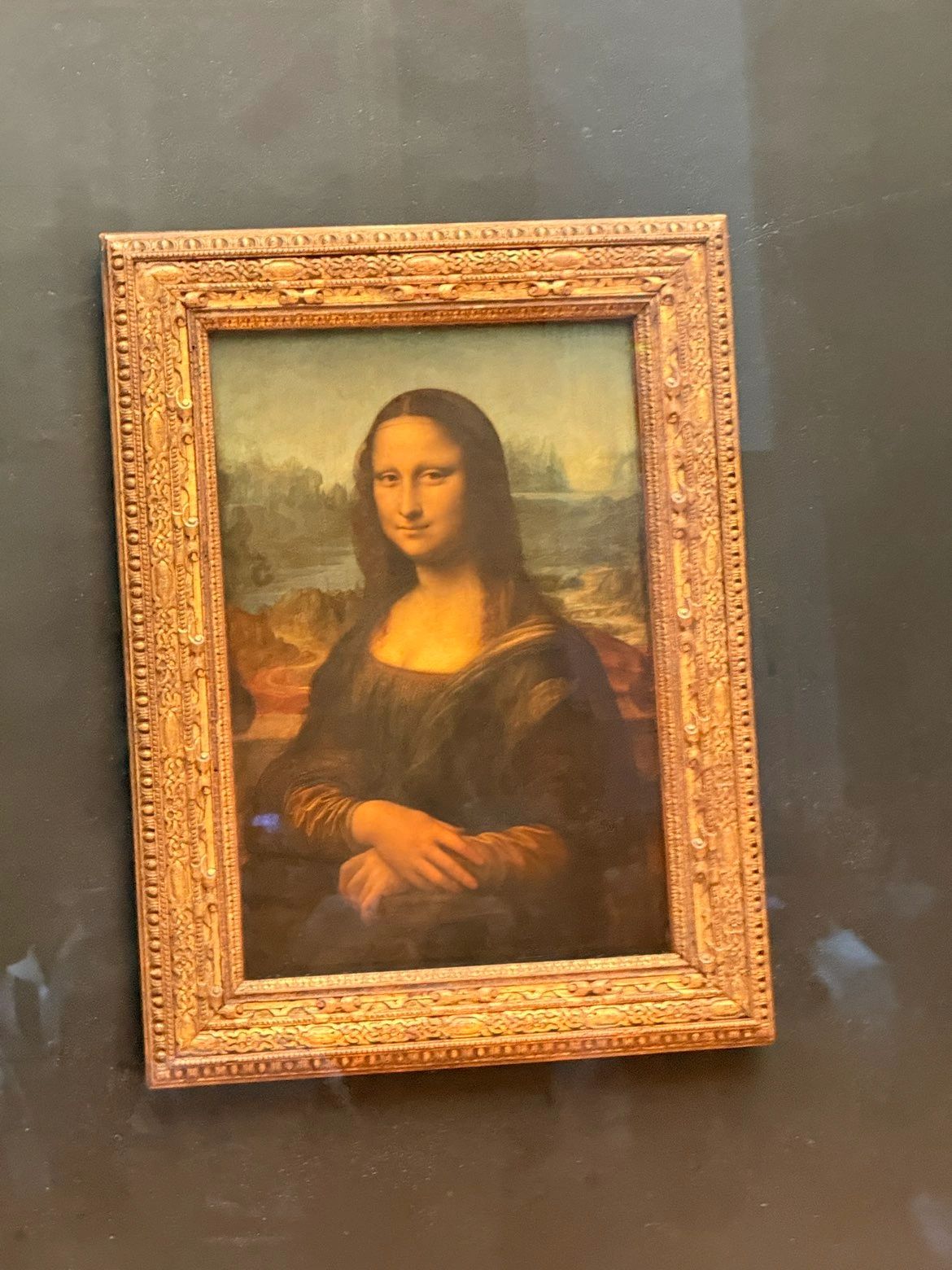
1:30pm was the time we chose for the Louvre, so we went and we were in complete awe at the size of it. Truthfully, we only looked at a small proportion of the hundreds of works on display, including the Mona Lisa. We found the map very confusing, so it took us a while, but we got there eventually. I’d heard people say this before, but the Mona Lisa is much smaller than you’d expect! We found the museum fascinating, but we knew we’d go mad if we looked at everything.
After a quick bite in a nearby café, we walked towards Galeries Lafayette, while making stops at a few other places. We went to a jewellery shop called L’Atelier d’Amaya, where Lewis bought me a ring. Although it isn’t an engagement ring (yet), I’ve placed it on my ring finger and we’ve called it a promise ring.
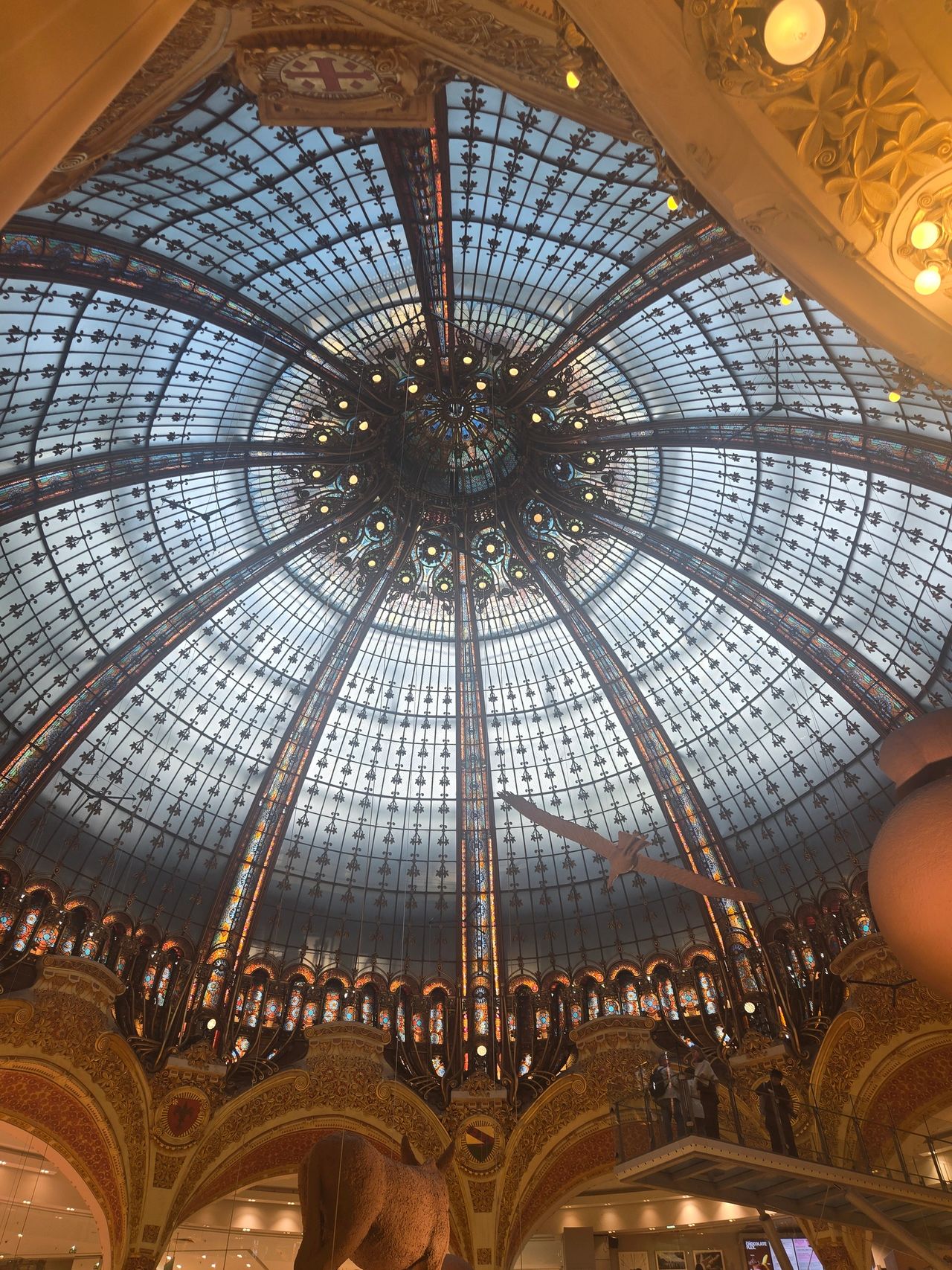
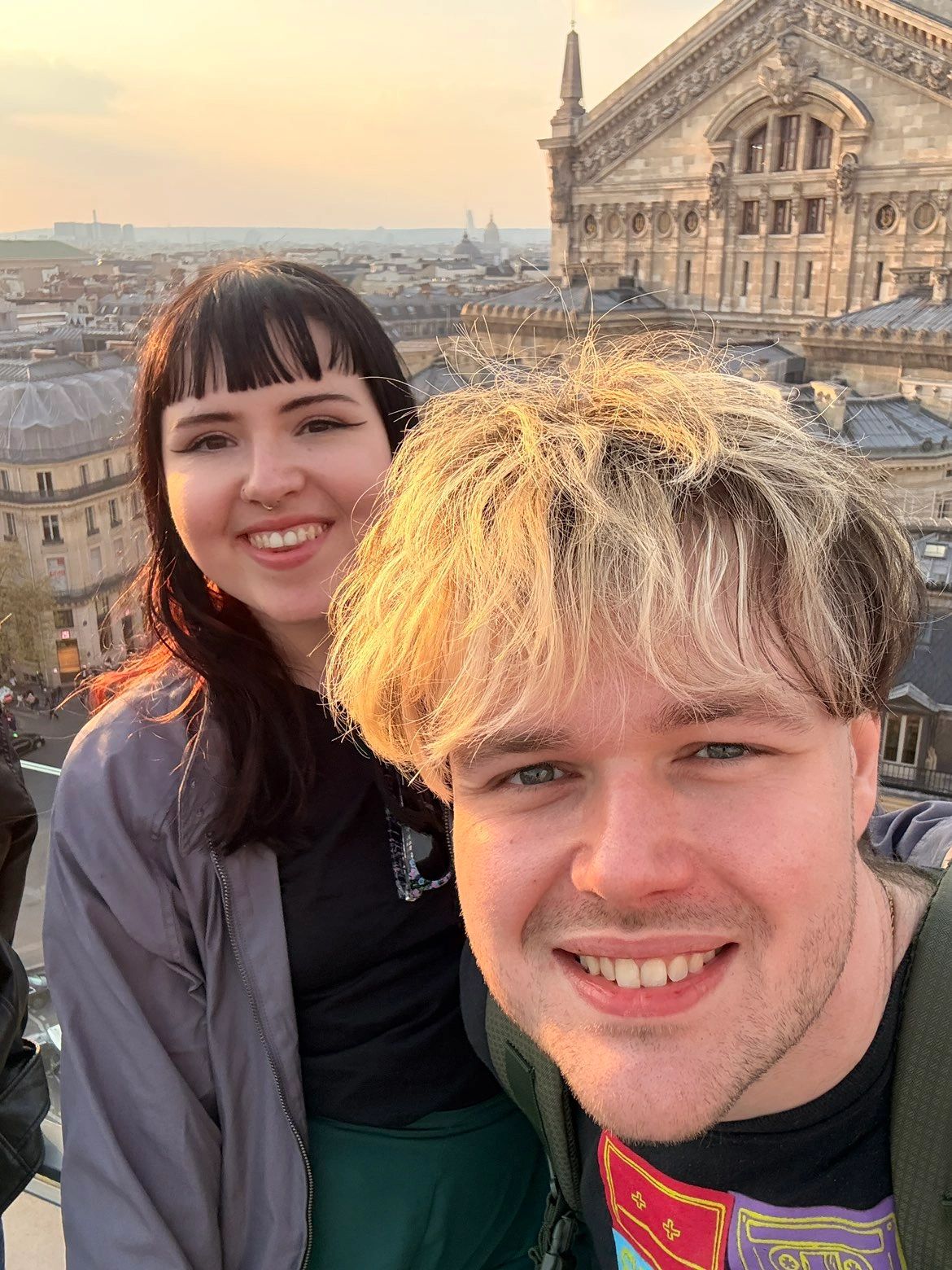
Galeries Lafayette, a huge department store in the 9th arrondissement, was both breathtaking and overwhelming in equal measure. The ground floor housed the shop’s frangrance section, where we spent a while smelling all manner of perfumes. Before long, though, we had become nose blind and couldn’t even stand to look at another perfume! The reason why I wanted to visit the shop, was because it’s also home to the Jellycat Patisserie. They were definitely overpriced, but I still walked out with Philippe Palmier, or Pip for short.
The shop also has a rooftop terrace with an amazing view of the city:
On the way home, we stopped at yet another bakery, as well as an ice cream shop for an impulsive nighttime treat. Our nutrition was practically nonexistent, but that doesn’t matter when on holiday. We also stopped at Monoprix for ingredients for the following day’s sandwiches as we had a big day ahead; we were going to Disneyland!
Day 3
We chose not to rush getting to Disneyland since holidays are for relaxing. Lewis wasn’t massively sold on us going to Disneyland because “it would be a waste of a day”, but I disagreed. We needed to get an hour-long train, which was fortunately about €2,50 each. I love the fact that pretty much every country besides ours has very cheap public transport, particularly trains. Thank you, Tories!
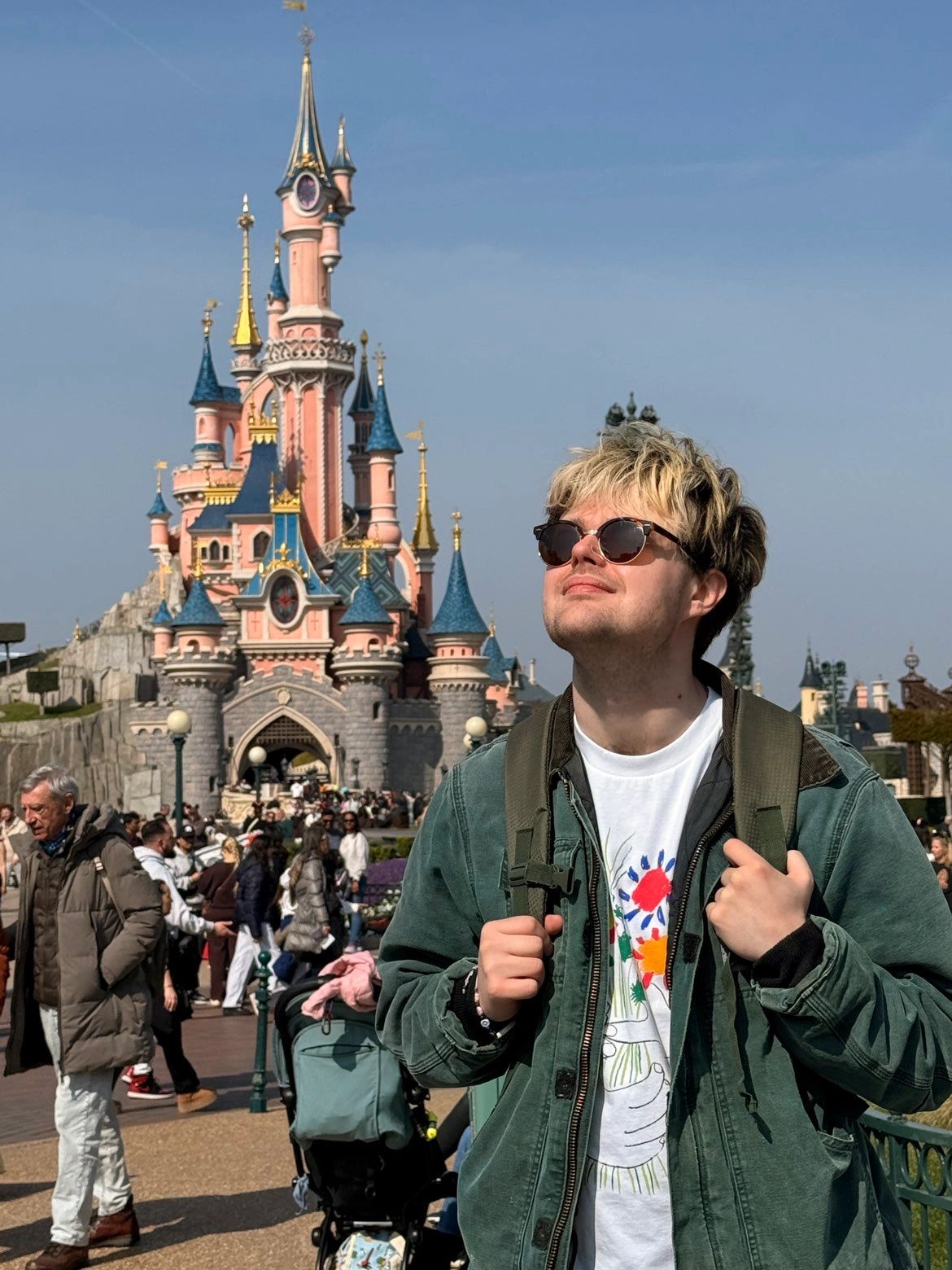
We had to wait for quite a while in the queue, but we made it eventually. I’ve been to Magic Kingdom in Florida twice, so I found it looked quite familiar besides the fact that Paris has Aurora’s castle instead of Cinderella’s. Upon entering the park, you’re instantly bombarded with lots of gift shops that mostly sell the same things, making it quite same-y. The first thing we did when we arrived, was buy a cake pop for €5 to fuel us for the day. Yummy but dear.
We started our day of rides with Buzz Lightyear’s Laser Quest, which we both enjoyed. An interactive ride where you shoot targets to defeat Zurg, Lewis scored far higher than me, leading me to question whether my gun was broken. Lewis then suggested that we went on Hyperspace Mountain, which I only realised while queueing was a rollercoaster. I’m not a fan of big rides, but I wanted to do it with him, and I’d noticed there were young children in the queue. So, I reluctantly went on…
Sorry to leave a cliffhanger, but this post will be in two parts. That’s because we only got back four days ago, so I haven’t yet had time to write the whole recount. Part two will be coming out a week today, on the 5th April, so come back next week!
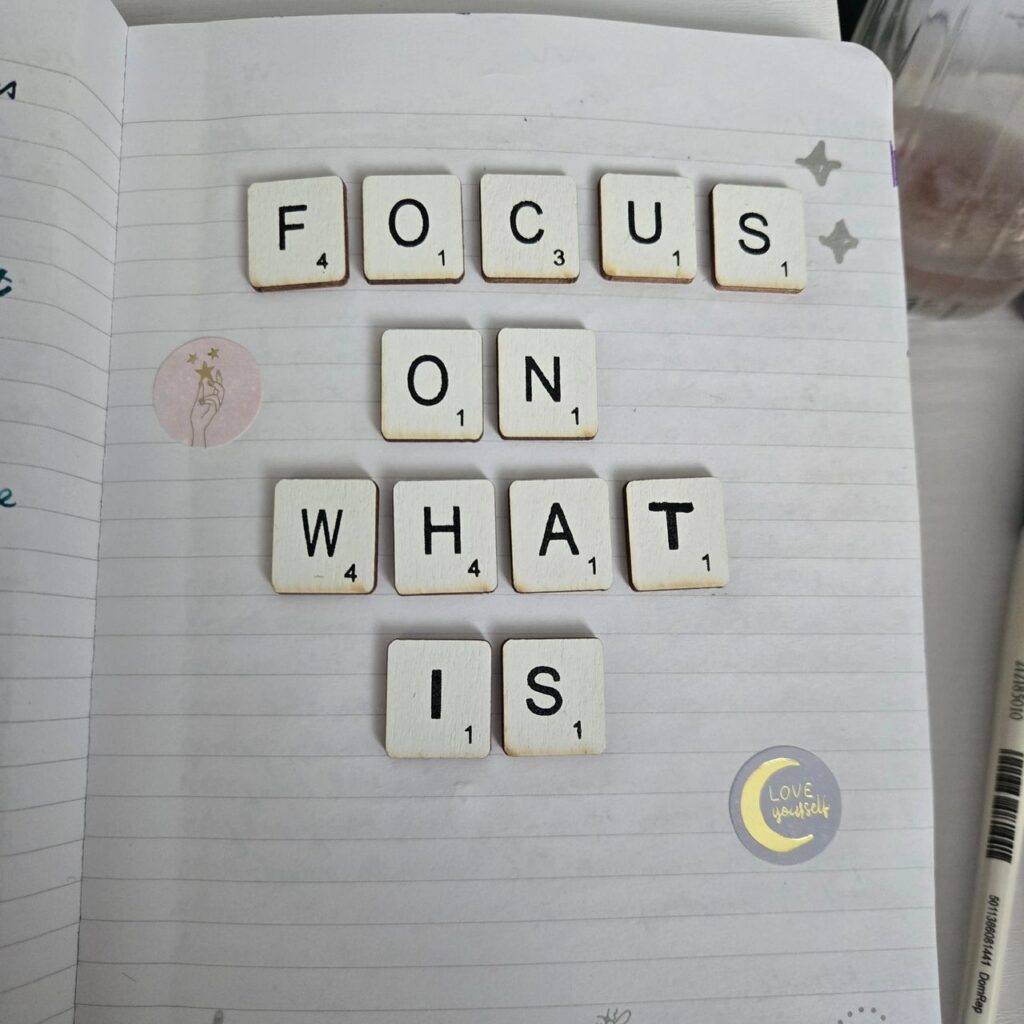
Five years ago today was a turning point in my life, though I wasn’t aware at the time. 16-year-old me was dabbling in spirituality and witchcraft, and I’d heard about the miraculous benefits of journaling. These benefits weren’t limited to magical ones; it’s a simple way to offload thoughts and manage stress. As someone who had gone through several bouts of diary writing before giving up, I wanted to give it a go.
This was my first ever entry from the 15th March 2021:
“I’m not really thinking about much right now. I was angry at myself earlier on for not speaking to [boy I liked at the time] at college today but there’s always tomorrow. I will speak to him tomorrow because there’s not really any disadvantages to doing so. Maybe I’ll speak too much and regret something I say but [friend from college] will be there to help defuse the situation. Even if he doesn’t like me, then I know it’s his loss because my worth is not defined by the attention I receive from boys. I can lead a fulfilling life without them. I’m really thankful for the high levels of self-confidence I’ve had today and for the past few days/weeks. I hope I always remember that life is too short to hate the way I look. Any person who’s a good friend will love you all the same no matter how you look. I’m also thankful for the fact that I did my German homework today without putting it off (too much). Thank you, past self.”
I don’t remember my exact sentiment at the time of writing, but I feel as though I was writing what I thought I should be writing. The reason I say this, is because I don’t think that it reflects my general memories of being at college (which I wrote about in my Valentine’s Day post). Even when I’m writing in my journal now, I get this feeling on occasion: where I have the awareness to understand that a situation is less bad than my anxiety thinks, but my brain still doesn’t believe the optimistic things I’m writing, making it feel inauthentic. These sorts of situations have taught me that journaling is a skill where you gain strength over time when you surrender to the fear of judgement.
One of the other obstacles I’ve encountered while journaling (though it isn’t strictly bad because it’s all part of the experience), is realising that I’m writing about the same problems and not wanting it to be repetitive. The biggest hindrance, which applies to both this and the previous point, is I sometimes treat journaling as if I’ve got an audience. When I realise that the only audience is future me, I do still worry about what she’s going to think since I sometimes cringe at my old entries. I’ve taken a more optimistic stance about it now, where I use those entries as proof of my growth and development. As well, recognising patterns in your thinking is the key to making positive change with journaling. This means that if I notice that I’m having a recurring problem, I’ll step back and think about what I can do to change it. If I can’t do anything about it, I try to simply let it be.
That’s enough of the ‘negatives’; I want to talk about all the great parts too. As I said, I love journaling to document my life because I can reminisce on happy times and witness how I’ve changed. I find it especially valuable to read my entries from Geneva because I sometimes forget just how different things are now. If I’m having a bad day, I might tell myself that I’m ‘just as bad as when I was in Geneva’, but reading those entries proves otherwise. I’m not ready to share them here, but all I can say is I’ve put in a lot of mental work to combat how horrible I felt, and I’m proud to say I’ve improved massively.
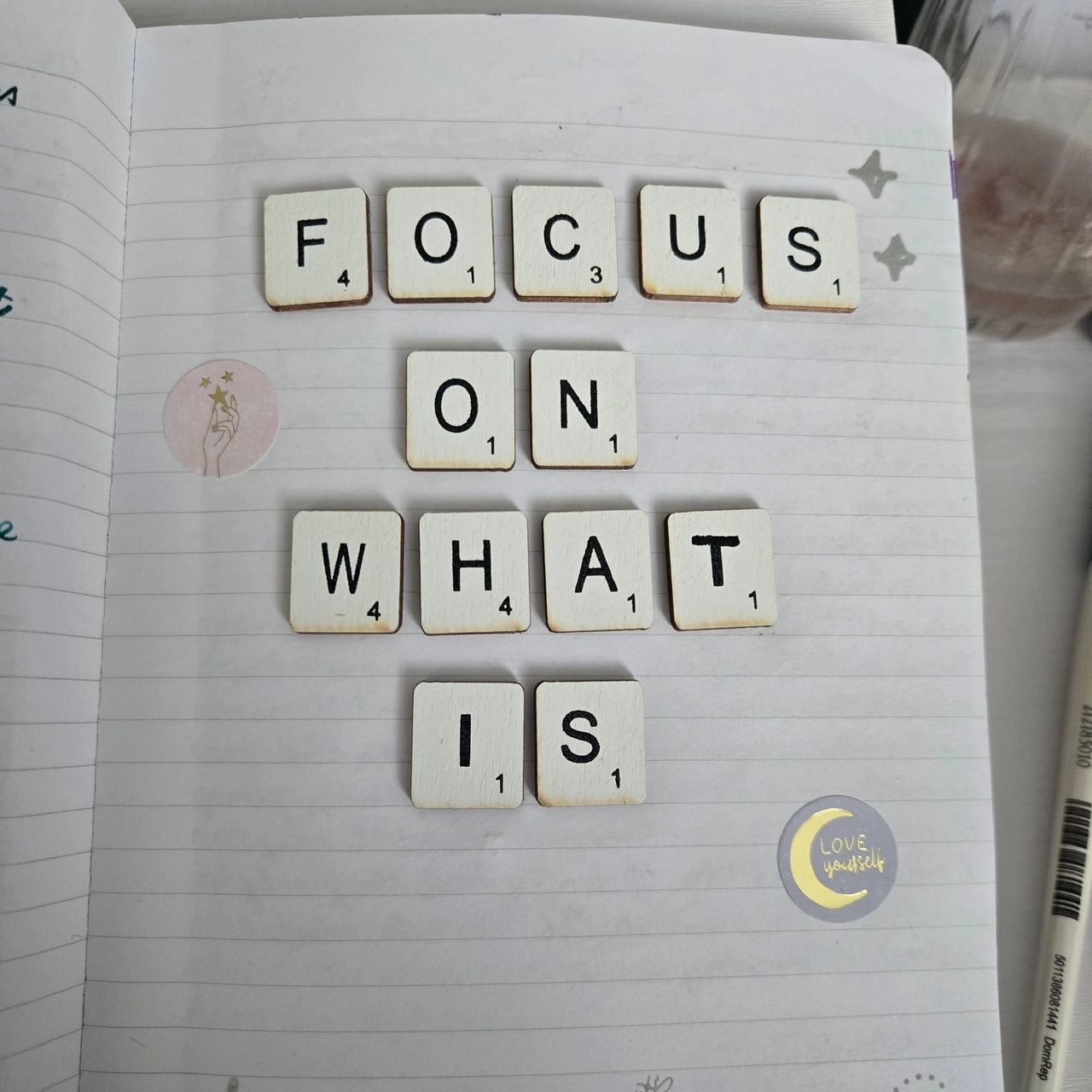
The world of journaling also introduced me to another interest of mine: stationery and pens. It’s made me very picky about the type of notebook that makes the perfect journal, and any that doesn’t meet this standard makes journaling far less enjoyable. In my humble opinion, the perfect journaling notebook should be hardback, it can’t be spiral bound, there has to be quite a lot of lines but they can’t be too close together, and the paper has to be decently thick. That last piece of criteria is because I also love fountain pens, where the ink will feather on flimsy paper. All of this to say, that personalising the experience will make you excited to do it regularly.
My journal unearths a lot of gems that I may have forgotten about, which can be quite funny. For example, in my 2nd year of uni, I was writing about all the stress that was accompanying my year abroad and I wrote something like, “Bottom line is, I’m going to get through this bastard degree even if it kills me.” I really need to find the quote to contextualise my graduation post. Another one that I’m really glad that I documented, is the day I first met Lewis in Currys. I wrote something along the lines of, “This really good looking guy served me in Currys but I don’t know whether he was flirting or just being nice.” Hindsight showed that the former was true. It’s so beautiful to have a record of your thoughts because you can look back at how you felt before an event and see whether you were right. For example, I’ve recently been writing about my expectations for my Master’s, which will be especially interesting to read back in the midst of next year.
It goes without saying that I’ve grown a lot from doing this for five years and I’d highly recommend it to anyone. Even if you don’t feel you have the time, write just one sentence a day. I know people who do this and it obviously isn’t quite the same, but it’s a start. I have admittedly had some dry patches in the time I’ve kept a journal, which is normal because life gets in the way sometimes. But don’t let that be an excuse not to bother; having excerpts from some parts of your life is better than none at all. They’ll be even more curious to read in decades to come.
Isn’t capitalism great? Access to any product you can imagine, for the mere price of the general population struggling to get by, in subpar rented housing, while working long hours to ensure they’re too tired to do what they really enjoy. Sounds fantastic, doesn’t it? One of the biggest detriments to this incredibly flawed system is the way its impact on our self-perception. When someone asks you to tell them about yourself, I can almost guarantee that you say your job before anything else. Why? Because capitalism emphasises our contributions over our true selves.
I’ve written before that I often worry I’m “not doing things right”, which has recently caused me to question how much of what I do is subconsciously shaped by external sources. I’ve concluded that, truthfully, I’d probably be living a completely different life if outside influences didn’t exist. It also made me realise, though, that it’s impossible to live completely independent from said influences because of the Internet and, you guessed it, capitalism.
Our society has slowly turned more and more towards “hustle culture”: the idea that we should always aim for more, namely within the professional realm. While I don’t think there’s anything wrong with this in itself, it’s pushed many of us towards an unhealthy relationship with productivity, where we feel guilty for resting, and “living to work” instead of “working to live”. It reminds me of when I got told I should make a business selling jewellery, which quickly sucked all the fun out of something I loved. It exemplifies society’s unspoken rule that our hobbies must be profitable for them to be worthwhile.
The more I reflect on it, the more I take the exact opposite stance: we should be doing more things that don’t benefit our income. Personally, I’m a curious person who loves learning new skills and information, which means I love to read and do crafts simply because I can. Indirectly, this might be an asset for my professional life because it improves cognitive function, though that isn’t why I do it. The risk reduction of Alzheimer’s through lifelong learning is more important to me than the potential increase to my salary anyway.
When I didn’t complete my year abroad, I felt incredible anxiety because I thought I was “falling behind”. However, when I really dissect that, I ask myself what “falling behind” means. It dawned on me that this was yet another example of capitalist brainwashing, where we believe we’re “doing it all wrong” if we aren’t making money or working towards our career goals. I in part blame Linkedin for this; it’s rife with people boasting about their professional achievements while conveniently leaving out the sacrifices they may have made.
The other big obstacle to simply being, is the patriarchy. As soon as we’re born, we’re assigned a societal role depending on our gender that follows us throughout our life: girls are gentle caregivers, whereas boys are logical problem-solvers. Before you roll your eyes and disregard me as a ‘crazy feminist’, I believe it’s harmful for everyone. There are men out there who may have dreamed of being a teacher or a nurse, but societal conditioning teaches them that those are ‘women’s jobs’, so instead they choose a more traditionally masculine role, and vice versa with women who dream of being independent entrepreneurs.
And don’t get me started on beauty standards. While I think that men and women encounter this, it disproportionately affects women much, much more. Women have historically been valued for how they look more than anything else, and it frankly doesn’t and shouldn’t gel with today’s society. With more and more women entering the workforce in the 21st century, fearing that we look too messy, too overdressed, too thin, too fat, so on and so forth, is an extra concern that hinders us from dedicating our time to what really matters.
After beginning to read feminist non-fiction, I was overthinking whether I ‘should’ be wearing makeup, because it’s ultimately a way that women adhere to patriarchal beauty standards. Honestly, that is the reason I became interested in makeup in the first place, but it’s become something I enjoy using to express myself. I have a healthy relationship with makeup, where I can go out without wearing it (in fact, I’m sitting bare-faced in Lancaster Library right now) and I don’t rely on it to make me feel pretty. It taught me that, as with many things in life, self-awareness is the key to understanding why I feel compelled to do certain things.
I’m currently reading a book called Femonomics by Corinne Low, which I ironically received as a gift after I came up with the idea for this post, but it ties in perfectly. She advises making a list of six things that bring you genuine fulfilment, commenting that women often do things with short-term benefits that ultimately detract from our long-term goals. She provides the example that a mother might dedicate time to making homemade cupcakes for a school bake sale so that she’s perceived as a ‘good mother’, which adds more stress to her schedule and pushes her away from her true desire to spend quality time with her family. I’m sure many of us can relate to a similar situation — where we sacrifice our needs to keep up appearances.
It’s a very nuanced and complex situation; as I already mentioned, being part of a society means it’s impossible to live completely independent of societal influence, which I could go on about for hours. These are just a few of my thoughts on the subject, which have helped me to know myself better, however hard that may be in our world. There are some small things we can do to reclaim our happiness and rebel against these flawed rules of society: do things for the sake of doing them, wear a skirt with unshaven legs, cancel that event you don’t want to do so you can relax, go to a meeting without makeup. The world will still be there, and it won’t explode if you prioritise your downtime over a deadline. I promise.
I used to dread the 14th February every year for the same reasons any single person might: not only is it cold and dark, but you’re also bombarded with ways to treat your non-existent significant other, which may as well be calling you a lonely loser. When I was about 16, I remedied this by making it a day for myself, where I’d get dressed up nice, give myself presents and order a takeaway. It made me feel a bit better, but I still felt like something was missing. Over the years, I’ve learnt a few things about love, although I know it’s far from everything there is to know. This is my story, with those little lessons sprinkled in along the way. Look out for the phrases in bold.
When I first started college, my friends were talking about how exciting it is to not wear uniform and study their favourite subjects. While I also enjoyed college for these reasons, my objective for college was far more specific: find a boyfriend. As someone who’s always self-identified as a feminist, I was aware of how sad it sounded, but I don’t know, I guess I wanted to subconsciously prove that I could have one. I also felt like my life was a ticking time-bomb at the ripe old age of 16, where I would die alone if I finished college single (which isn’t true at all, by the way). I vividly remember sitting with my friends at college while they all gossiped about their relationship gripes. It had me thinking to myself, “How could they possibly complain? If I had a boyfriend, I don’t think I’d ever complain about anything again.”
The most ironic part about it, was that I was way too shy to actually make a move — my tactic was that I’d meet a boy I liked, they’d telepathically know I liked them, they also happened to like me, and we’d live happily ever after. There was a boy to whom I spoke over text daily for months, but we never spoke in person as he was also very shy. My friends told me that he must like me if he’s been talking to me for that long, so I should just ask him out, but I couldn’t bring myself to do it. One of my friends was having a party, so I FINALLY gained the courage to invite him. He said no, but I never explicitly implied it was a romantic invitation, so it could have gone over his head…
I spent a large chunk of my college time worrying about being single. That was until one day, a friend and I went to a metaphysical shop where I bought a set of oracle cards. I had the option to ask them about any aspect of my life, where love was obviously the first and most important for me. The card I chose translated to “Don’t rush. You have so much time”, which deeply resonated with me. Really, I knew this the whole time, but it took the pressure off to reduce my life to whether someone loves me.
When I started uni, the same old logic returned. This time, though, I thought that “boys at uni will be so mature”, so there’d be no problem. Since everyone was freshly 18 and were having their first experience of complete autonomy away from their parents, I turned out to be very wrong. I was seeing a boy at the start of uni for a few weeks, during which time I had a tarot reading. I was told that she “couldn’t see anyone” in respect to my love life, and “I needed to learn to love myself before loving someone else”. Say what you want about divination, but it proved true both times.
Things ended badly with him. Over the next few years, I noticed that with many of my romances, even if I knew it wasn’t right, or I didn’t even like them, I would stay and still be upset when it ended. It’s hard to explain why — I suppose I subconsciously placed my self-worth into them, so a breakup became evidence that I was unloveable.
I’d been in two relationships last year that didn’t go to plan. The first one was ended by him, and though I was devastated at the time, I’m so glad he did; we weren’t compatible but I don’t think I would have had the guts to do it myself. The second one was ended by me, which I was very proud of. I know it sounds brutal, but it had only been a few weeks and I had a gut feeling that it wasn’t right. It was the first time I’d broken up with someone, and I saw it as a marker of growth. I then went on a date with a guy I met online, and I instantly knew he wasn’t right either. I was, once again, proud of myself for being honest, even if it disappointed him.
With all this romantic stress I’d put myself under in 2025, I’d learnt that being in a relationship isn’t all sunshine and rainbows, and they take work from both parties. In consideration of final year being stressful on its own, I told myself I wasn’t going to bother with pursuing anything for the next year. The phrase “love comes when you least expect it” must be true, because it was only then that I met my current boyfriend, Lewis, who is the happiest coincedence of my life.
Though we’ve only been together a short while, I learn things every day from being with him. He taught me that I didn’t have to settle for mediocrity, and if someone wants me, they’ll make it clear. It isn’t as if all of life’s problems have been erased like younger me had dreamt up, but I feel safe in the knowledge that I have someone who understands me. Even now, I do occasionally feel anxiety about it all going wrong, but the most important thing I’ve learnt about love, is that love is a gamble. Maybe it’ll work out, maybe it won’t, but I may as well enjoy the ride for what it is — I’ll learn things from it either way.
I’m far from the first to notice, but can’t life get stressful and banal at times? It’s so easy to lose motivation for what you once loved, as if you’re ‘going through the motions’ instead of living. It’s sad when you think about it, what with all the amazing things we’ve come up with to ‘make life easier’, like the Internet, which ultimately leave us drained; with them come unlimited access to content, i.e. distractions from what’s in front of us.
I don’t remember when or where exactly, but I came across a concept called ‘adding whimsy to your life’. While similar to the romanticisation I’ve mentioned here before, I interpret ‘adding whimsy’ as really focusing on how to make your life fun, carefree, and whacky, as it may have felt when we were little. It remedies the burnout that often accompanies a busy life by reigniting love for life’s small pleasures. I had plenty of fun looking for ideas to implement this, which alerted me to the facts that A. I unintentionally do a lot of ‘whimsical’ things already, but B. there’s a whole world of whimsy that I’ll be adding.
So, I’m giving you a list of ideas to do exactly that: adding more whimsy to your life. They’re all tried and tested by yours truly, minus the last one, which is certainly on the agenda.
Adding colour to my outfits and makeup
This is a matter of personal taste because some people prefer minimalism, but I’m a sucker for a funky ‘fit. There’s a concept called ‘dopamine dressing’ which essentially states that adding colour to your outfits can boost your mood, which is my objective. I find I feel more optimistic and confident when I’m wearing a cool outfit I really like. Some people are afraid of truly expressing themselves with their clothing, which is understandable, but I’ve found that people will have something to say no matter what, so I do what I want anyway. I have received some remarks like “why are you wearing pyjamas?”, but frankly and concisely, I don’t care — it makes my life more whimsical!
Singing and dancing
I’m not a good singer or dancer by any stretch, but it’s been proven that both of these things boost our mood. This means that I’ll sometimes have a dance session in my room, or scream my heart out whilst driving. Sometimes I do it because I’m in a good mood, but other times it’s because I’m not feeling so good as it nearly always makes me feel better. It also serves to remind me of the simplicity of pleasure — it’s completely free yet it’s still fun.
Watching kids’ TV shows/films
There’s something so very pure about watching what I once loved. I suppose this also falls under the ‘nursing my inner child’ that I’ve spoken about before, but the nostalgic, comforting feelings it brings truly fills me with whimsy. I’m a huge fan of Moomins, in part because I find Tove Jansson’s life story fascinating, as well as my all time favourite: Steven Universe. What’s more, is I sometimes watch them with French dubbing to incorporate a bit of language practice.
Talking to my teddies
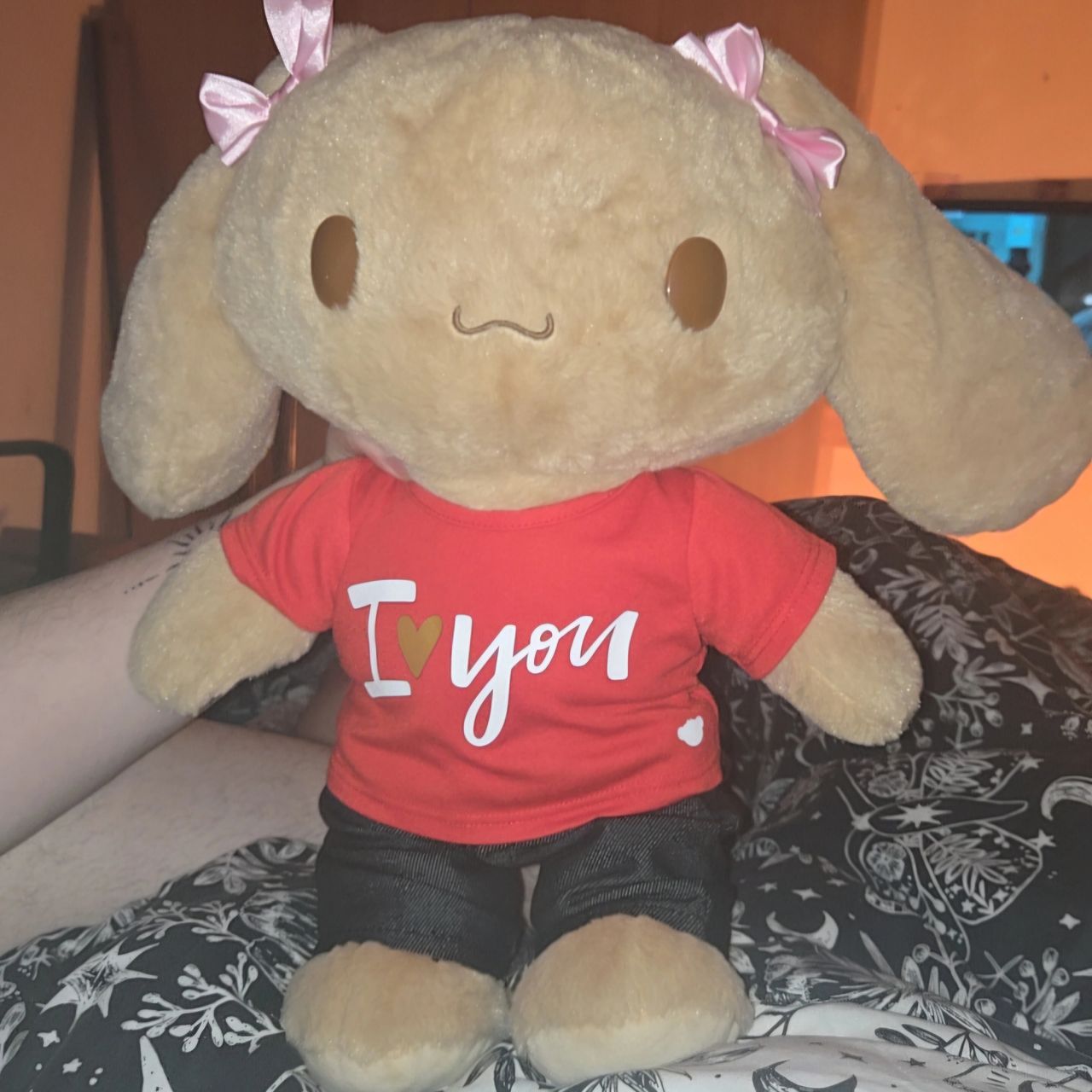
Another one I did a lot when I was little. I have a lot less teddies than back then, but I wanted to give them a ‘purpose’ so they weren’t simply taking up space in my room. For example, I got a Jellycat for my birthday who has become my ‘meditation partner’ that I now associate with being calm. We also adopted a mocha Cinnamoroll from Build-A-Bear called Rosalina, whom we talk to as if she’s our child!
Little Rosalina
“A frog has stolen my phone.”
While doing my research, I came across the idea of “pretending a frog has stolen your phone” to encourage leaving it at home. Although I’d had phone-free days before, it was never because of amphibian theft, so it made me chuckle. Soon after this, my heart dropped when I was in town and couldn’t find my phone. I started freaking out, until I remembered and said, “It’s okay; a frog is borrowing it.” Thankfully, it turns out I’d left it at home (or the frog had borrowed and kindly returned it), and I realised it was refreshing to spend a few hours in the present.
Taking pictures of pretty or funny things
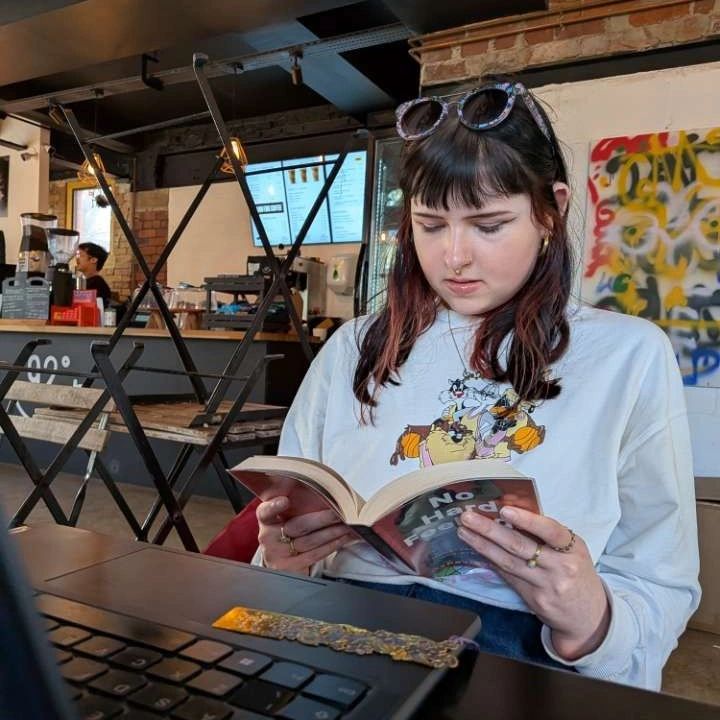
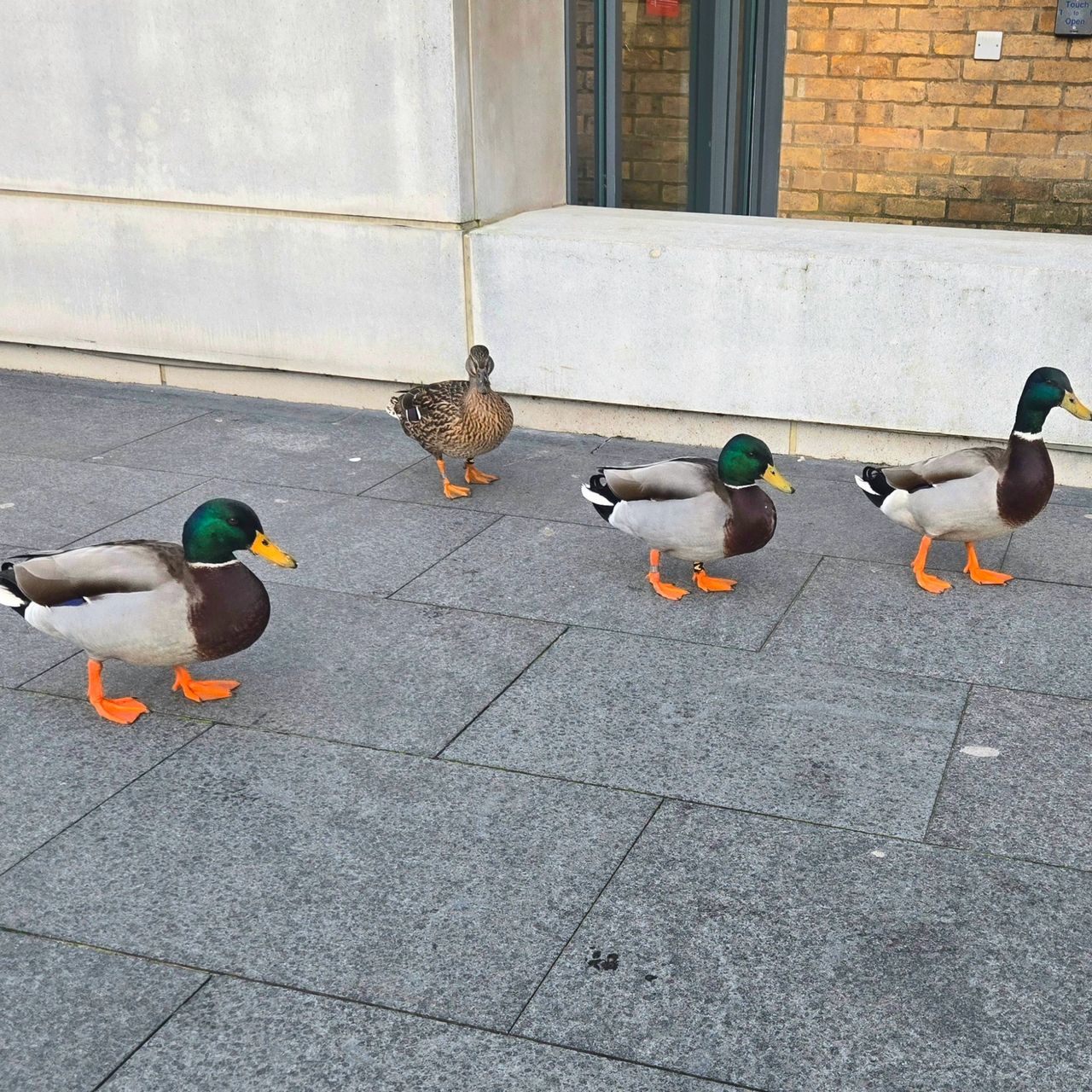
This is debatably in disaccordance with the frog stealing my phone, but I like taking pictures to preserve memories. I acknowledge it can be annoying when people around you are constantly taking snaps instead of savouring the moment, which is why I try to bring my camera when I can. Even if I don’t, it’s still nice to capture those little things so I can look back and reminisce.
Prime example: the campus ducks
Writing letters to myself
I find this one beneficial for several reasons. First of all, I like to do these in the form of a watercolour card, making the whole process creative and cathartic. It’s highly therapeutic to write everything I want to tell my future self, and it’s even more satisfying once I get to open it. Before starting final year, I wrote a little letter to myself in my journal for when I’m feeling demotivated by uni, where I essentially remind myself of how hard I’ve already come, as well as a proper card for when I’ve graduated. I fortunately haven’t had to remotivate myself (yet), but I’m excited to see what I wrote to myself when I graduate.
Keeping trinkets everywhere
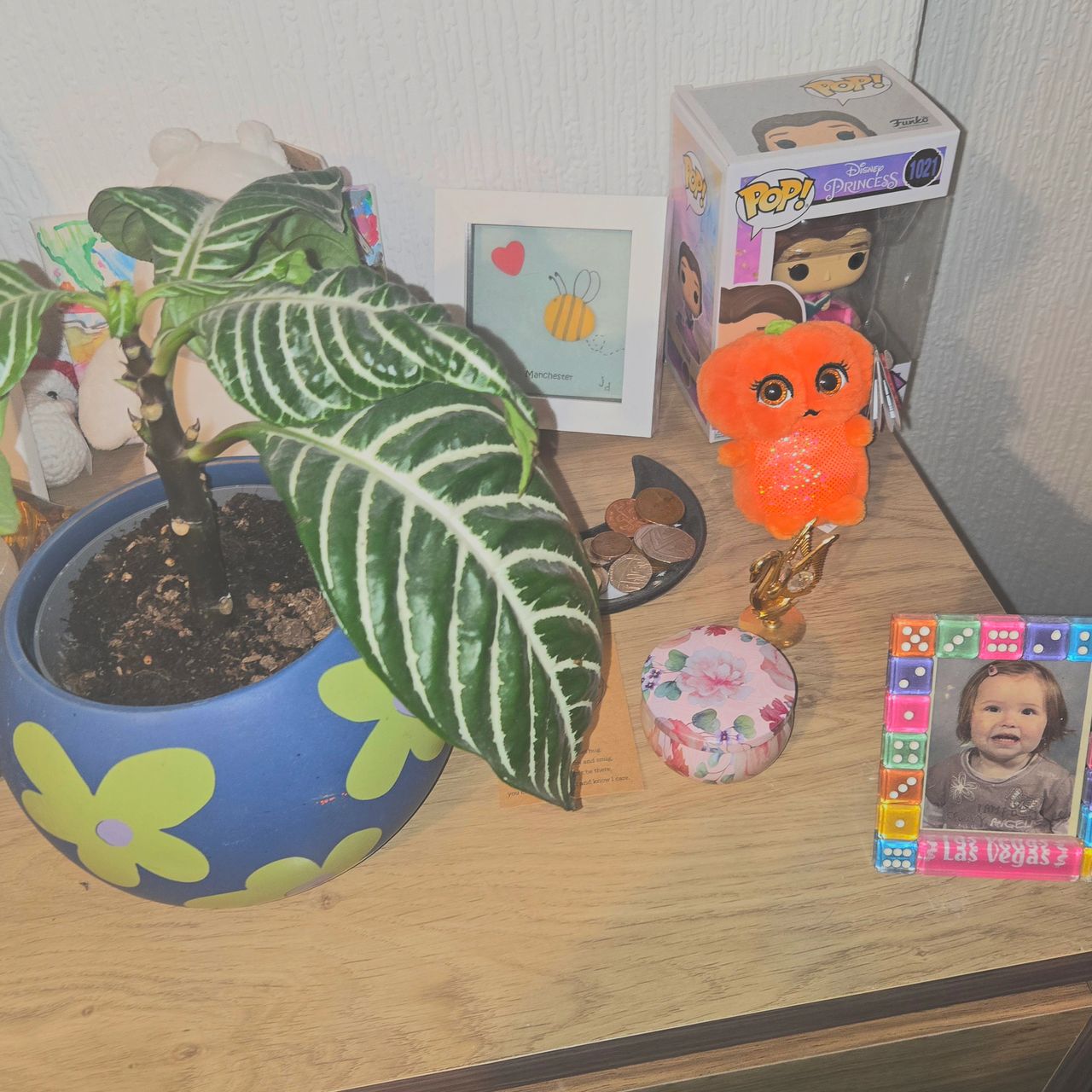
There’s a limit with this one, because it can quickly turn your house into a manic tip, but keeping trinkets everywhere makes me feel like I’m in a witch’s cottage. Most of my trinkets are either functional – for example a rose aromatherapy stone – or they have sentimental value. This, in my opinion, is what trinkets are all about as I’m opposed to useless overbuying.
Finding new cafes to sit or study in
A habit that I adopted in Geneva was giving myself a ‘quest’ of the day, so that I can always say I’ve accomplished at least one thing. On my days off from uni, my quest is often to find a new café and rate it in my head. The two main criteria for my rating are based on its coffee quality, and whether it’s a nice place to study. I think that I’ve now been to most of them in Lancaster’s city centre, but I’d love to say that I’ve tried them all by the end of my time here.
Seeds for the birds
This is the one I haven’t yet tried, but all the supplies are ready. A recommendation on Pinterest told me to “carry seeds around to feed birds”, which led me to find an organza bag, and I luckily already had pumpkin seeds in my kitchen. We’ve agreed that when the weather warms up, we’re going to walk along the canal and feed the ducklings and cygnets, which I’m really looking forward to.
Technically, a lot of these cross over into other wellness habits I’ve incorporated, but maybe that’s a good thing; they’re easier when they tick more than one box. And, even if many of them are fairly normal activities, it adds an extra touch of fun to them when I imagine they make my life more whimsical. So if you’re reading this with a confused look on your face, don’t be so quick to reject the idea — you might just need a little bit of whimsy, and end up happier for it.
On the 17th January 2025, I awoke with a spring in my step. It was the day of my flight home from Geneva, for the final time. I was more than happy to be leaving it behind after enduring a horrific few months over there.
I knew I wanted to pursue languages from the age of about 14. While applying for uni courses in my last year of college, the compulsory year abroad with a language degree was the one aspect I wasn’t so keen on. I suppose it’s ironic as a lot of people tell me they’d love to study abroad, but I wasn’t mad about the idea. I love to travel, but spending a few days away is different from moving somewhere completely new.
The year abroad felt like a distant thought when I started uni — as if it would never come. It was only a year later, when I started second year, when I had to seriously consider it. The decision felt intuitive; the University of Geneva had a special translation and interpreting school. I was one of two from my cohort who wanted to go to Geneva, while many were fighting for a place to study in Bordeaux. This meant that I easily secured a place, but I still didn’t feel very prepared.
The host uni told us that they prioritise international students when offering accommodation, which put my mind at rest. That was until I still hadn’t heard anything from them four months after applying. They then told me in July that I was more than #1000 on the waiting list, so I began to panic. In the end, I stayed with a family that a fellow Lancaster student had stayed with a few years prior. I thought that as somebody else had previously stayed with them, it couldn’t be so bad.
Although I was grateful that I’d resolved the accommodation issue, I was still unenthusiastic about the whole thing. Countless people had emphasised that it’d be “the best experience of my life”, which frankly didn’t reassure me a whole lot. I knew the only way I could avoid it was either by switching my course or dropping out of uni, neither of which I particularly wanted, so I reminded myself that it was all in aid of my degree.
I spent the days preceding the flight full of worry; I didn’t want to leave behind everything I knew. Though there was a piece of wisdom I had which would always stay with me: what doesn’t kill you makes you stronger. Even if it did turn out as bad as I was imagining, I was settled by the knowledge that it would ultimately be a form of character-building and make me more resilient.
The first few days were quite enjoyable. The first night was spent having dinner with my host family. They seemed quite pleasant, and they lived in a small, picturesque village on the outskirts of Geneva. I had arrived just in time for Welcome Week, meaning the first week of my stay was chock-full of events and parties for meeting other Erasmus students.
Although I’d met countless people from all over the world, once I’d settled into the routine of classes, I realised that most of these people weren’t really my ‘friends’. There was nothing wrong with them — that’s not what I’m saying — but I was confronted by the fact that a tipsy conversation with a near-stranger is no real connection. This realisation made me feel very isolated. I’d made a couple of friends from my course, but I felt like I wasn’t having the classic ‘year abroad experience’.
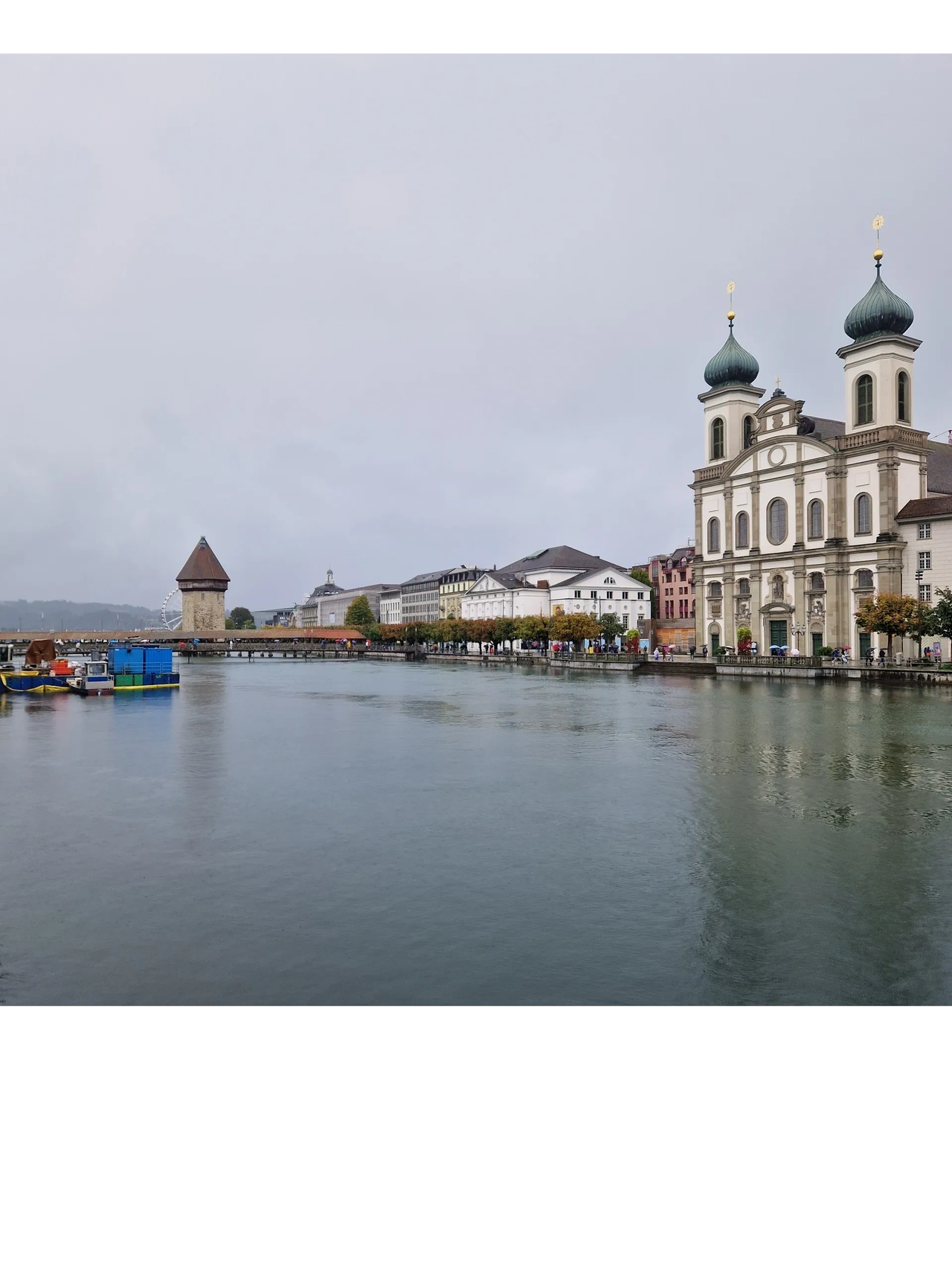
I had been warned that these feelings are common, so I didn’t want to let this stop me. I was also aware of the fact that connections can take longer than a few short weeks. With this in mind, I booked a trip to Lucerne with the Erasmus Student Network so I could have chance to experience another part of Switzerland.
I remember it as a horrible, horrible day, and one which I’d mark as the beginning of my downward spiral. I felt excluded the entire time because it seemed that everyone had already formed their own groups, and I was just an outsider. We spent two, if not three, hours in the Transport Museum, which I probably would have liked if I was at all interested in transport, but I instead sat and cried in the café. To make it even better, it rained the entire day, making it appear overwhelmingly bleak.
I became an anxious mess after the trip, to put it lightly. It’s difficult to explain, since it went so much deeper than feeling as if I had no friends. It made me feel as if everything in my life was going wrong because everyone told me how fun it would be, remember? To add onto that, my ‘pleasant host family’ gradually became more and more unpleasant. This meant I felt very uncomfortable in what should have been my temporary safe space.
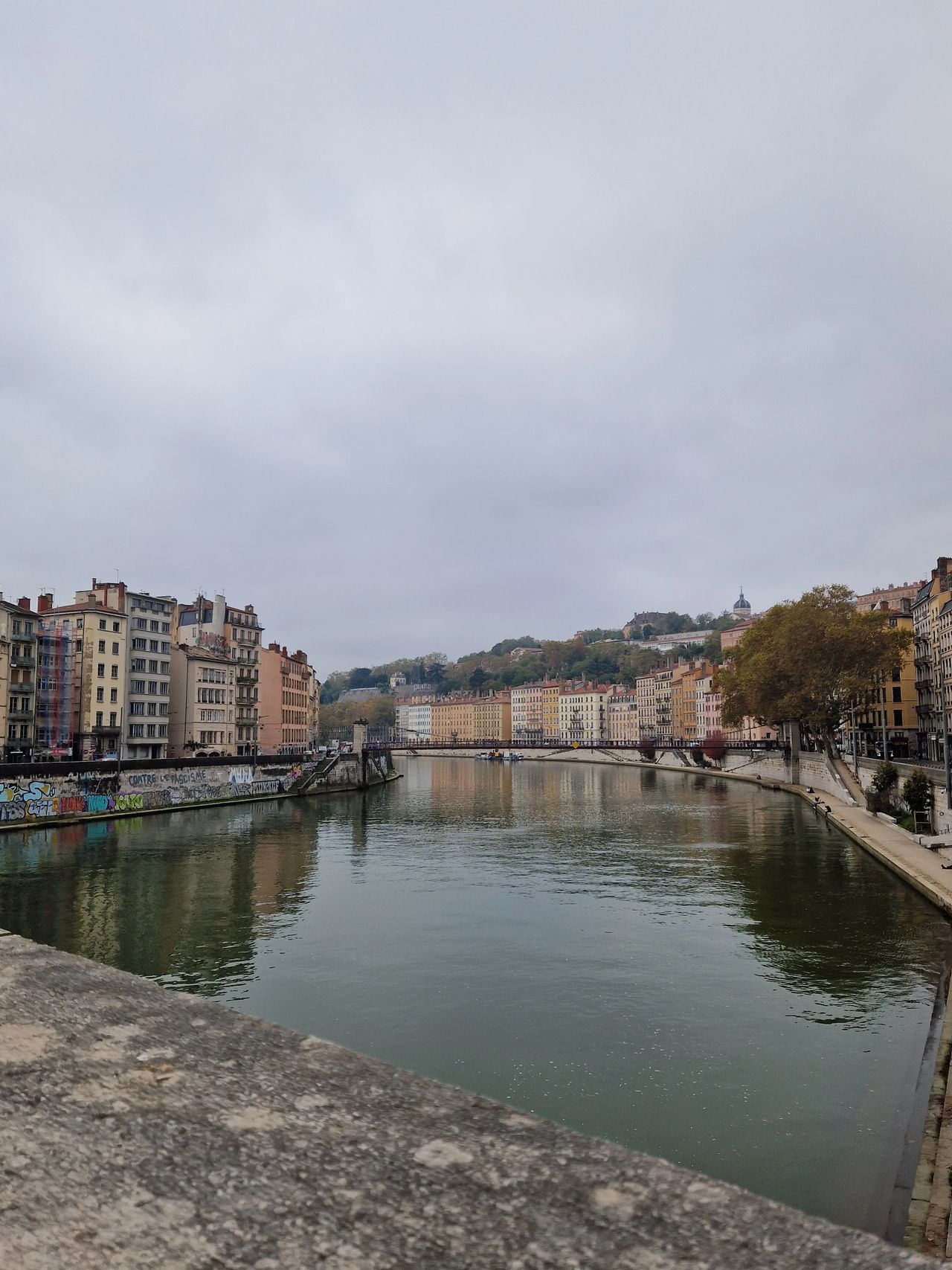
As I said earlier, I didn’t want to let this stop me. To combat the fact I hated being at ‘home’, I booked a few trips away. One of my first posts on here was about my trip to Lyon, which was the first time I’d ever been on a solo trip (if you exclude the entirety of Switzerland as a solo trip). I also went to Bern, Milan, as well as different landmarks and museums in Geneva. I still wouldn’t say it made me feel happy inside, but I’m proud to retrospectively say that I tried to have a good time.
There’s a group I came across called GoSocial Switzerland, with whom I went on a few nights out. On one of these nights, I made a Turkish friend called Bora who studies in Lausanne, and we’re still in touch. Although we met towards the end of my stay, I’m glad that our paths crossed because he gave me experiences that make me view Switzerland (slightly) positively. He’s currently trying to get a visa for the UK, so I hope we’re reunited at some point.
Christmas soon approached, but I didn’t feel particularly excited about it because of how unhappy I was. After our last class, everyone was thrilled about leaving, but I burst into tears because I thought that I’d ‘ruined my own happiness’ and I was ‘never going to be happy again’. The girls from my class gave me a hug and reassured me it would get better. It didn’t feel like much consolation at the time, but they did prove to be right.
The University of Geneva had silly logic for international students, because I had to go back in January for exams despite not staying for two semesters. After a relaxing Christmas period with my family, I was dreading the return, but I luckily had a much nicer experience the second time. I’d originally planned to stay with the same not-so-pleasant family, but they told me in my last week before Christmas that their son needed his (my) bedroom back. They told me I could stay in the games room, but I wasn’t going back to that hellhole. I instead stayed in an AirBnB which was much more expensive, but this host was much kinder than the first one. I had chalked my host family’s abrasiveness down to cultural difference, but considering how my second host was, I think the family were just dickheads.
A few days before leaving, I went to Lausanne for another night out with GoSocial. There was a guy who lived in Geneva who had kindly offered me a lift home, but he ended up staying in Lausanne. I hadn’t bought a return train ticket for this reason, so I risked the journey home sans billet. Imagine the horror on my face when the absolute jobsworth of a train conductor checks my ticket at 2 in the morning. The following day, I threw the fine in the bin because I knew I was not intending to return to Switzerland. This was my last act of defiance.
That brings us back to the first paragraph: on the 17th January 2025, I awoke with a spring in my step. The experience tested me in countless ways, but I survived it. I’m even now at the point where I reminisce on some parts, (like an amazing gelato shop near uni called Gelato Mania) but I can say with certainty that I wouldn’t go back. I wish I’d enjoyed it more, but it’s easier to say that with the gift of hindsight. I wasn’t as old or wise back then, and it was a completely new experience, so all I can do is be proud of little me for getting through it.
Once I’d gotten into the groove of being at home, I had to prepare to uproot my life for the second time to study in Graz, Austria. Then, I sat down and thought, “why am I doing this again?” I was fairly confident that I would have enjoyed Graz more than Geneva, but I wasn’t in the right headspace to go. My uni were very obtuse about my decision, telling me I was no longer allowed to study German.
I think it was all a blessing in disguise, though: I only have to dedicate time to learning one language in my final year. It’s also taught me to fall in love with academia, since I now have to do more cultural modules than if I was studying two languages. I’m considering picking it up again when I do my Masters in Translation, where I wouldn’t have to actively speak the language, the skill in which I always had the least confidence.
To be brutally honest, I’d say that my experience in Geneva was worse than my anxiety was predicting. You’re probably not used to hearing that since we normally get told that “it won’t be as bad as you think”, and while I still agree that this is correct 99.9% of the time, I’m not going to sugar-coat my experience one bit.
When I first got back from Geneva, and my head was still all over the place, I thought that ‘my head was permanently messed up’ and I was ‘never going to be the same person I was before’. The first one is definitely wrong, because I’d argue that I’m now happier than before because I appreciate the UK more. I’ve finally come to the terms with the fact that there will always be a little voice in my head that likes to feed me negative thoughts and predict worst-case scenarios, but it doesn’t mean I can’t live a fulfilling life anyway.
However, the second belief I had was true: I’m never going to be the same person I was before I went on my year abroad. This doesn’t have to be a negative thing, and I’d actually say that it’s brought more good than bad. I’ve become a more driven and motivated person through the bad experience that life presented me with; it gave me a new ‘lease of life’ to perform as best as I can in my degree. It also pushed me to explore therapy that I probably needed even pre-Geneva, so I now have the self-awareness to know that even if I’m not productive 100% of the time, I have inherent worth. That’s just one of many things I’ve learnt in the past year.
Another key thing I learnt, and perhaps the most important one, is that intelligence doesn’t equate to being able to thrive in every possible situation without issues. I’ve always held myself to a high standard because I’m academically inclined, while forgetting that I am allowed to find things challenging. I was originally surprised and disappointed by the fact I ‘couldn’t handle’ my semester abroad, but I know that I’m still a person with value, and that I came out stronger for it.


-39cac1d.jpg/:/cr=t:0%25,l:0%25,w:100%25,h:100%25/rs=w:1280)